“Going to Japan and Bringing Shame on the Country”... ‘Sushi-jaro’ Tsushima Trip Sparks ‘Nuisance’ Controversy Over Cutting in Line and Littering
- Input
- 2026-11-28 15:00:00
- Updated
- 2026-11-28 15:00:02
[Financial News] South Koreans are flocking to Japan to buy the obesity drug Mounjaro at a lower price. So-called “Sushi-jaro” trips have increased since the South Korean government began allowing people to personally bring in Mounjaro prescribed overseas on the 12th. Japanese media have since published a series of critical reports voicing concern about side effects and shortages of the medicine.
Fuji News Network (FNN) reported on the 26th that Korean tourists traveling to buy Mounjaro were flocking to Tsushima Island in Nagasaki Prefecture, where they had to wait in line for as long as two hours just to pick up the medication. The Mainichi Shimbun also reported that day that Koreans were rushing to Tsushima Island to buy Mounjaro.
“No more than half the price in Korea”... Long queues on Tsushima Island, a 90-minute ferry ride from Busan
The Hokkaido Shimbun explained the Korean “Sushi-jaro” craze by noting that “Mounjaro is not covered by health insurance in Korea, so it costs two to three times as much as in Japan.” It added that “a four-week supply of 2.5 mg Mounjaro costs more than 300,000 won in Korea, but in Japan it can be bought for less than half that price.”
As a result, some clinics in Tokyo, Fukuoka and elsewhere are advertising through Korean-language websites and social media, saying, “If you have a telemedicine consultation in Korea, we’ll deliver the medication to a hotel in Japan to fit your travel schedule.”
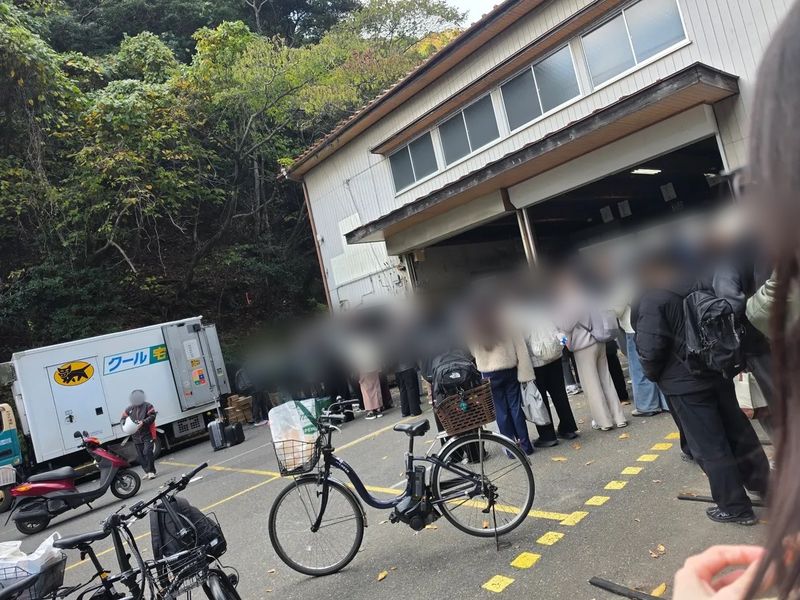
Tsushima Island, about a one-and-a-half-hour high-speed ferry ride from Busan, has recently emerged as a major destination for these trips. Visitors get a prescription through a telemedicine consultation with a Japanese hospital, pick up the medicine at a local courier office, and return the same day. On the 24th and 25th, photos of lines outside Yamato Transport offices on Tsushima were posted one after another on Threads and other social media platforms.
A 32-year-old Korean office worker identified as A told the Hokkaido Shimbun, “It costs no more than half as much as it does in Korea, and the weak yen makes the trip cheap, too,” adding, “I didn’t have any side effects, and I’d like to buy it in Japan again.” A also explained that they had telemedicine consultations with medical institutions in Osaka in July and September this year and received the medication at their accommodations.
The problem is that Korean visitors traveling to Tsushima to buy Mounjaro have drawn criticism for nuisance behavior, such as asking to cut in line and illegally dumping rubbish, including empty boxes. Tsushima residents told FNN, “Hundreds come all at once and leave their boxes behind, so we’re worried about the trash,” and “I often see Mounjaro packaging lying on the street.”
Japanese internet users have generally been critical. Negative comments included, “Don’t go to a remote island like Tsushima—go to Fukuoka instead. You’re causing too much trouble”; “They come like that because it’s cheap. Just sell it at a higher price”; and “Koreans come to Tsushima for Mounjaro, don’t even sightsee, and head straight back. Didn’t they hate Japan?” Calls have also continued for the Japanese government to regulate “Mounjaro tourism.”
Japanese media: “Not approved for weight loss”... Warnings over side effects and supply shortages
Japanese media are most concerned about safety. The Hokkaido Shimbun noted that the Japanese government has not approved Mounjaro for weight loss, saying its safety and efficacy for that purpose have not been confirmed.
Mounjaro is an obesity treatment in the glucagon-like peptide-1 (GLP-1) class and is approved in Japan only to treat type 2 diabetes. Reported side effects include gastrointestinal symptoms such as diarrhea, vomiting and abdominal pain, as well as acute pancreatitis and low blood sugar. The U.S. Food and Drug Administration (FDA) has also pointed to the risk of a rapid decline in vision.
Supply problems have also emerged. According to the Hokkaido Shimbun, some medical institutions in Hokkaido have been unable to newly prescribe Mounjaro to patients with diabetes because of shortages. Local medical professionals have voiced concern that the supply shortage could worsen.
With ‘Sushi-jaro’ imports allowed... from buying up supplies to reselling
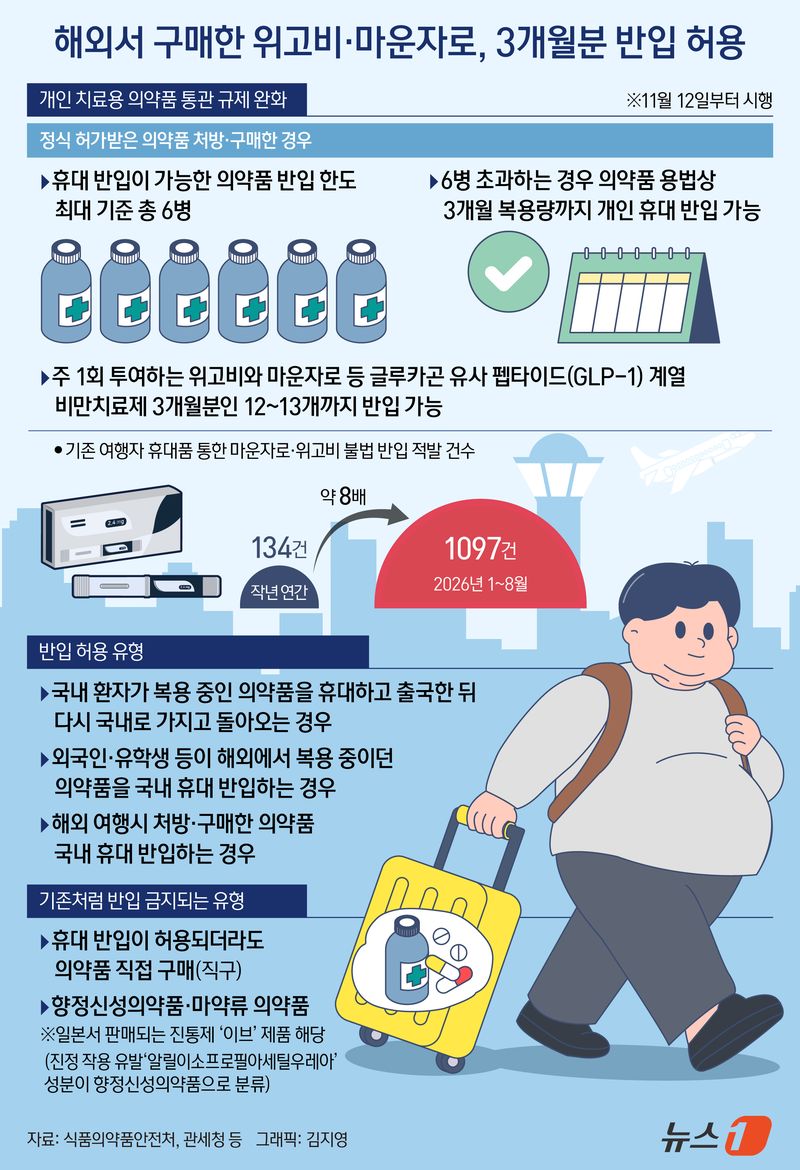
The South Korean government had previously blocked Mounjaro imports, citing difficulties in verifying how the medicine was distributed and stored. According to the Korea Customs Service, the number of cases in which obesity drugs that failed to meet import requirements were detected surged from four in 2024 to 5,030 between January and August this year.
But after criticism that blocking even medicines legally prescribed overseas was excessive, the government changed its policy. Since the 12th, people have been allowed to bring in person up to about a three-month supply of Mounjaro prescribed by a medical institution.
However, the requirements for bringing medicine into South Korea remain strict. The Ministry of Food and Drug Safety said customs clearance may be restricted if someone brings in more than the permitted three-month supply or imports medicine repeatedly over a short period, as those cases may not be considered for personal treatment. Selling or giving medicines bought overseas to third parties, such as family members or acquaintances, violates the Pharmaceutical Affairs Act.
According to the Ministry of Food and Drug Safety, importers and others suspected of secretly bringing 48 units of Mounjaro into South Korea in two separate shipments during July this year (24 units of 2.5 mg and 24 units of 5 mg) and reselling them for cash to acquaintances and middlemen were caught and recently referred to the Seoul Western District Prosecutors’ Office.
[email protected] Kim Hee-sun Reporter