Jeju Province Targets 100% EVs Among New Cars by 2030... Seeks to Retire Four Aging Power Generators
- Input
- 2026-11-27 10:07:42
- Updated
- 2026-11-27 10:07:42
【Financial News | Jeju — Reporter Jeong Yong-bok】The government and Jeju Province have set a goal of converting all new cars registered in Jeju to EVs starting in 2030. They aim to expand solar and wind power capacity to 5.5 GW by 2035 and gradually retire aging thermal power plants to pursue 100% renewable energy use (RE100).
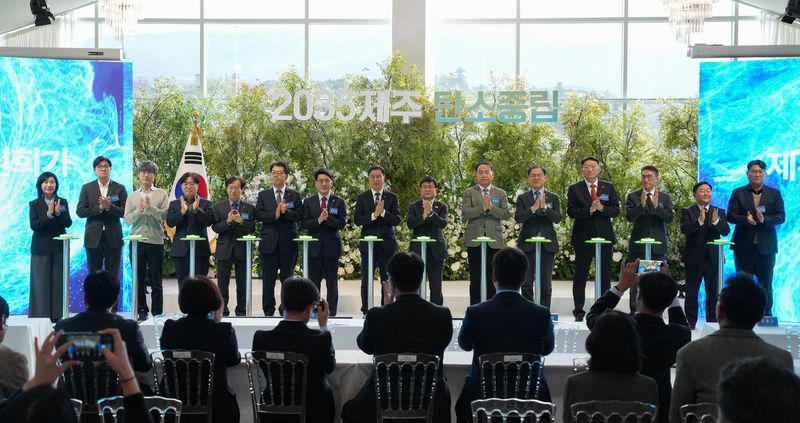
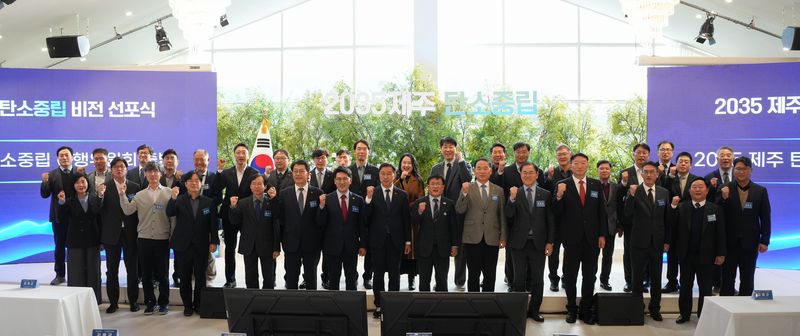
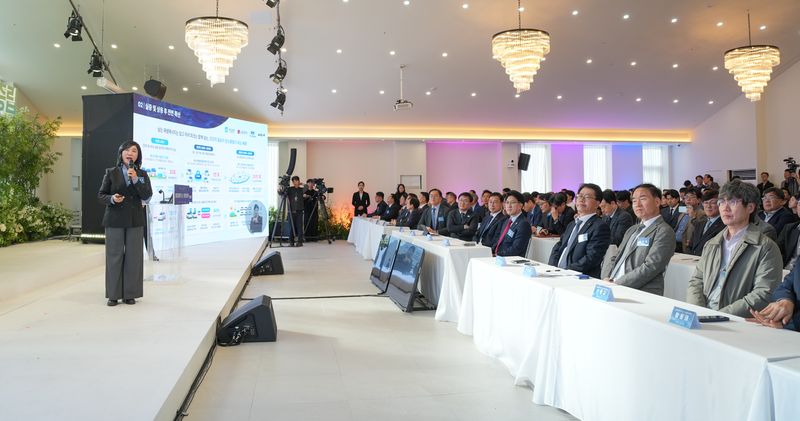
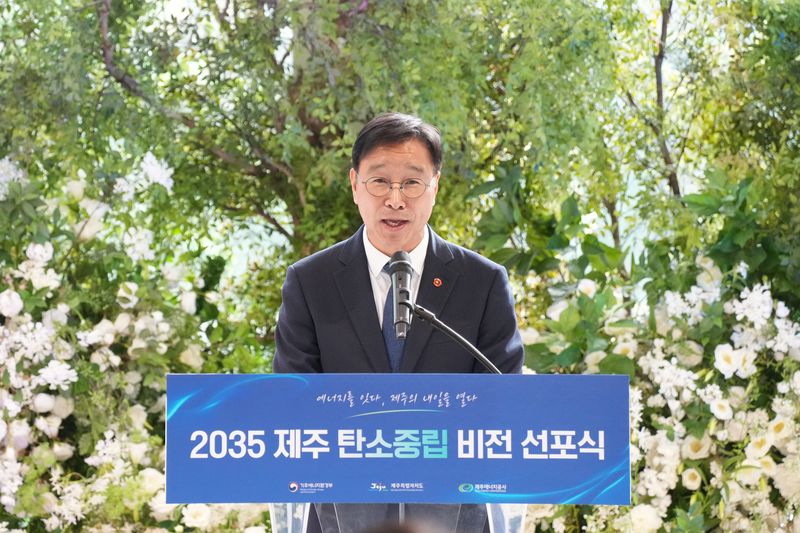
According to the Ministry of Climate, Energy and Environment and Jeju Special Self-Governing Province on the 27th, Minister Kim Sunghwan and Jeju Province Governor Wi Seong-gon held the “2035 Jeju Carbon Neutrality Vision Declaration Ceremony” at Heritique Jeju in Odeung-dong, Jeju City, on the 26th, and announced an energy transition strategy to reshape the power supply and consumption systems and the market structure.
The plan is to implement an energy transition model in Jeju 15 years ahead of the national carbon-neutrality target of 2050, and to spread nationwide the results of demonstrating relevant policies and technologies.
Since Jeju established “Carbon Free Island 2030” in 2012, its energy policy has focused on expanding renewable energy generation facilities. It will now broaden to combine power consumption and storage, market reforms and the sharing of benefits with residents.
■ From 50,000 to 210,000 EVs... Expanded support for rental-car conversions
Electrifying the transportation sector is an area with a direct impact on residents’ lives and the tourism industry.
According to Jeju Province, as of August this year, there were 50,718 EVs in the province, accounting for 12.2% of all registered vehicles. That is about 2.8 times the national average EV share of 4.35%. EVs also made up 42.2% of newly registered vehicles this year.
The government and Jeju Province have set a target of converting 100% of new cars to EVs by 2030 and plan to increase the cumulative number of EVs deployed to 210,000 by 2035. That would amount to 53% of all vehicles.
However, no measure has been finalized to legally ban the registration of new internal-combustion-engine vehicles starting in 2030. This is a policy target to be achieved through measures such as expanding purchase subsidies, adding charging facilities and supporting the conversion of internal-combustion-engine vehicles.
In Jeju, where tourism accounts for a large share of the economy, converting rental cars to EVs is also a key task. Before the vision declaration ceremony, Minister Kim Sunghwan held a meeting that morning with representatives of the rental-car industry in Jeju at the SOCAR Terminal in Dodu 2-dong, Jeju City, to discuss support for the transition to EVs.
According to last year’s vehicle mileage statistics from the Korea Transportation Safety Authority, passenger cars used for business travel an average of 69.3 km per day, 2.2 times the 30.9 km average for non-business passenger cars.
Rental cars, which are driven extensively and have relatively short replacement cycles, are considered a sector where switching to EVs can significantly reduce greenhouse gas emissions. The government currently provides up to an additional 1.8 million won on top of the standard purchase subsidy for EVs bought for rental or lease use.
Starting next year, the government plans to expand eligibility for conversion grants—provided when an internal-combustion-engine vehicle is replaced with an EV—to include rental and leased vehicles. It is also considering establishing shared charging hubs for rental cars using public and state-owned land near Jeju International Airport.
■ 5.5 GW of Renewable Energy Capacity... Reducing Reliance on Thermal Power
The power supply structure will also be reshaped to meet the needs of EVs and the electrification of buildings. As of August this year, Jeju’s total power generation capacity was 2,296 MW. Renewable energy facilities accounted for 1,283 MW, or 55.9% of the total.
However, renewable energy accounts for only 25.6% of actual power generation. That is higher than the 10.7% share on the mainland cited in materials released by the Ministry of Climate, Energy and Environment, but actual generation remains low relative to installed capacity. Solar and wind output varies with weather conditions, and output curtailment occurs when electricity supply exceeds demand.
Jeju Province has set targets for renewable energy to account for 64% of power generation by 2030 and 100% by 2035. By 2035, it plans to expand solar capacity to 3 GW and wind capacity to 2.5 GW. It also plans to increase energy storage system (ESS) capacity from 68 MW last year to 600 MW in 2030 and 1,700 MW in 2035.
An ESS stores electricity when it is abundant so it can be used when supply is insufficient. It is a key facility for using solar power generated during the day in the evening or at night.
Aging thermal power plants will be retired in stages in line with their designed service lives. The Hallim combined-cycle liquefied natural gas (LNG) power plant is scheduled to stop operating at the end of 2027, while three bio-heavy-oil power units, including Jeju Thermal Power Plant, are scheduled to shut down at the end of 2030.
The government plans to expand facilities that maintain stable voltage and frequency, as well as ESS facilities that help stabilize the grid, and gradually reduce the operation of power plants required to maintain electricity supply and demand.
However, the 2035 target of 100% renewable energy excludes the power links connecting Jeju with the mainland. The government’s power supply and demand plan also includes using those links and thermal power plants as emergency sources of electricity. The 100% renewable energy target does not mean that thermal power generation and electricity supplied from outside Jeju will be completely cut off at all times.
■ Electrifying Heating in Public Buildings First... Then Expanding to Industrial Complexes, Farms and Hotels
Fossil fuels used for heating, cooling and hot-water supply in buildings will also be replaced with electricity.
The government and Jeju Province are working to deploy a cumulative total of 200,000 heat pumps by 2035. A heat pump uses electricity to transfer heat from sources such as air or water. It can provide heating, cooling and hot water in buildings in place of conventional boilers that burn oil or gas directly.
The government plans to require heat pumps in new buildings for public institutions in Jeju for which a building permit is issued or a construction report is filed after July 1 next year.
In the private sector, the government will expand national funding to support the installation of heat pumps in at least 2,500 detached homes each year, as well as during apartment renovations.
The government is also pursuing energy transitions at Jeju Advanced Science and Technology Park and agricultural and industrial complexes. In September, the Ministry of Trade, Industry and Energy and the Ministry of Land, Infrastructure and Transport selected Jeju Advanced Science and Technology Park as a candidate site for the 2027 project to strengthen the competitiveness of aging hub industrial complexes.
Jeju Province plans to use Jeju Advanced Science and Technology Park as a hub and link it with the Lava Seawater Industrial Complex and the Gujwa, Geumneung and Daejeong agricultural and industrial complexes to carry out an industrial complex innovation project worth a total of 323.2 billion won from 2027 to 2029. The project plan includes 187.4 billion won in national funding, and still requires consultations with relevant ministries and the selection of individual projects.
The government will also demonstrate self-sufficient distributed energy models that integrate solar power, ESS and heat pumps at residential complexes, farms, hotels and other sites. The approach is to consume locally generated electricity on-site and store any surplus for later use, reducing the need to purchase power from outside the area.
■ Generation Revenues for Residents... Considering an Energy Investment Fund
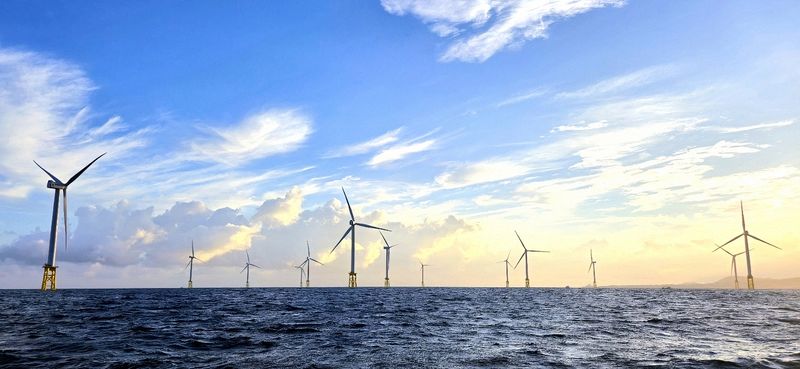
Another feature of the carbon-neutrality strategy is the creation of a system to share revenue from renewable energy generation projects with residents.
According to Jeju Province, 1,009 residents invested about 30 billion won in the Hallim Offshore Wind Power Project. The province estimates that participating residents will earn 3.51 million won per person annually. Solar Village power plants with a combined capacity of 3.4 MW are operating in 23 villages across the province.
Jeju Province plans to expand resident-participation power generation projects like these and is considering introducing a resident-participation investment fund, centered on Jeju Energy Corporation (JEC), through which residents can invest in solar, wind and ESS projects and receive a share of the returns.
The province also plans to develop ways to use investment returns for dividends, funds or facilities for residents. However, future institutional design must address how to manage project profitability and investment risks, and how to extend the benefits to residents who may find it difficult to invest directly.
The power market will also be restructured to enable consumer participation. Korea Electric Power Corporation (KEPCO) will launch “Tamna Electricity Forecast” on December 1, offering a 50% discount on the energy charge during periods of abundant renewable energy supply. The government also plans to introduce a system next year in Jeju’s power market under which electricity buyers bid for the amount of power they need.
The government is also pursuing a plan to install additional advanced metering infrastructure (AMI) in about 63,000 apartment households across the province by the end of next year, enabling electricity consumption to be measured by time of day.
■ Jeju as a Test Bed for National Carbon Neutrality... Funding, the Grid and Resident Acceptance Are Key
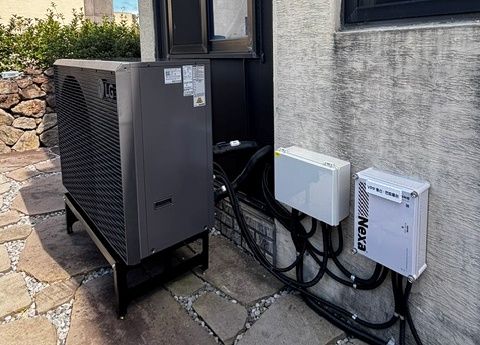
To achieve its 2035 carbon-neutrality target, Jeju must expand power generation facilities, stabilize the grid, and increase the deployment of EVs and heat pumps in tandem.
Key implementation challenges remain, including securing permits and public acceptance for large offshore wind farms, covering the cost of grid expansion, and securing funding for EV purchase subsidies and the electrification of buildings.
Alongside the vision declaration, MCEE and Jeju Province launched the “2035 Jeju Carbon Neutrality Implementation Committee,” with participation from KEPCO, the Korea Power Exchange, JEC, industry and academia. The committee will review progress on individual projects and discuss key policy issues, including securing funding, reforming electricity rates, generating income for residents and electrifying the transportation sector.
Minister of Climate, Energy and Environment Kim Sunghwan described carbon neutrality as “a transition to a green civilization in which we respond to the climate crisis while living more prosperously.” He added, “The government and Jeju Province will oversee implementation of power market and rate reforms alongside support policies so that Jeju’s sunshine and wind help residents lower their living costs and increase their income.”
Jeju Province Governor Wi Seong-gon said, “Building on our experience of leading the way in expanding renewable energy, we will now ensure that it translates into income for residents and, further, that they benefit from carbon neutrality, including through carbon credits.”
[email protected] Jeong Yong-bok Reporter