[Exclusive] Seoul Mayor Oh Se-hoon Moves to Restart the 2.3-Trillion-Won Seobu Line... Can It End 18 Years of Stagnation?
- Input
- 2026-11-27 11:17:12
- Updated
- 2026-11-27 11:19:12
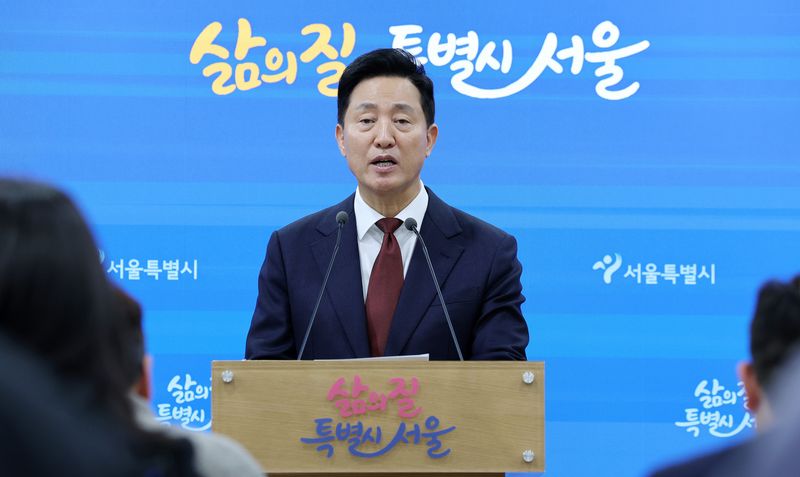
According to industry sources and city and district officials on the 27th, the meeting is expected to be attended by Mayor Oh, local lawmakers from the five districts of Gwanak, Dongjak, Mapo, Seodaemun and Yeongdeungpo, and officials from the Seobu Line Urban Railway Promotion Association. It will be the first on-site outreach event since the Seoul Metropolitan Government formalized its plan to make another attempt at the Seobu Line private investment project.
The Seoul Metropolitan Government had previously announced that it would substantially raise the total project cost to 2.3252 trillion won and issue a “third-party proposal re-announcement” on the 26th to restart the Seobu Line project, which was suspended after the Doosan Engineering & Construction consortium lost its status as preferred bidder. It also unveiled a roadmap to immediately convert the project to a publicly funded one if the tender fails again because no qualified bidder comes forward.
At the meeting, Mayor Oh is expected to explain directly to local politicians and residents the Seoul Metropolitan Government’s two-track plan to re-advertise the project and convert it to a publicly funded one, and to coordinate plans for future communication. Politicians and residents’ groups are also expected to strongly call for swift follow-up procedures to prevent any further delays.
A Seoul Metropolitan Government official said, “The meeting was arranged after a district government requested one, and it will be an opportunity to hear people’s views,” adding, “The city plans to review later the points raised at the meeting, including the districts’ requests to move the project forward quickly.”
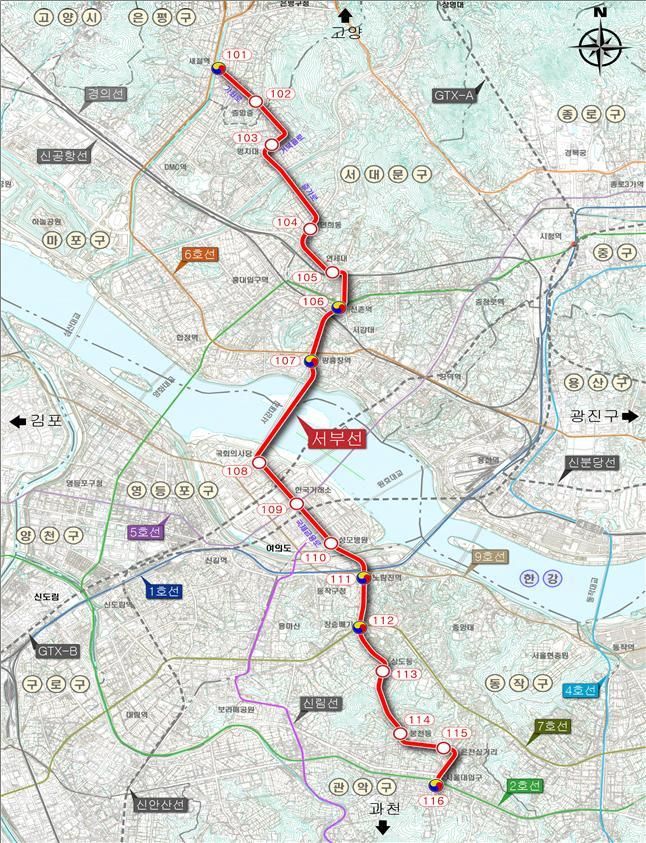
The Seobu Line, whose route was finalized in 2008, is a key light rail project connecting southwestern and northwestern Seoul. It will run from Saejeol Station in Eunpyeong District (Seoul Subway Line 6), through Sinchon, Yeouido and Noryangjin-dong, to Seoul National University Station in Gwanak District (Seoul Subway Line 2), linking a total of 16 stations from north to south. In addition to offering transfers to five existing main urban rail lines—Lines 1, 2, 6, 7 and 9—the route will connect densely populated residential areas in northwestern and southwestern Seoul, long considered rail gaps, with major business and university districts such as Yeouido and Sinchon without requiring transfers. It is therefore seen as having a greater impact than other light rail lines.
Interest in bringing the Seobu Line to fruition is growing further as the question of directly connecting it to the Goyang-Eunpyeong Line—a regional railway that would run from Saejeol Station, the Seobu Line’s starting point, through Goyang Changneung New Town to Goyang City Hall—emerges as a key issue in the regional transport plans for the Third New Towns.
The Seobu Line Normalization Promotion Committee, a residents’ group, held a press conference at the Seoul Metropolitan Council the previous day, calling for the city to mobilize its administrative resources and urging the Ministry of Economy and Finance and the Ministry of Land, Infrastructure and Transport to cooperate. A committee representative said in a phone interview, “The Seobu Line is a long-awaited project that countless residents have hoped for over decades. Because the inconvenience caused by poor transport infrastructure is so severe, residents want construction to begin quickly.” The representative added, “We hope concrete plans will emerge from this meeting,” and, “There is great anticipation that the clock on the Seobu Line, which had stopped, will start ticking again.”
[email protected] Jeon Min-gyeong, Seong Cho-rong Reporter