Business Community Says 35% U.S. Semiconductor Tax Credit Should Be Extended ... Also Urges Action on EU Auto Trade Barriers
- Input
- 2026-11-27 08:42:13
- Updated
- 2026-11-27 08:42:13
[Financial News] As uncertainty over tariffs and investment incentives continued even after the U.S. midterm elections, the business community urged the government to seek an extension of the U.S. semiconductor facility investment tax credit and respond to European Union (EU) restrictions on auto imports, among other measures.
With uncertainty persisting, USTR recently proposed imposing tariffs of up to 15% on South Korean goods based on the results of an investigation into manufacturing overcapacity, while also saying it could consider tariffs of up to 25%, depending on the outcome of U.S.-South Korea consultations. The business community and the government agreed on the need for proactive action through public-private cooperation, and the government heard industry views.
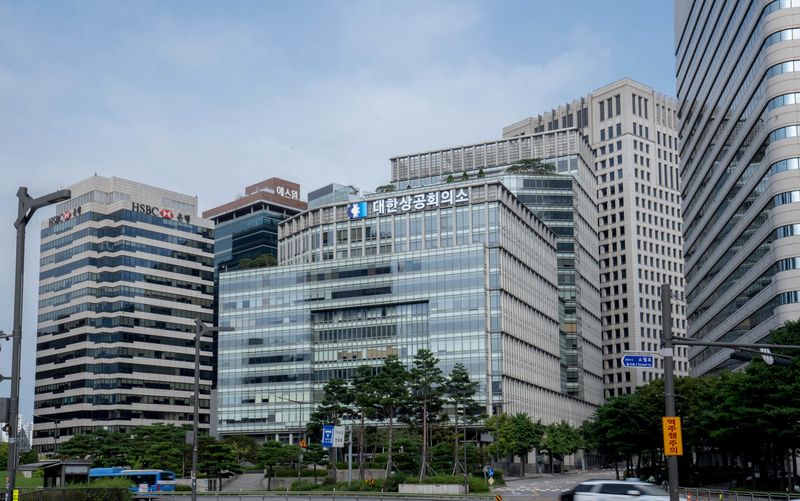
The Korea Chamber of Commerce and Industry (KCCI) held an International Trade Committee meeting on the 27th at its headquarters in Jung District, Seoul, inviting Park Jeong-seong, head of trade negotiations at the Ministry of Trade, Industry and Energy.
Attendees included Lee Kye-in, chair of KCCI’s International Trade Committee and CEO of POSCO International; Kim Jong Il, KCCI’s standing vice chairman; and officials from major companies including Samsung Electronics Co., Ltd., SK Group, Hyundai Motor, LG Energy Solution and Hanwha Ocean. They discussed implementing U.S.-South Korea tariff consultations and ways to cooperate on strategic investment.
The semiconductor industry asked for support to ensure that the 35% investment tax credit for qualifying facility investments in the United States, which is set to expire, could also apply to investments beginning construction next year.
An industry official said, “To ensure the stable continuation of investment in the United States, consultations between the South Korean and U.S. governments and legislative support from the U.S. Congress are needed to maintain the tax credit for investments whose construction begins next year or later.”
The finished-vehicle industry expressed concern over the EU’s proposed Industrial Accelerator Act (IAA), which favors products made within the bloc, and provisional safeguard measures on some hybrid cars. It stressed, “The government needs to respond actively and consult closely with the EU to ensure these measures do not disadvantage our companies.”
The energy industry, discussing investment projects in the United States such as nuclear power and gas-fired power generation, said, “Bipartisan consensus on the need to expand nuclear power is likely to remain even after the U.S. midterm elections, but the pace of policy implementation and business conditions could change.” It added, “To ensure the smooth progress of major U.S. investment projects, including nuclear power and gas-fired generation, consultations between the South Korean and U.S. governments should be strengthened, and changes in U.S. congressional and state government policies and regulations should be anticipated and addressed proactively.”
Earlier, in his opening remarks, Park Jeong-seong, head of trade negotiations, said, “We will manage trade relations with major countries such as the United States and the EU steadily, while diversifying export markets by expanding cooperation with emerging markets such as Latin America and upgrading existing trade agreements.” He also urged industry to “actively share its views with the government, as combining the government’s negotiating strength with businesses’ on-the-ground experience can help us find a way to resolve trade issues.”
Meanwhile, Ha Sang-eung, a professor at Sogang University, said that even if congressional scrutiny intensifies after the midterm elections, the U.S. administration could use Section 301 of the Trade Act of 1974 and Section 232 of the Trade Expansion Act of 1962 as tools to impose tariffs.
Professor Ha said, “Changes in the political landscape in Texas, Georgia and Ohio, where South Korean companies have concentrated their investments, could affect investment incentives and labor and environmental regulations,” and called for action at the state government level.
Yoon Cheol-min, head of KCCI’s International Trade Division, said, “KCCI will strengthen its role as a bridge between the public and private sectors so that difficulties faced by businesses on the ground lead to concrete trade negotiations and policy support.” He added, “We will help ensure that strategic investments between South Korea and the United States create new growth opportunities not only for large companies but also for small and midsize partner companies.”
[email protected] Kim Hak-jae Reporter