"It Hurt Even at the Lightest Touch; Couldn't Even Walk"... '44-Year-Old' Narsha's Ordeal With 'This Disease'—Women Can't Let Their Guard Down Either [Health Talk]
- Input
- 2026-11-27 08:20:43
- Updated
- 2026-11-27 08:20:43

[Financial News] Narsha (44) of Brown Eyed Girls recently opened up about the excruciating pain she experienced from gout.
Narsha opens up about gout... a disease caused by excessive uric acid buildup in the body
Narsha appeared on the recently aired tvN show 'Time Observer: The Secret' and said, "Over about 20 years of performing, I wore 12-centimeter high heels on stage and put my knees through a lot."
Narsha recalled, "A few years ago, I suddenly couldn't put any strength into my right ankle, and when I got it checked, it turned out to be gout. That's what 'it hurts even if you're just brushed against' meant. I couldn't walk at all."
A specialist explained that the pain score for the gout Narsha experienced reached '9.' The scale ranges from 0, meaning no pain at all, to 10, the most extreme pain imaginable.
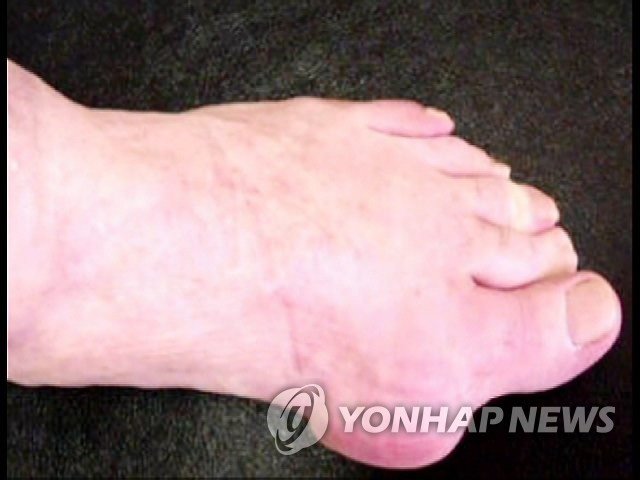
Gout is a disease caused by an excessive buildup of uric acid, which is produced when purines are broken down in the body. When uric acid accumulates in the joints and surrounding tissues in the form of crystals, it causes inflammation and extreme pain. Gout commonly affects the big toe, but can also occur in the ankles, knees, wrists, elbows and other areas.
Men are affected 14 times more often than women... men in their 40s make up the largest group
According to the Health Insurance Review and Assessment Service on the 26th, 581,230 people in South Korea received treatment for gout last year, an increase of about 52% from 2016. Over the same period, healthcare benefit expenditures rose about 80%, from 43.2 billion won to 77.7 billion won.
By gender, there were 541,341 men and 39,889 women, meaning male patients outnumbered female patients by about 13.6 to 1.
By age group, men in their 40s accounted for the most patients, at 130,720. They were followed by men in their 50s (110,912) and 30s (105,347).
Among women, those in their 60s made up the largest group, at 8,591. They were followed by women in their 50s (7,402) and 70s (6,935).
The increased risk of gout in women after middle age is related to female hormones. These hormones help the kidneys excrete uric acid, but hormone secretion declines after menopause, weakening this protective effect.
If gout is not treated properly, uric acid crystals can build up in clumps, potentially leading to joint deformity or impaired movement. In severe cases, the risk of complications such as chronic kidney disease and cardiovascular disease also increases.
To prevent gout, avoid alcohol, which interferes with uric acid excretion, and reduce excessive consumption of meat and organ meats, which are high in purines. Also limit carbonated drinks and fruit juices containing high-fructose corn syrup, and make sure to drink enough fluids and maintain a healthy weight.
[email protected] Ahn Ga-eul Reporter