As Prices Surge, Trump’s Tariffs Fan the Flames... “Economic Self-Harm at the Worst Possible Time”
- Input
- 2026-11-27 07:08:15
- Updated
- 2026-11-27 07:08:15
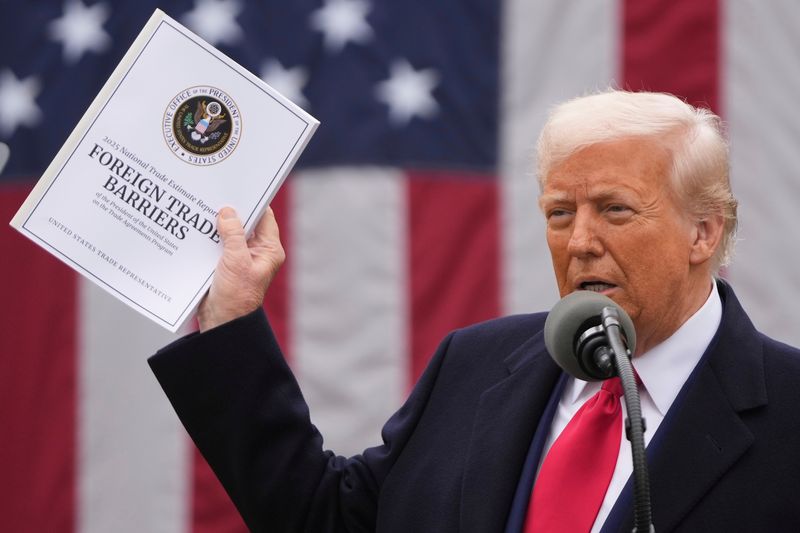
[Financial News] With inflation accelerating again in the United States, major U.S. media outlets have been criticizing the Trump administration’s push for sweeping tariff increases.
Critics say that after suffering a crushing defeat in the midterm elections amid voters’ frustration over the cost of living, the Trump administration is once again pushing a tariff policy that adds to inflationary pressures.
On the 26th (local time), the U.S. daily The Wall Street Journal (WSJ) reported that Greg Ip, its chief economics commentator, criticized the Trump administration’s plan to raise tariffs in a column titled “Why Now Is the Worst Time to Impose New Tariffs.”
“Given that tariffs are unpopular, there is no good time to raise them,” he said. “Even so, this week was a particularly bad time.”
U.S. Fed’s preferred inflation gauge’s rate of increase reaches highest level in nearly three years
The previous day, the Trump administration announced plans to impose additional tariffs on 14 economies, including China, South Korea, Japan and the European Union (EU), based on the findings of an investigation into industrial overcapacity under Section 301 of the Trade Act.
That was the day an announcement was made that the rate of increase in an inflation gauge favored by the U.S. Federal Reserve (Fed) had reached its highest level in about three years.
The U.S. Commerce Department reported that the Personal Consumption Expenditures (PCE) price index rose 3.8% year over year in October. The core PCE price index, which excludes volatile energy and food prices, also rose 3.3%, its highest level since late 2023, adding to inflation concerns.
It was also just a few weeks after Republicans suffered a crushing defeat in the midterm elections, where the cost of living was a central issue.
The WSJ noted that while the tariff hikes’ direct impact on prices may be limited, the problem lies in the direction of the pressure.
The point is that President Trump is adding to these pressures at a time when the public, businesses and investors have become extremely sensitive to rising costs across the economy.
The WSJ focused in particular on how the U.S. economy’s solid growth could intensify inflationary pressures resulting from the tariff hikes.
Business sales are strong, with U.S. nominal gross domestic product (GDP) rising 6% year over year in the third quarter. When demand is this solid, it is easier for companies to pass on the higher costs resulting from tariff increases to consumers by incorporating them into their prices.
Fed officials: “Tariffs Make It Harder to Curb Inflation”
Fed officials are also concerned that these economic conditions could make it harder to curb inflation.
Earlier this month, Fed Governor Christopher J. Waller noted that it becomes harder to bring inflation down when companies believe consumers will accept price increases.
Mary Daly, president of the Federal Reserve Bank of San Francisco, also said that more companies are saying they can no longer absorb higher costs themselves and need to pass some of them on through their prices.
This trend of companies raising prices is also a key reason a Fed interest rate hike in December is expected.
In an editorial published that day, The Washington Post (WP) criticized the Trump administration’s rationale for imposing new tariffs, saying that imposing additional tariffs while inflation concerns persist is “an act of economic self-harm.”
The WP also recalled that in midterm exit polls, 66% of respondents said President Trump’s tariff policy had harmed the U.S. economy, while only 21% said it had helped.
It argued that if Democrats secure control of both the House and Senate next January, they should immediately introduce a bill to repeal the tariffs, and that Congress must reclaim the authority granted to it by the Constitution.
[email protected] Lee Seok-woo, International Affairs Specialist Reporter