Tracing the Beginnings of Modern Korean Architecture Through a Three-Syllable Name... ‘Find Lee Hun-woo’ [New Book]
- Input
- 2026-11-27 07:00:00
- Updated
- 2026-11-27 07:00:05
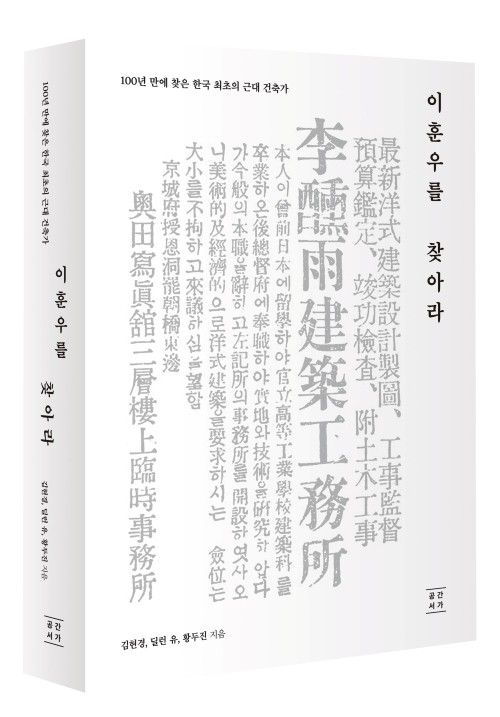
Of the book’s four chapters, the first, which recounts how the book came about, reads like a detective story. From 2017 until recently—a period of nearly nine years—the three traveled around Seoul, Jinju, Hadong, Yangju, the United States and Japan, pursuing the story with every fact and contact network at their disposal.
It began when architect Doojin Hwang, who was hosting the Seoul Philharmonic Orchestra’s “After-Work Concert” at Cheondogyo Central Temple in Seoul’s Gyeongun-dong in 2017, read a sentence while looking through some materials. Next to Cheondogyo Central Temple had stood a building that has since been demolished, the “Daesinsa Centennial Memorial Hall” (construction began in 1924; capacity: 1,000), and the sentence read, “The design was by Lee Hun-woo.”
After coming across this, Doojin Hwang became fascinated with the figure of Lee Hun-woo. Hwang’s acquaintance Dylan Yu searched databases and confirmed that the name Lee Hun-woo appeared in a 1921 issue of the Cheondogyo magazine Gaebyeok. The two regularly posted updates on Facebook about their search for Lee Hun-woo. Kim Hyun-kyung, who was preparing a doctoral dissertation in Tokyo, then said, “I’d like to help as a researcher of history.” The three opened a group chat on Facebook Messenger called “Find Lee Hun-woo.”
The three had different areas of interest, including architecture, history and academia, but communicated in real time in the virtual space of social media and frequently held “remote strategy meetings.” It was a new form of interdisciplinary research in which they developed ideas across boundaries. Working in their respective places and at their own times, they confirmed Lee Hun-woo’s dates of birth and death and his graduation from the architecture department of Japan’s Nagoya Higher Technical School through online searches and checks of historical records. They also visited Lee’s descendants and local sites to conduct interviews and seek firsthand assessments.
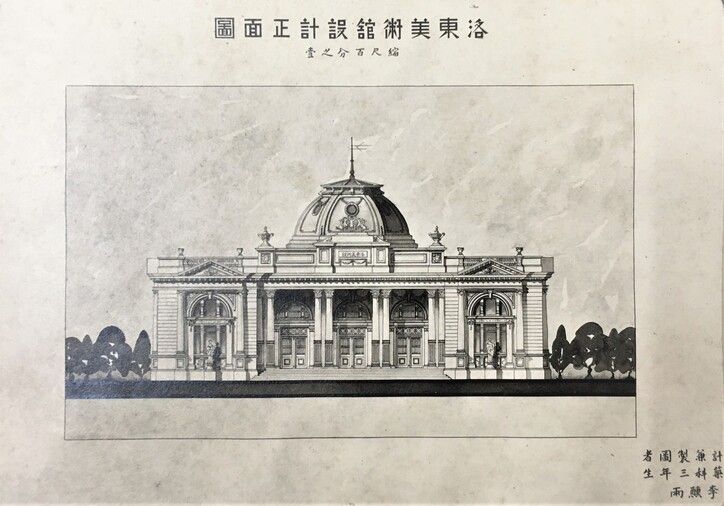
In Chapter 3, the latter part of the book, the authors compare the educational systems of Korea under Japanese rule and Japan at the time, as well as their architecture curricula, to understand the education that shaped Lee Hun-woo. Chapter 4 follows his path as a modern intellectual, examines his architectural inclinations and whether he was pro-Japanese, and adds a present-day assessment.
In that sense, this book is a chronicle of architect Lee Hun-woo’s life. At the same time, it is a work of historical commentary that enriches, restores and expands the sparse narrative of Korea’s early modern architectural history through meticulous archival research.
Author Kim Hyun-kyung earned master’s and doctoral degrees from Kyoto University in Japan and is now an assistant professor in the Japanese Language and Literature program at Myongji University. Dylan Yu, who graduated from Seoul National University and the business school at the City University of New York’s Baruch College, works for a financial information company in New York. Doojin Hwang, who studied at Seoul National University and Yale University, heads Hwang Doojin Architects.
[email protected] Jang In-seo Reporter