Kookmin University to Cultivate Interdisciplinary Talent for the Climate Crisis With 22 Years of 'Car-Free Campus' Know-How
- Input
- 2026-11-26 17:41:43
- Updated
- 2026-11-26 17:41:43
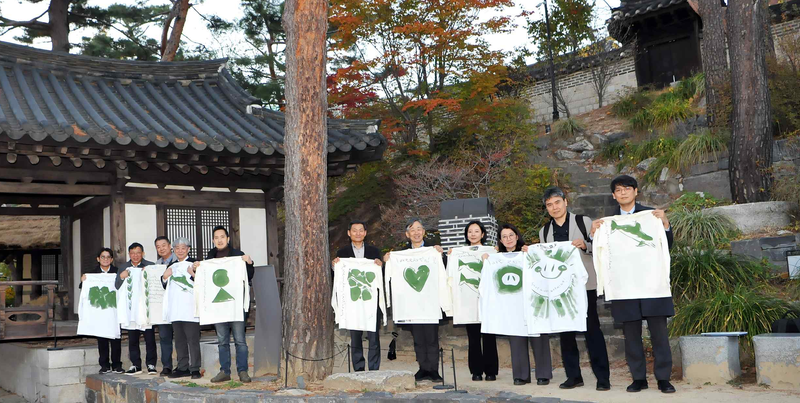
[Financial News] Kookmin University is stepping up efforts to train interdisciplinary talent who can directly address environmental problems in the era of climate crisis. The strategy is to extend across the training of future talent and campus operations the know-how in eco-friendly education and practices that the university has built up since 2003, when it began tending a small barley field on campus, and through its declaration of a “car-free campus” 22 years ago.
On the 26th, Kookmin University said its Climate Change Response Project Group held a seminar on the 6th at Haeongheon in Myungwon Museum on campus in Seongbuk District, Seoul, to discuss ways to connect the spirit of environmental action cultivated by past university members with education on responding to today’s climate crisis.
The most notable change is practical education that breaks down barriers between academic disciplines. Since being selected in 2023 as the lead university for the environmental track of the Ministry of Education’s Humanities and Social Sciences Convergence Talent Development Project (HUSS), Kookmin University has partnered with Duksung Women’s University, the University of Ulsan, Inha University and Chosun University to run a joint curriculum on “Coexistence and Mutual Growth in the Era of Climate Crisis.” The university has also actively introduced project-based learning (PBL), moving beyond lectures in which professors unilaterally impart knowledge and having students identify environmental problems in their communities and society and propose solutions themselves.
Carbon-neutral practices in daily life, with students taking part across campus, have also taken root. The university has expanded its eco-friendly facilities, including energy-saving campus policies, PET bottle collection machines and Bukak Market, a resource-circulation space where people share secondhand goods. The environmental clubs Net Zero and The Eco run a shared-umbrella program that lets people borrow umbrellas on rainy days and organize plogging activities, picking up litter while jogging. They are also joining forces with the Seongbuk District Office and Seoul YWCA to help address environmental issues in the local community.
These efforts have their roots in an environmental movement that began in 2003 with the cultivation of a barley field of about 10 pyeong in front of Kookmin University’s main building. The university put “green campus, green curriculum, green network” forward as its core values and, the following year, in 2004, declared a “car-free campus,” creating an eco-friendly educational environment conducive to walking and bringing a breath of fresh air to university communities across South Korea.
The faculty members and experts who attended the seminar agreed that environmental movements should not be limited to one-off campaigns but should become a core competitive strength of universities. Lee Chang-hyeon, a professor in Kookmin University’s School of Media and Advertising, stressed, “If past movements were attempts to change the lifestyles of university members, now we need to develop eco-friendly values into a distinctive brand unique to Kookmin University.” Han Gyeong-gu, former secretary-general of the Korean National Commission for UNESCO, also suggested, “To encourage students’ voluntary and creative environmental action, the value of sustainability must be woven throughout the curriculum.”
[email protected] Kim Man-gi Reporter