“The Current Government Is All In on Semiconductors, Has No Interest in Hydrogen”: Conservatives Compete for Future Growth Engines by Promoting Climate Tech
- Input
- 2026-11-26 16:56:26
- Updated
- 2026-11-26 16:56:26
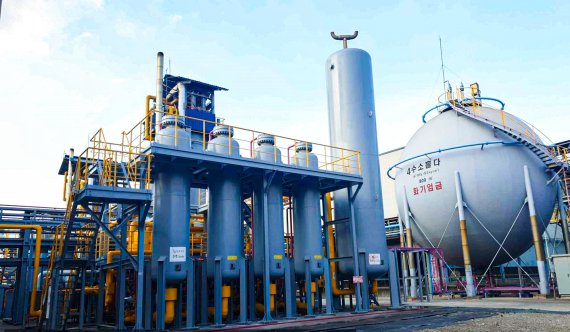
At a climate tech forum hosted by the Conservative Climate and Environment Network at the National Assembly Members’ Office Building on the 26th, People Power Party lawmaker Yoon Jae-ok criticized the government’s lack of consistency in industrial policy, saying, “Depending on what policies the country adopts, companies are likely to have a really hard time.” Yoon cited the hydrogen industry as a prime example. In contrast to the Moon Jae-in administration, which actively pursued the development of the hydrogen industry, “the current government is completely all in on semiconductors and pays no attention to hydrogen, so I’m concerned about how companies that have invested so far will struggle,” he said. Even if companies make proactive investments in line with government policy, they will find it difficult to secure industry competitiveness without sustained support, he said.
Reform Party lawmaker Cheon Ha-ram also stressed the need to expand support for and interest in climate tech to diversify growth engines, saying, “Rather than continuing to talk about and focus only on semiconductors.”
Conservatives plan to provide legislative support for this effort. People Power Party lawmaker Kim Sohee, who introduced the Special Act on Promoting Climate Tech, said, “My current goal is to bring the climate tech bill forward and have it reviewed as quickly as possible.” The Democratic Party of Korea has also introduced a related bill.
The forum also featured a concrete plan to commercialize the hydrogen industry. Amogy, a U.S. company specializing in ammonia-based hydrogen power generation technology, announced plans to establish a gigawatt-scale mass-production facility and global export hub in Korea, starting at Samsung Heavy Industries’ Geoje site.
However, climate tech industries such as hydrogen require massive funding for demonstration projects and production facilities even after technology development, making it a challenge to close the investment gap at the commercialization stage.
In response, Lee Jong-min, CEO of KEPCO Technology Holdings, proposed a support plan combining a scale-up fund focused on investment in companies’ mass-production and business-expansion stages, demonstrations using KEPCO’s power grid, and purchase-linked contracts. The plan is to provide investment capital and initial sales channels through the public sector to encourage follow-on private investment and foster at least 10 domestic energy unicorns.
[email protected] Jiwon Song Reporter