Plagiarism Allegations, Chinese Government Advisory Role Among a Host of Issues as Second-Round Foreign Affairs, Unification and Security Chiefs Face Tense Confirmation Hearings
- Input
- 2026-11-26 16:33:44
- Updated
- 2026-11-26 16:33:44
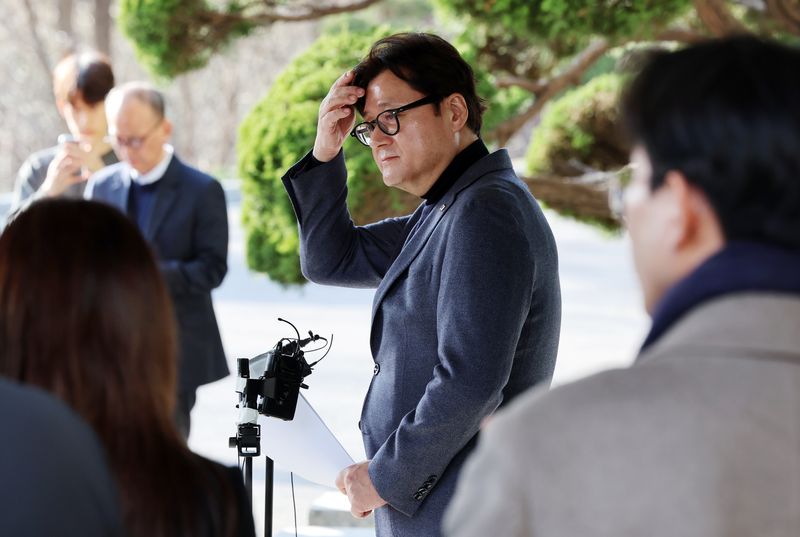
Hong said he was willing to adjust the pace of peace policy on the Korean Peninsula when he met with reporters covering the ministry at the Inter-Korean Talks Headquarters in Jongno District, Seoul, that day. Asked about future policy toward North Korea, he said, “We won’t rush, but we won’t stop either.”
Hong also said, “The severance of inter-Korean ties has left us with many challenges,” adding, “We need to build a Korean Peninsula that develops through mutual prosperity.” He indicated that he was open to changing the use of the term “people from the North,” one of the policies pursued by Minister Jeong. “We will make practical adjustments to the use of terms such as ‘people from the North’ by gathering views within the Ministry of Unification and building public consensus,” Hong said. He took a position similar to Minister Jeong’s on the ministry’s “peaceful two-state theory.” “With the two Koreas joining the UN simultaneously in 1991, they are de facto two states under international law. But I am not endorsing that view simply because Chairman of the State Affairs Commission Kim Jong Un talks about two states,” he stressed.
He also addressed allegations of self-plagiarism in his doctoral dissertation. “Under the current rules, it is true that there are aspects of plagiarism,” he said, but added that “there were no such rules when I wrote the dissertation,” arguing that, broadly speaking, there was no problem. Hong also said, “They say a plagiarism rate of 10% or less is acceptable, and mine does not exceed 10%.”
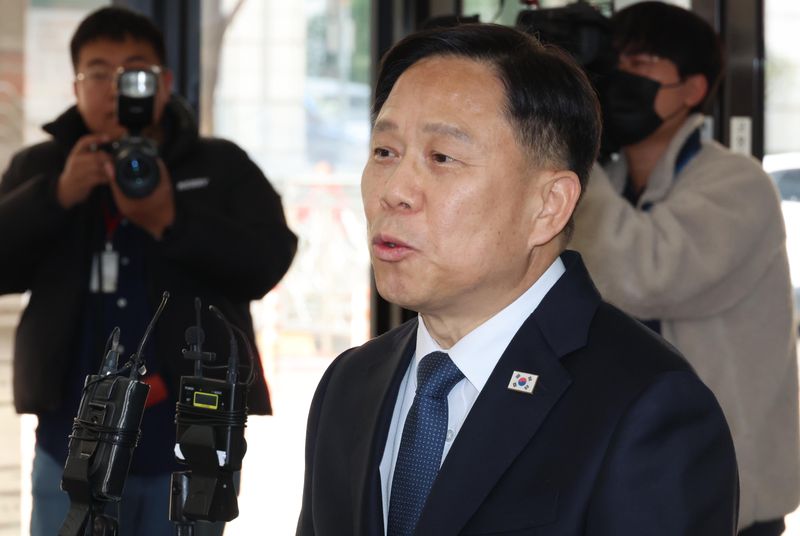
Lim Woong-soon, nominee for foreign minister, signaled that he would pursue pragmatic diplomacy in relations with the United States and China. On his first day reporting to the office set up to prepare for his confirmation hearing in Sejongno, Seoul, he said, “Both the Korea-U.S. alliance and Korea-China relations are important to us.” He also said, “The Korea-U.S. alliance is not so fragile that it can be swayed by a particular issue.”
Regarding how to coordinate North Korea policy, which has been a source of disagreement between the Foreign Ministry and the Ministry of Unification, Lim said, “I basically think the directions pursued by the departments dealing with foreign affairs are the same.” Asked what President Lee Jae Myung had asked of him, Lim said, “I believe the president wants the Foreign Ministry to make every effort to respond proactively to businesses’ difficulties, the concerns raised by compatriots, and even the smallest problems.” He also signaled a willingness to reform practices at the Foreign Ministry.
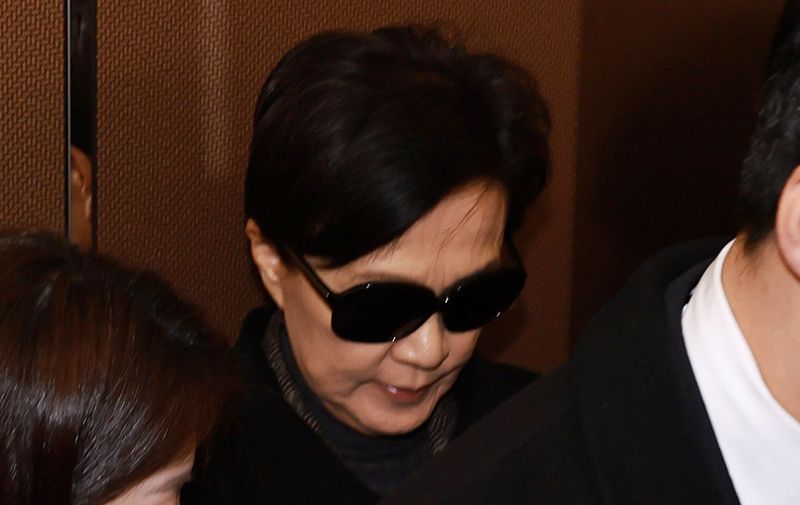
Kang drew attention on her first commute to prepare for her confirmation hearing with her black coat and sunglasses, but did not answer any of the reporters’ questions. The previous day, in response to reporters’ questions, she gave a brief reply only via a mobile phone message, saying, “I’ll begin reporting to work in earnest tomorrow, after the office is set up.” Kang is facing an intense offensive from the opposition over her record of serving as an adviser to a Chinese local government.
[email protected] Kim Kyung-soo Reporter