Livelihood Benefits Cut Off After Registering at Parents’ Home... Legal Battle in 'Visiting Litigation Aid Season 2'
- Input
- 2026-11-26 16:31:41
- Updated
- 2026-11-26 16:31:41
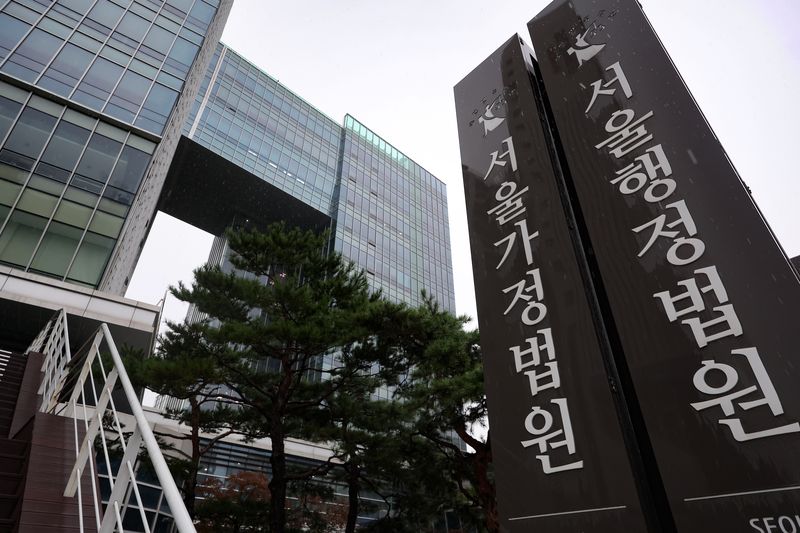
[Financial News] A court has pointed out the illegality of of the Ministry of Health and Welfare’s notice form and the retroactive suspension of benefits in a challenge brought against a district office by a recipient whose basic livelihood benefits were retroactively suspended for moving into their parents’ home. In particular, the court said it would examine whether the administrative action—retroactively suspending benefits solely on the basis of subordinate notice forms and guidelines, without properly providing the basis for the calculation—complied with higher-level laws.
On the 26th, the Seoul Administrative Court’s Seventh Administrative Division, presided over by Senior Presiding Judge Kang Woo-chan, held a hearing in a lawsuit brought by plaintiff A against the head of the Nowon District Office in Seoul, seeking to overturn the suspension of livelihood benefits. This is the first case under “Visiting Litigation Aid Season 2,” an initiative by the Seoul Administrative Court to provide court-appointed counsel in administrative cases. The court had previously granted A’s application for a stay of execution on August 26.
A, who had been receiving basic livelihood benefits, filed suit after the benefits were suspended because A’s parents’ general assets exceeded the threshold (350 million won under the separate-household standard), following A’s move to the parents’ address on May 19 and the resulting formation of a four-person household. The Nowon District Office suspended A’s livelihood benefit payment for June, sent a suspension notice on June 26, and issued a notice of suspension on the 30th of the same month.
Attorney Kang Seo-young, counsel appointed to represent A in the legal-aid case, focused on procedural violations in the process leading to the decision. Kang argued, “The official records of the parents’ assets that formed the basis for suspending the benefits were information A could not readily verify. Yet no specific calculation was provided, including how much of the parents’ assets and ownership shares had been counted or what the final combined amount was.” Kang added, “This is a social security case directly affecting a recipient’s minimum standard of living, so the failure to provide essential safeguards for their rights—including prior notice and an opportunity to submit an opinion—cannot be treated as a minor defect.”
The Nowon District Office countered that it had taken unavoidable action in accordance with regulations and guidelines. The district office’s counsel explained, “After A moved in, we reviewed both the criteria for treating them as part of the same household and the separate-household criteria, which include people aged 30 or older with chronic illnesses. But the parents’ general assets exceeded 350 million won, putting them over the threshold for the support-obligor criteria.” The counsel added, “We advised A to move out again by June 12, to a gosiwon or elsewhere, and even worked out how to provide assistance with gosiwon fees. We put the suspension of eligibility on hold, but A continued living at the parents’ home and asked to keep receiving benefits as a one-person household.”
The court, however, confirmed with the district office that the advance notice of suspension dated June 26 did not reach A until July 1, after the date of the decision (June 30). “Since it arrived after the decision, it cannot be considered advance notice,” the court noted.
The court also pointed to possible legal violations in the standard notice form prescribed by the Ministry of Health and Welfare and in the retroactive suspension of benefits. “The National Basic Livelihood Security Act requires the basis for calculations to be clearly stated, but the form prescribed by the Ministry of Health and Welfare only allows a box to be checked for ‘parental support.’ It is unclear whether the form adequately reflects the information required by law, such as the basis for calculating assets,” the court said. It added, “Officials followed the notice and guidelines, but the court must review whether the prescribed form complies with the law enacted by the legislature.”
Given the opportunity to speak directly, A said, “I filed complaints several times with e-People, the Ministry of Health and Welfare, the Board of Audit and Inspection, and the Anti-Corruption and Civil Rights Commission, as well as the Nowon District Office, but it always felt like shouting at a wall.” A added, “I lost my home and the foundation for my business, so I had no choice but to move into my parents’ home. But the district office’s written submission makes it seem as though I turned down an opportunity for support, which leaves me feeling dejected.”
A continued, “Thanks to the court granting my application for a stay of execution, I am receiving treatment and preparing to start a business again.” A asked the court to “overturn the decision so that recipients in even more difficult circumstances than mine will not suffer the same thing.”
The first-instance ruling is scheduled for January 28 next year.
[email protected] Chang-hoon Lee Reporter