More Than a Year of Free Bus Fares... 88% of Jeju Middle and High School Students Say They Use Public Transit More, Call for Better Frequency and Routes
- Input
- 2026-11-26 16:01:25
- Updated
- 2026-11-26 16:01:25
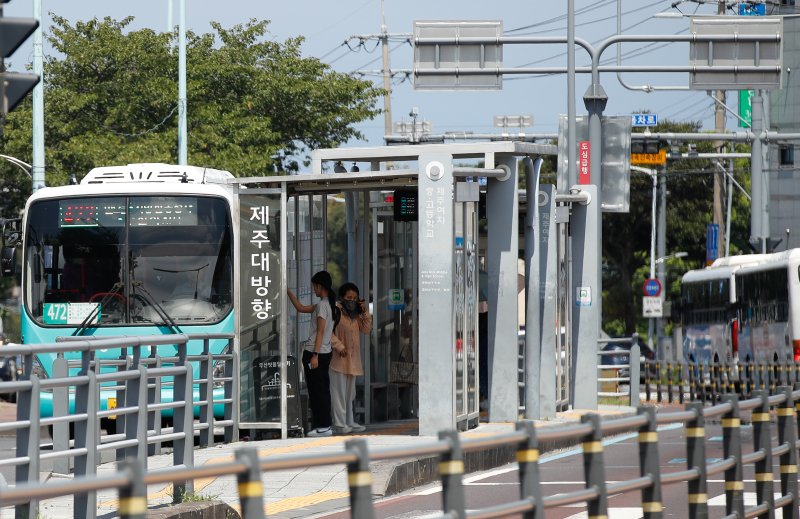
【Financial News Jeju = Reporter Jeong Yong-bok】 In Jeju, where bus fares for youths have been made completely free, 87.9% of middle and high school students surveyed said they used public transit more often. Policy satisfaction reached 93%, but shortening service intervals, expanding routes and adding buses during school commuting hours remain areas for improvement.
According to the Jeju Special Self-Governing Province Office of Education's “Results of the 2026 Survey on the Free Public Transportation Program for Youth,” on the 26th, 2,643 (81.2%) of the 3,257 students surveyed said they were very satisfied with the fare-free policy. Another 386 (11.9%) said they were generally satisfied.
From the 10th to the 18th, the Jeju Office of Education conducted an online survey of 2,191 middle school students and 1,066 high school students in the province. The survey had 16 questions on public transit use, satisfaction with the policy and requests to improve commuting conditions, among other topics.
Jeju made bus fares completely free for youths aged 13 to 18 starting on August 1 last year. It is a transportation welfare policy that Jeju Province says it was the first metropolitan-level local government in the country to introduce.
The program expanded existing commute-fare support for middle and high school students to include out-of-school youths. With a Jeju Transportation Welfare Card, they can ride city buses, express buses and airport limousine buses free of charge, regardless of the purpose or number of trips.
Actual transit card usage figures also show the scale of the program. According to figures on free transit use by children and youths released by Jeju Province in April, the cumulative number of trips over the seven months from August last year through February this year was 4.83 million, with fare savings totaling about 4.1 billion won. Of the approximately 86,000 eligible people, 59,421 registered a Transportation Welfare Card and used it.
The survey found that fare support helped students not only with their commutes but also with educational and cultural activities outside school. Compared with before the free-fare policy took effect, 70.8% said they used public transit much more often, while 17.1% said they used it somewhat more often.
A total of 93.4% said the policy helped with commuting, and 92.8% said it improved the convenience and independence of getting around. In response to whether it had become easier to travel on their own without a guardian's help, 90.9% gave a positive answer.
As many as 93% said the policy helped them travel for activities outside their commutes, including private academies, education and cultural activities, as well as daily needs. In a multiple-response question on reasons for using free public transit outside commuting, private academies and educational activities accounted for the largest share of selections, at 31.4%. They were followed by leisure and cultural activities (25.5%), visits to friends and family (16.6%), learning activities such as going to libraries (10.7%), and everyday trips such as visits to hospitals (8.5%).

Buses were students' most common means of commuting, at 45.2%. They were followed by a guardian's car (30.3%), walking (17.4%) and school buses (4.3%).
A total of 1,755 students (53.9%) said they used free public transit almost every day to get to and from school. Including those who used it occasionally, 85.4% of all respondents used free public transit for their commutes.
Although the cost burden had eased, there were also clear calls to improve bus service. A total of 615 students, or 18.9% of respondents, had a one-way commute of 30 minutes or longer. Of these, 147 students (4.5%) said it took at least an hour to get to school.
Among 5,828 multiple responses on ways to improve public transit, the most common request was shorter intervals between buses, with 1,879 responses (32.2%). This was followed by expanding or adjusting bus routes, with 1,434 (24.6%), and adding buses during school commuting hours, with 1,391 (23.9%).
The top three items accounted for 80.7% of all selections. In other words, students' requests for improvement centered on bus frequency, routes and transit services during commuting hours.
There were also calls to improve how the Transportation Welfare Card and other services are used (7.5%) and to strengthen safety management (5.7%). The findings show that, to make youth transportation welfare more effective, fare support must be backed by transit services that let students travel to their desired destinations when they need to.
The Jeju Office of Education plans to share the survey results with Jeju Province and use them as basic data for improving bus schedules and routes to reflect commuting needs at individual schools.
Kim U-cheol, head of the Safety Management Division at the Jeju Office of Education, said, “This survey confirmed that the free public transportation policy for youths is providing practical help with students' commutes and making it easier for them to get around. We will continue to consult and work with relevant agencies to ensure that the improvement requests raised by students can be reflected in future programs.”
[email protected] Jeong Yong-bok Reporter