Savings Bank Rates for Mid- and Low-Credit Borrowers: '15%→10%'...Commercial Banks to Supply 500 Billion Won in Inclusive Loan Funds to Second-Tier Financial Institutions
- Input
- 2026-11-26 16:01:53
- Updated
- 2026-11-26 16:01:53
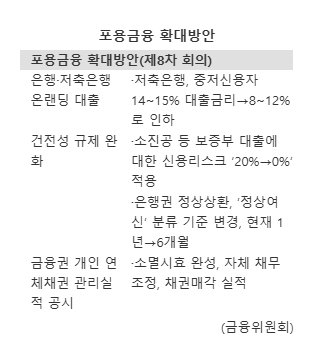
Under the plan, banks will provide funds to savings banks, which will use the money to lend to mid- and low-credit borrowers through an 'inclusive on-lending loan' program. This will reduce banks' burden of lending directly to these borrowers. Savings banks will be able to lower their funding costs, giving them room to cut interest rates for mid- and low-credit borrowers by 3–5 percentage points from current levels.
To encourage banks to participate, the FSC plans to count banks' on-lending loan performance toward their Saehuimangholssi Loan (a credit loan product for low-income households) performance, and offer other incentives, including exempting them from contribution payments to the Korea Credit Guarantee Fund, Korea Technology Finance Corporation and regional credit guarantee foundations. The final loan rate is expected to average around 10%. Eligible borrowers will have annual income of 40 million won or less, or a credit score in the bottom 20% and annual income of 50 million won or less. Loans will be capped at 35 million won per person. The measure is intended to address the 'interest-rate cliff' in which rates for mid- and low-credit borrowers at second-tier financial institutions, including savings banks, rise sharply.
The FSC plans to grant regulatory exemptions through a project-based regulatory sandbox designation to help commercial banks provide funds smoothly to savings banks affiliated with financial holding groups. The Banking Act and the Financial Holding Companies Act currently restrict credit extensions and other support to affiliated savings banks. The plan is to make exceptions to these rules or simplify them.
Financial authorities also plan to ease prudential regulations to expand inclusive finance. They will eliminate the 20% risk weight on loans guaranteed by the Small Enterprise and Market Service, reducing it to 0%. In the insurance sector, the Korea Inclusive Finance Agency will be recognized as an eligible guarantor under the Korean Insurance Capital Standard (K-ICS) solvency ratio framework, lowering the risk weight applied to guaranteed loans from 8% to 2.5%.
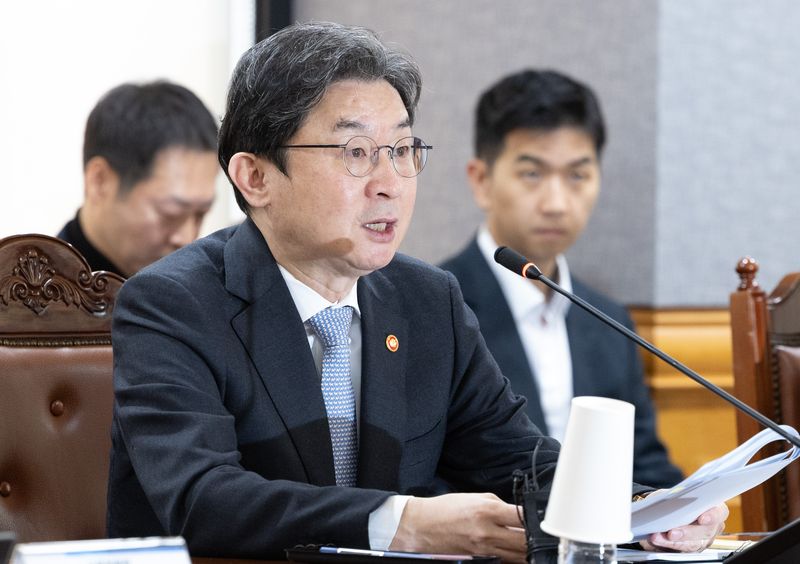
Other measures include expanding banks' use of alternative credit-scoring models; classifying loans from banks, insurers, credit finance companies and savings banks as 'normal loans' after six months of regular repayments; and classifying card companies' loans as normal claims when debt is restructured. Financial Services Commission Chairman Lee Eog-weon said, "The five major financial holding companies had disbursed about 14 trillion won in inclusive finance through the second quarter, and both the banking sector's Saehuimangholssi lending and its social contribution performance are at record highs." He added, "We will rationalize regulations, including by improving capital rules, to ensure inclusive finance can continue."
Meanwhile, in the first half of this year, the financial sector, in line with the government's inclusive finance policy, allowed the statute of limitations to expire on or prematurely wrote off 355,000 personal delinquent debt claims totaling 1.6 trillion won.
[email protected] Jo Eun-hyo Reporter