“Son With a School Bullying Record Rejected by All Six Early-Admission Programs... Is This a Fair Price to Pay?” Father’s Lament [What Do You Think?]
- Input
- 2026-11-26 15:29:06
- Updated
- 2026-11-26 15:34:05
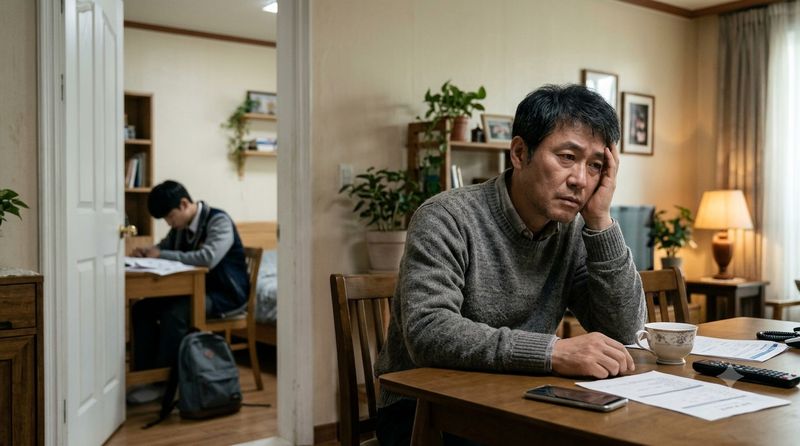
[Financial News] A father lamented that his high school senior son, who has a history of school bullying, was rejected by every university he applied to through early admissions, drawing a wave of cold responses.
On the 26th, a post titled “Son Rejected by All Early-Admission Programs Because of His School Bullying Record” spread across online communities and social media (SNS).
“My Son Was Disciplined for School Bullying in Middle School. Is This a Fair Price to Pay?”
The post’s author, identified as Mr. A, said he was a 49-year-old man working in the financial sector. He wrote that his high school senior son had been rejected by every university he applied to through early admissions because of his school bullying record, and that he did not know how to comfort him.
“My son, a high school senior, was rejected by all six places he applied to through early admissions this year. His grades weren’t bad, and his teachers had said he had a good chance of getting into those schools,” Mr. A began. “But when every result came back as a rejection, my wife and I were both at a loss for words.”
The reason cited for the early-admission rejections was Mr. A’s son’s record of school bullying. He explained that his son had been disciplined for ostracizing a classmate in a group chat when he was in his third year of middle school.
He claimed, “He was young and immature then. My wife and I went to the other child’s parents and apologized in person, and our son sincerely regretted what he had done,” adding, “After that, he got through high school without any major problems.” But after a schoolteacher recently told him that the past school bullying record may have affected the admissions results, he took to the internet to express his frustration.
Mr. A said, “They told me they couldn’t know the exact reason, but that comment keeps bothering me,” adding with sadness, “Since the day he saw the results, my son has hardly left his room and hasn’t been eating well.” He also said, “He was definitely in the wrong. When I think about how much the student who was victimized must have suffered, I feel I have no right to defend my child.” But he added, “Seeing that mistake follow him for so long and my child fall apart like this, I don’t know if this is a fair price to pay.”
He asked for advice, saying, “There’s still the regular admissions round, but my son says, ‘I don’t want to do anything anymore.’ As his father, I don’t know what to say to him. I don’t even know how to start a conversation that offers both remorse and comfort.”
Internet users reacted coldly to Mr. A’s story. One criticized him, saying, “He failed to raise his child properly, and now he’s getting back what came from his son being involved in school bullying.” Another user also said, “If something he did in middle school was serious enough to keep him from getting into college, it must not have been something to take lightly,” and expressed sympathy for the victim, asking, “How long must the student who was bullied have suffered?”
Some users, however, argued that it was far too harsh for an incident from middle school to affect someone’s chances of going to college, and said the issue needed to be discussed more broadly in society.
A history of school bullying can make college admission virtually impossible
In its Comprehensive School Violence Eradication Plan, announced in February 2023, the Ministry of Education made it mandatory to take school bullying records into account in every admissions track, both early and regular, starting with the 2026 academic year. Accordingly, major universities have introduced qualitative assessments and quantitative point deductions based on the severity of disciplinary measures to screen applicants with a history of school bullying, regardless of the admissions round.
According to data titled “Status of School Bullying Record Consideration in 2026 Early-Admission Tracks,” released in January this year by the office of Jin Sun-mee, a Democratic Party of Korea lawmaker on the National Assembly’s Education Committee, 149 of 150 applicants (99.3%) with a school bullying record were rejected by 10 major universities in Seoul.
At 170 universities nationwide, 2,460 of 3,273 applicants (75.2%) were also rejected. In regular admissions, 26 of 28 applicants (92.9%) were rejected at 10 major universities, while 535 of 593 applicants (90.2%) were rejected at 165 universities nationwide.
A history of school bullying can lead to point deductions or disqualification not only in student-record-based admissions but also in essay-based and College Scholastic Ability Test (CSAT)-based regular admissions. Korea University deducts up to 20 points, depending on the admissions track, while some universities, including Seoul National University of Education and Busan National University of Education, have made disqualification the rule for applicants with a school bullying record, regardless of the track.
[email protected] Kim Hee-sun Reporter