Ministry of Education: “Expanding Teachers’ Discretion Over Educational Activities... Long-Term Discussions on an Exception to Referring Every Case” [Q&A]
- Input
- 2026-11-26 14:43:06
- Updated
- 2026-11-26 14:43:06
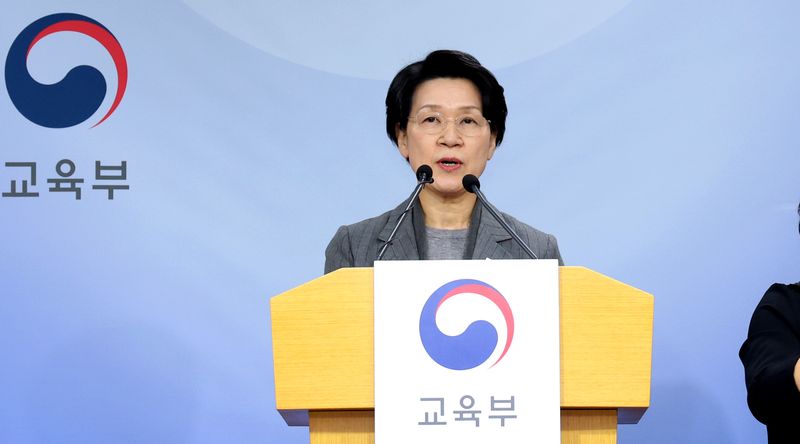
[Financial News] More than three years after the Seoi Elementary School teacher’s death in the line of duty, the government has decided to clarify the concept of emotional abuse under the Child Welfare Act. The aim is to reduce baseless child abuse reports by broadening teachers’ discretion over educational activities. However, an exception to the principle of referring every child abuse case to prosecutors—a measure the education sector has repeatedly called for—was not included in this plan because the relevant ministries disagreed. The plan also sets no specific deadline for handling investigations, leaving open the question of how much it will ease the burden of investigations on teachers.
The following is a Q&A with officials from the Ministry of Education and the Ministry of Health and Welfare, including Jang Hong-jae, director of the Ministry of Education’s School Policy Office, on the 26th.
- Why maintain the principle of referring every case even when the police find no grounds for prosecution?
△ (Lee Kang-bok, an official in charge of supporting teacher education autonomy at the Ministry of Education) Four bills to amend the Act on Special Cases Concerning the Punishment of Child Abuse Crimes are pending in the National Assembly. Even if a superintendent of education says the activity was part of normal teaching and the police find no grounds for prosecution, the principle is to refer every child abuse case because of the issue’s symbolic significance and seriousness. Relevant ministries believe the matter warrants more cautious, long-term discussion, taking into account concerns about fairness if only teachers are exempted, as well as the risk of prolonged proceedings due to appeals. This time, we plan to announce first the measures agreed upon between the ministries and move quickly to implement them.
- What led the relevant ministries to reach an agreement? Is further consultation needed?
△ (Ministry of Health and Welfare) Many bills to amend the Child Welfare Act have been introduced since the Seoi Elementary School teacher case. Some included a proviso to the definition of emotional abuse along the lines of, “However, teachers are excluded.” We have taken a cautious approach because the principle is that the basic law for child protection cannot make an exception for only a particular group or category. This plan is not about changing how child abuse is determined; it is about improving the reporting system. The relevant ministries agreed that clarifying the concept of emotional abuse might help reduce baseless reports. The key is how to strike a balance between protecting teachers and safeguarding students’ right to learn and other rights. I believe we can continue consulting on practical guidance and reflect views from the field during the process of amending the law.
- Aren’t the Supreme Court of Korea’s precedents also vague about the criteria for determining emotional abuse?
△ (Ministry of Education) The amendment to the Child Welfare Act will reproduce the wording of the Supreme Court of Korea’s precedents as is. We also sought to add to the Elementary and Secondary Education Act the criterion of “a case that significantly exceeds the reasonable bounds under social norms.” Given the wide range of educational activities, it is practically impossible to specify every action that would constitute child abuse. By using the term “significantly exceeds,” we sought to broaden teachers’ discretion over educational activities to some extent.
△ (Ministry of Health and Welfare) We need to distinguish between reporting suspected child abuse and determining whether abuse has occurred. Even now, anyone can report suspected child abuse. After consultations between ministries and meetings with practitioners, legal experts and child-welfare experts, we concluded that the precedents established by the Supreme Court of Korea offered the most acceptable standard for making that determination.
- What grounds are there for finding no suspicion before an investigation begins? If there is no evidence of abuse and the superintendent also considers the activity legitimate teaching, is the case closed?
△ (Jang Hong-jae, director of the Ministry of Education’s School Policy Office) Of the 2,321 child abuse reports made over the past three years, superintendents of education found that 1,719 involved legitimate educational activities. Of the 1,323 cases among these that were closed, 358 (27.1%) were closed before an investigation began. Many reports can be assessed by the police even before a full investigation begins, such as those based on a student’s subjective discomfort or those that contain no specific alleged misconduct. The police say they will close a case promptly before formally booking it if there is no basis whatsoever for treating the report as factual. However, the Ministry of Education cannot comment on individual cases.
- What educational activities will receive new protection as a result of the law’s amendment?
△ (Director Jang) Under the current Child Welfare Act, the reasonable bounds of educational activities are somewhat unclear. With criteria in place, we expect educational activities to be recognized far more robustly than under current law when parents make reports, investigative authorities conduct inquiries and courts make decisions.
- Will teachers be free from child abuse reports for giving milk late, warning students who disrupt class, or waking students who have fallen asleep?
△ (Ministry of Education) When a report is filed, the police conduct a preliminary inquiry and, if necessary, formally register the case before proceeding with an investigation. This is for investigative authorities to decide, so it is difficult for the Ministry of Education to say whether such actions are allowed or not. We expect many more cases to be closed before they are formally registered. Reports based on simple subjective discomfort or dissatisfaction should also decline, and cases are more likely to be closed quickly during the investigation process.
- How much will the investigation period be shortened?
△ (Ministry of Education) It is difficult to set a uniform investigation period for the police or prosecutors because what must be assessed differs from case to case. The ministries have continued discussing how long the processing period should be, but we did not include a specific timeframe because of various concerns about investigative difficulties that could arise if one were set. Instead, we agreed to work toward closing cases as quickly as possible to ease the burden on teachers and to reflect this in guidelines related to investigations and the Public Prosecution Office.
- Why were measures to strengthen criminal penalties for parents who make baseless reports and to seek reimbursement for government-funded legal fees left out?
△ (Director Jang) Measures to address baseless child abuse reports are included in the plan announced last January. Superintendents of education have been authorized to file complaints, and in consultation with metropolitan and provincial offices of education, we are taking steps to actively file complaints over baseless or malicious child abuse reports. As for legal fees, I understand there is a procedure to claim them separately under criminal proceedings once a lawsuit is underway and the review has concluded.
- Could stronger requirements for recognizing child abuse weaken protection for students who have actually been harmed?
△ (Ministry of Health and Welfare) We focused on improving predictability for people in the field while maintaining the principle of child protection and without substantially undermining the existing scope of emotional abuse. We concluded that the Supreme Court of Korea’s precedents are consistent with the principle of child protection, since they interpret the current provisions. Even after the law is amended, the Ministry of Education will lead an interagency working group to discuss together what should be included in detailed guidance.
[email protected] Lee Bomi Reporter