Constitutional Court of Korea Unanimously Rules 180-Day Pre-Election Ban on Distributing or Circulating Documents Unconstitutional
- Input
- 2026-11-26 14:36:55
- Updated
- 2026-11-26 14:36:55
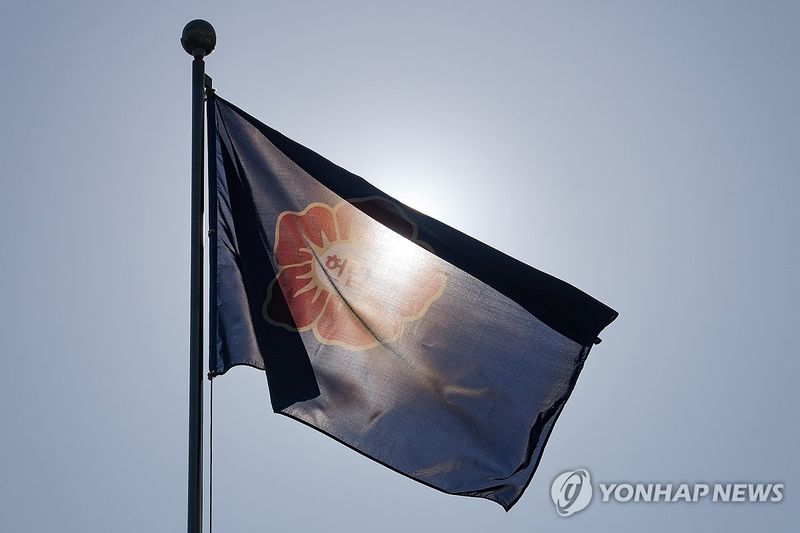
[Financial News] The Constitutional Court of Korea has ruled unconstitutional a provision of the former Public Official Election Act that prohibited distributing or circulating documents to influence an election from 180 days before election day through election day, and subjected offenders to criminal penalties.
On the 26th, the Constitutional Court of Korea unanimously ruled the relevant provisions unconstitutional in a constitutional review case concerning the part of the main text of Article 93(1) of the former Public Official Election Act on “distributing or circulating documents” and the corresponding penalty provision in Article 255(2)(5).
The provision prohibits distributing or circulating documents containing content that supports or recommends, or opposes, a political party or candidate, among other things, for the purpose of influencing an election from 180 days before election day through election day. Violators are subject to up to two years in prison or a fine of up to 4 million won.
The Constitutional Court recognized the legitimacy of the legislative aims of ensuring fair elections and preventing imbalances caused by differences in candidates’ financial resources. However, it found that the provision excessively restricted ordinary voters’ freedom of political expression.
The Constitutional Court noted, “For ordinary voters, this effectively results in depriving them of the opportunity to express themselves politically by distributing or circulating documents.”
It went on to say that, given the reality that various elections follow one another and overlap, long-term restrictions would continuously suppress the public’s freedom to speak on election-related matters.
The Court found that imbalances in electoral opportunities caused by differences in candidates’ financial resources could be prevented through measures such as limits on election expenses and reimbursement schemes, or restrictions on the types and sizes of media. It explained that false information and slander could likewise be addressed through provisions directly prohibiting and punishing such acts.
A and others were indicted on charges including distributing documents bearing the name of a person seeking to become a candidate, with the intent of influencing an election. In May 2023, they were sentenced to fines of 1.5 million won and 500,000 won, respectively. They requested a referral for constitutional review during their appeals, and the Busan High Court granted the request.
The case of B, who was fined 1 million won for allegedly circulating documents containing content supporting or recommending a candidate, among other things, was also consolidated for review after the Seoul High Court referred it for constitutional review following the Supreme Court’s reversal and remand.
Justices Jeong Jeong-mi, Cho Han-chang and Jeong Gye-seon agreed with the conclusion that the provisions were unconstitutional, but issued separate opinions differing on the legislative feasibility of the alternatives proposed in the majority opinion and the effectiveness of the regulations.
The Constitutional Court issued an outright ruling of unconstitutionality, taking into account that an amendment to the law in August 2023 shortened the restriction period from 180 days to 120 days, leaving no possibility that the provision would be applied in the future.
[email protected] Yoo Seon-jun Reporter