Half of City Buses Are Low-Floor Buses... 16.46 Million People With Mobility Challenges, ‘One in Three Citizens’
- Input
- 2026-11-27 06:00:00
- Updated
- 2026-11-27 06:00:01
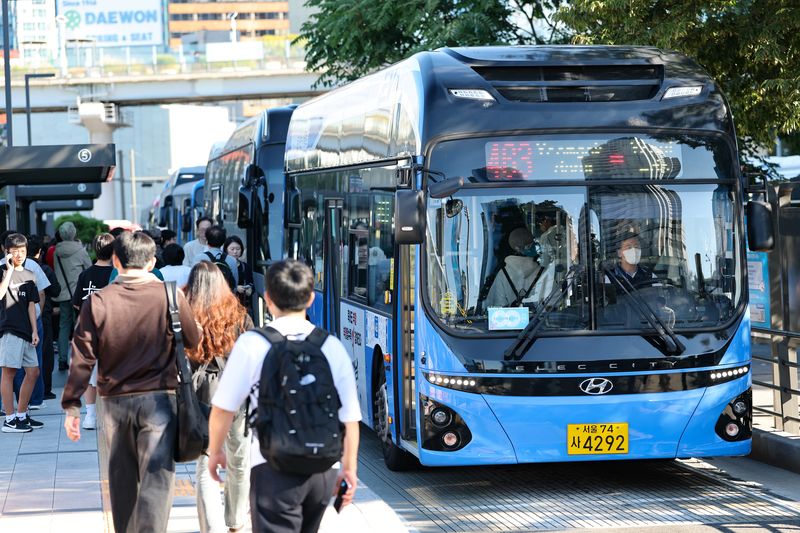
[Financial News] The share of low-floor buses among city buses nationwide has exceeded 50% for the first time.
According to the results of the 2025 Survey on Mobility Convenience for People with Mobility Challenges, announced by MOLIT on the 27th, there were 18,160 low-floor city buses last year, accounting for 51.8% of the fleet. The number rose by 2,417 in a year, pushing the rate up 7.4 percentage points. By region, Seoul had the highest rate at 73.7%, while Jeju recorded the largest increase, rising 20.6 percentage points over the year. The number of routes served by low-floor buses rose by 809 to 3,726.
People with mobility challenges include people with disabilities, adults aged 65 or older, pregnant women, people accompanying infants and toddlers aged 7 or younger, and children aged 12 or younger—in other words, people who experience difficulty getting around. At the end of last year, they numbered 16.46 million out of a total population of 51.12 million, up by about 330,000 from 16.13 million (31.6%) a year earlier. Older adults drove the increase, rising by 584,000, while the number of pregnant women also grew by 16,000. By contrast, the number of children fell by 125,000 and that of people accompanying infants and toddlers by 101,000.
The rate of facilities installed in compliance with standards for transport modes, passenger facilities and pedestrian environments in special and metropolitan cities reached 86.1%, up 12.9 percentage points from 73.2% in 2014. MOLIT changed its survey methods to improve reliability. Urban and metropolitan rail stations and railway stations, which had previously been tallied together by facility type, were surveyed individually, facility by facility. For passenger ships, a specialized marine agency conducted a complete survey instead of relying on transportation operators’ own surveys. As a result, some facilities recorded lower figures than before, but the overall compliance rate rose.
By category, passenger facilities (84.4%) and pedestrian environments (86.0%) improved by 1.6 and 1.3 percentage points, respectively, from 2023. The rate for road passenger terminals surged by 10.7 percentage points to 80.6%, with Daejeon—which consolidated and newly established Yuseong Complex Terminal—recording the highest rate at 90.2%. Airport passenger terminals scored 94.1%, and all nine airports surveyed exceeded 90%; Ulsan Airport ranked first at 99.0%. Bus stops, on the other hand, rose by 2.3 percentage points to 64.0%, but remained at a low level. In pedestrian environments, Daejeon, Ulsan and Sejong improved by around 10 percentage points or more, while Gwangju remained at 76.7%.
Jang Gu-jung, MOLIT’s director general for comprehensive transportation policy, said, “Thanks to the continued attention and efforts of local governments and transportation operators, the rate of mobility convenience facilities installed in compliance with standards in special and metropolitan cities has risen from 73.2% in 2014 to 86.1% in 2025 over the past decade or so. The travel environment for people with mobility challenges is steadily improving, with the share of low-floor city buses also surpassing 50%. We will continue to actively promote the introduction of metropolitan-area low-floor buses and draw up a ‘Mobility Convenience Promotion Plan for People with Mobility Challenges’ setting out policy directions for the next five years. We will continue working to improve the travel environment in ways that people with mobility challenges can experience in their daily lives.”
[email protected] Jeong Gyeong-su Reporter