Next Year, Applications to Open for 56,000 Public Housing Units in the Seoul Metropolitan Area... LH Funding Burden Remains a Challenge
- Input
- 2026-11-26 14:00:00
- Updated
- 2026-11-26 14:00:09
[Financial News] The Ministry of Land, Infrastructure and Transport will invite applications next year for 56,000 public housing units in the Seoul metropolitan area. That is about twice the average number of units offered over the past five years. The government plans to accelerate supply to consolidate the slowdown in Seoul home-price growth. However, as the public sector’s role expands through measures such as purchase commitments for unsold homes and an expansion of purchase-rental housing, the funding burden on Korea Land and Housing Corporation (LH) remains a challenge.
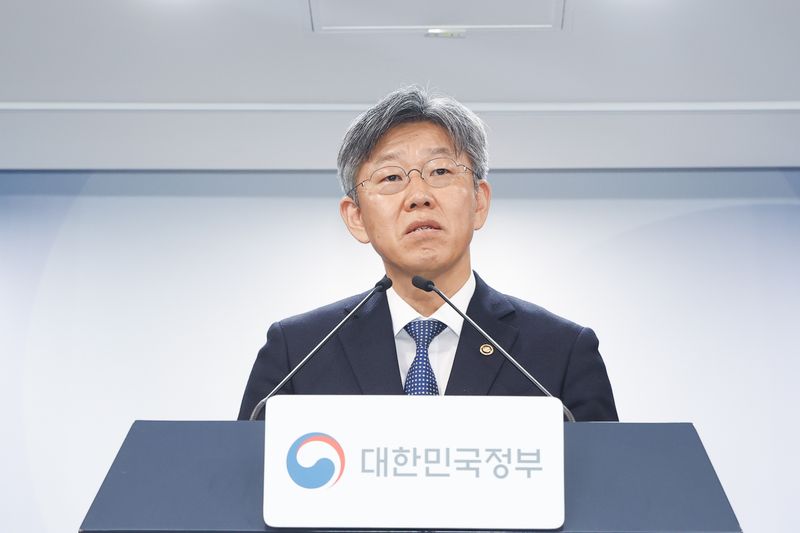
Kim Yi-tak, First Vice Minister of MOLIT, said this at the fourth regular housing supply briefing at the Government Complex Seoul on the 26th.
In 2027, the government will invite applications for a total of 56,000 public housing units in the Seoul metropolitan area, including 35,000 public-sale units and 21,000 public-rental units. That is twice the annual average of 28,000 units over the past five years (2021–2025), and about 44% more than this year’s forecast of 39,000. Vice Minister Kim said, “We will expand opportunities for people without homes who genuinely need housing to buy a home, and provide a robust housing safety net for people who need housing support, including young people and newlyweds.”
Public-sale housing will comprise 3,000 units in Seoul, 27,000 in Gyeonggi Province and 5,000 in Incheon. Supply will focus on 2nd and 3rd Generation New Towns and major downtown locations. A total of 6,800 units will be offered in Namyangju Wangsuk, a 3rd Generation New Town, with additional sales in Suwon Dangsu (3,200 units), Ansan Jangsang (1,800), Siheung Geomo (1,300), Seongnam Bokjeong (735) and Hwaseong Dongtan (464). Sales through the urban public housing complex project will also get underway in earnest. For the first time, applications will be invited for 3,800 units in urban station areas, including 500 at Seoul’s Ssangmun Station, 300 at Banghak Station and 3,000 at Incheon’s Jemulpo Station.
The number of units targeting young people and newlyweds will also increase. Around 2,700 shared-equity public-sale housing units, introduced this year, will be offered in Namyangju Wangsuk and Suwon Dangsu, among other locations. After fast-tracking legislation for Profit-Sharing Type II, the government will consider offering around 1,000 units.
Public-rental housing will comprise 1,000 units in Seoul, 17,000 in Gyeonggi Province and 3,000 in Incheon. Supply will include 2,100 units in Namyangju Wangsuk and 1,100 in Bucheon Daejang, both in 3rd Generation New Towns, as well as 354 in Seoul’s Yeongdeungpo District, 406 in Gwacheon Juam and 362 in the Guri Galmae Station area. Applications for public-rental housing will be invited earlier, moving from one year before planned occupancy to two and a half years before, the same lead time as for public-sale housing. Next year, 10,000 units nationwide, including 9,000 in the Seoul metropolitan area, will be eligible for early application. Jeong U-jin, head of MOLIT’s Housing Supply Promotion Headquarters, explained, “Since jeonse and monthly rental contracts typically last about two years, we decided it would be better for people to be able to plan a move or their housing situation roughly two years in advance.”
The measures will also ease the burden of unsold homes on private-sector projects. Purchase commitments for projects before construction begins have so far applied only to public land supplied by LH, but will now be expanded to all public and private land. Under the system, LH buys homes at an agreed price if they remain unsold. Eligible properties are apartments and row houses with an exclusive floor area of 30 square meters or more and 85 square meters or less, built on land for multifamily housing in regulated areas of the Seoul metropolitan area. Applications are limited to sites where construction can begin by 2028. Projects that break ground in the first half of next year will receive the maximum benefit under the agreed purchase price. Projects that pass review can enter into purchase commitments without a limit on the number of units and will also receive financial support, including project-finance (PF) loan incentives. The project notice will be issued in December. MOLIT plans to apply the same purchase-price system to private land as to public land. The eligible volume in the Seoul metropolitan area is estimated at 219,000 units, with a target of 38,000 units excluding reconstruction and redevelopment projects.
As the public sector takes on a growing share of unsold homes, concerns have been raised that LH’s funding burden will inevitably increase. Regarding funding for purchase-rental housing, Shin Yun-geun, MOLIT’s director general for land policy, said, “LH will fund it from its own resources, but if government support is needed later depending on how the housing is used, we will provide it.”
MOLIT also emphasized that home prices in Seoul have begun to stabilize. The rate of increase in Seoul apartment transaction prices fell from 1.27% in July to 0.54% in October. The rate of change this week was 0.01%, the lowest in 94 weeks, and prices fell in nine Seoul districts. As of the 25th, about 83,000 Seoul apartments were listed for sale, up 45.6% from the start of the year. Vice Minister Kim said, “We will further accelerate housing supply so that this trend of market stability can take firmer hold,” adding, “We will build homes faster and provide people with more opportunities to move in.” Asked about outlying areas of Seoul, where prices are still rising, he said, “Wouldn’t it be better to wait and see a little longer?”
[email protected] Jeong Gyeong-su Reporter