Starbucks CEO Shin Dong-woo Targets Q4 Turnaround... Starbucks Shifts to Quality-Focused Growth Next Year
- Input
- 2026-11-26 14:53:39
- Updated
- 2026-11-26 14:53:39
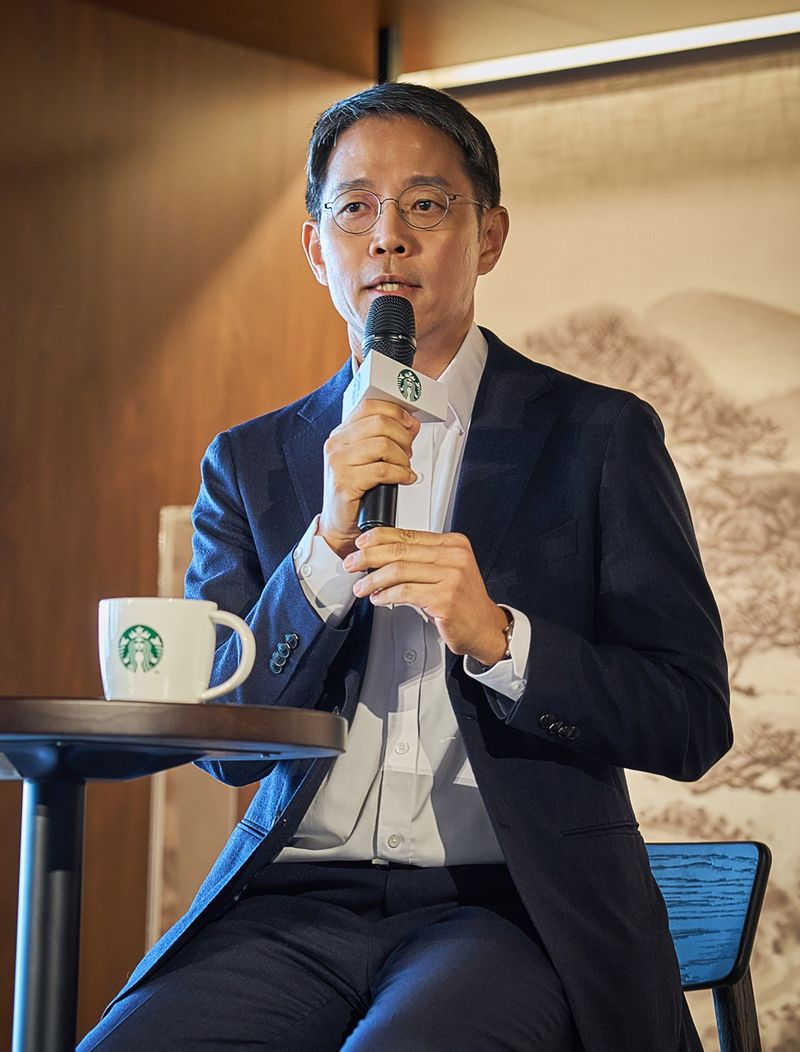
[Financial News] Starbucks Korea CEO Shin Dong-woo set a turnaround in fourth-quarter results this year as a target. The company aims to improve the quality of the brand experience and strengthen its focus on fundamentals, building on efforts to restore customer trust and drive quality-focused growth.
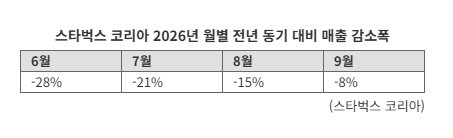
According to industry sources on the 26th, Starbucks Korea recorded losses in the second and third quarters of this year for the first time since entering the Korean market. For the fourth quarter, however, it has set its sights on normalizing operations and achieving a turnaround, with improvements across key business indicators. The year-on-year sales decline narrowed steadily, from 28% in June to 21% in July, 15% in August and 8% in September. Operating losses also fell from 25.1 billion won in June to 13.5 billion won in September. Profitability continued to improve more markedly last month, raising hopes of a return to profit.
Results from major promotions have also supported the recovery. Sales on Chuseok day last September reached their highest level in the second half of the year, while the Winter e-Frequency promotion, which began a week earlier than last year, helped boost sales by expanding customer engagement. Hello Kitty collaboration products launched on the 19th also prompted an “open run” on their release day.
Starting in 2027, Starbucks plans to further improve the quality of the brand experience as perceived by customers. It will move away from quantitative growth centered on opening new stores and shift to quality-focused growth by improving the competitiveness and efficiency of existing locations. The company plans to expand renovations based on a coffeehouse concept, transforming stores into places customers will want to revisit and spend time in.
Starbucks also plans to keep introducing signature beverages that showcase its coffee expertise, such as the “Aerocano,” which it unveiled in February as the first of its kind across Starbucks globally. At the same time, it will develop drinks that reflect customer trends and expand its non-coffee lineup, including caffeine-free beverages and a stronger tea menu, to appeal to a range of customer preferences.
Starbucks plans to enhance customer engagement and service quality, two of its core strengths. Building on global Starbucks’ “Green Apron Service,” launched under the “Back to Starbucks” banner, the company plans to improve service quality and operational consistency at around 2,200 stores nationwide. It will also expand partner training and on-site coaching to further strengthen coffee quality and expertise.
CEO Shin said, “As CEO, I would like to apologize for the concern caused by the marketing issue last May. We will not forget the love we have received over the past 27 years as a leading national brand. Determined to get back to basics, we will keep moving forward one step at a time and grow into a brand that customers trust and choose,” he said.
Starbucks held an open house event at N Seoul Tower in Yongsan District, Seoul, that day and unveiled its 15th special store, The Namsan Seoul Tower. Located on the fourth and fifth floors of N Seoul Tower, the store offers panoramic views of Seoul landmarks including Namsan and the Han River. It features a “K-Heritage Coffeehouse” concept that reinterprets traditional Korean aesthetics in a modern way. Spanning about 992 square meters (300 pyeong) and offering around 200 seats, the store gives a modern reinterpretation of the layout of traditional Korean homes, with spaces such as a main gate, courtyard, guest quarters, wooden veranda and inner quarters. Simply walking through the store is designed to make visitors feel as if they have stepped into a hanok, or traditional Korean house.
The store will also offer specialty items available only at this location, including the Sarangchae Scorched-Rice Café Latte and Sarangchae Scorched-Rice Latte, both made with Korean-grown rice, and the Namsan Wolbaek cocktail, inspired by makgeolli.
[email protected] Park Kyung-ho Reporter