Jensen Huang Returns With a 'Free Pass Without an Investigation'... U.S. Cabinet Clash; Credit Ratings Diverge
- Input
- 2026-11-26 16:03:42
- Updated
- 2026-11-26 16:08:12
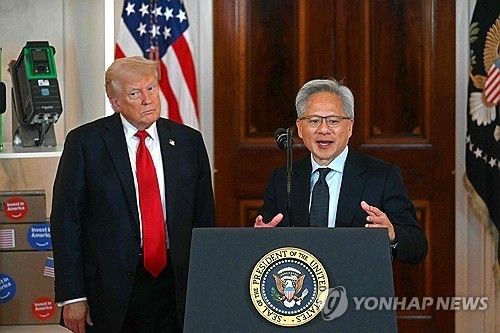
On the 25th, local time, British media reported that the U.S. Department of Justice had not officially investigated Huang before his return. Instead, according to the reports, the department investigated two Nvidia customers, including Megaspeed, a company owned by Alice Huang, who had been involved in an affair with Huang. It concluded that it had found no evidence Huang was involved in illegal activity. Todd Blanche, the attorney general, then reported this conclusion to President Trump and Vice President Vance. The two presented it to Nvidia's board and pressured it, ultimately securing Huang's return.
It has also been reported that no counterintelligence investigation into Huang was conducted. A counterintelligence investigation focuses on whether someone posed a risk to national security, rather than on gathering evidence for criminal prosecution. In effect, authorities concluded without a multifaceted investigation that there was no evidence Huang posed a national security risk or was involved in illegal activity. This leaves open the possibility that evidence of his involvement could emerge in a future congressional investigation. Steve Cash, who leads a group of former U.S. Central Intelligence Agency (CIA) officials, said, “It is not unexpected that the Justice Department did not conduct an official investigation into the national security allegations, but it is concerning.”
Amid these circumstances, the pro- and anti-return camps within the Trump administration reportedly clashed fiercely over Huang's return. According to a synthesis of U.S. media reports, Vice President Vance and Commerce Secretary Howard Lutnick backed his return, while Secretary of State Marco Rubio and Treasury Secretary Scott Bessent opposed it. U.S. Trade Representative Jamieson Greer said that day, “There were no fistfights among cabinet members,” but a power struggle reminiscent of one had been unfolding behind the scenes.
According to reports, Rubio, who briefed President Trump on intelligence related to Huang last May, was excluded from the effort to bring Huang back, along with CIA Director John Ratcliffe, who produced intelligence containing details of Alice Huang's intercepted conversations. Rubio, who is competing with Vice President Vance to become the next Republican presidential nominee, was reportedly furious when Huang's return was announced. Bessent, for his part, had publicly criticized Lutnick for allegedly knowing of Alice Huang's suspected ties to Chinese intelligence authorities without taking action, and had urged Nvidia to bring in an outside figure. But as the effort to bring Huang back proceeded, Bessent appeared to back down.
Looking at the details, after President Trump said on the 20th, “I hope Huang gets a second chance,” Vice President Vance reportedly set out to persuade Nvidia's board. Jay Clayton, director of national intelligence (DNI) and a former chair of the Securities and Exchange Commission (SEC), served as a link between the administration and the board, while President Trump and Vice President Vance reportedly led the weekend discussions. The day before Huang's return, Trump coordinated the wording of the announcement with the board. That reportedly allowed Nvidia's press release stating that “Jensen Huang's return poses no national security risk” to match the content of Trump's social media post.
Elon Musk, Tesla's CEO, also reportedly helped secure Huang's return. Musk discussed semiconductor export controls with President Trump and reportedly pressured officials, saying that technology and business leaders he knew firmly supported Huang.
While fierce political debate was underway, markets also showed differing views that day on the effects of Huang's return. Credit rating agency S&P warned of a possible downgrade, citing governance issues exposed by Huang's departure and return, as well as geopolitical risks related to Nvidia's China business. S&P analyst Andrew Chang said, “We maintained Nvidia's corporate credit rating and senior unsecured debt rating at 'AA' each, while placing them on negative watch.” Moody's, by contrast, maintained Nvidia's 'Aa1' rating and 'stable' outlook, saying Huang's return had reduced management uncertainty.
[email protected] Hong Chae-wan Reporter