Court Rebukes Welfare Ministry in Lawsuit Over Independent Living Allowance for People With Disabilities... “Narrowing the Law Through Guidelines—Is This a Monarchy?”
- Input
- 2026-11-26 14:58:31
- Updated
- 2026-11-26 14:58:31
[Financial News] A court has challenged an administrative agency’s interpretation of the law in a case involving the denial of an independent living allowance to a young person preparing for independent living who had left a residential facility for people with disabilities rather than a child welfare facility. The panel criticized the limits of administrative practice, saying the Ministry of Health and Welfare had arbitrarily narrowed the eligibility requirements by issuing lower-level guidelines instead of a presidential decree, without statutory authorization. It also noted that the past protection-measure documents the agency demanded would be difficult for the individuals concerned to prove and were not normally required.
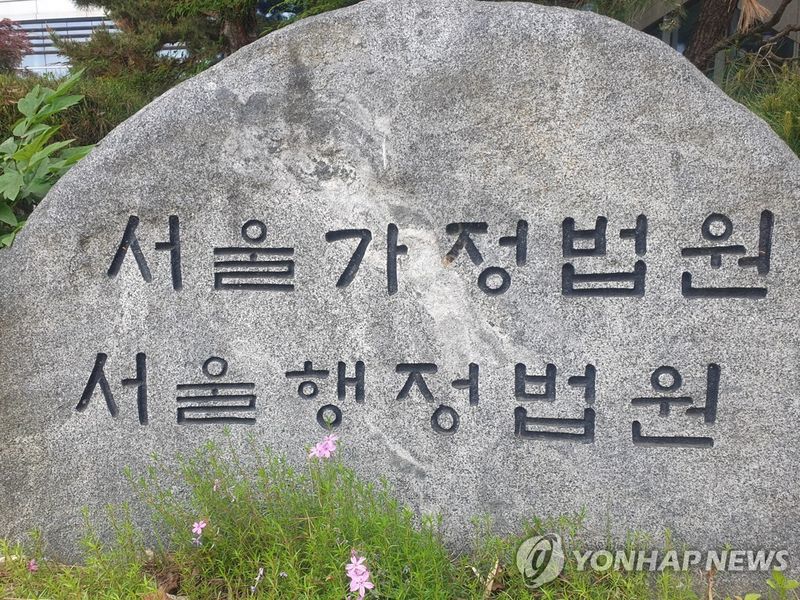
On the 26th, the Seoul Administrative Court’s Seventh Administrative Division, presided over by Senior Presiding Judge Kang Woo-chan, held a hearing in a lawsuit filed by plaintiffs A and B against the head of the Seodaemun District Office in Seoul, seeking to overturn the denial of their independent living allowance. The Ministry of Health and Welfare, the relevant government ministry, participated as an auxiliary intervenor on the defendant’s side.
Under the amended Child Welfare Act, young people preparing for independent living who leave a facility for society after turning 18 can receive an independent living allowance of 500,000 won per month for up to five years. The law was amended after systemic gaps came to public attention through media reports and National Assembly audits. In 2021, for example, a young person with an intellectual disability received the allowance after leaving a residential facility for people with disabilities, following guidance, but was later ordered to repay 1.65 million won on the grounds that they had not been in a child welfare facility.
The plaintiffs, who had also left a residential facility for people with disabilities, applied under the amended law in June this year to the Seodaemun District Office, their local government, for the remaining period—about one year—before five years had elapsed since they left the facility. Their application was denied. The district office argued that the provision merely establishes an administrative basis for transferring a child directly to a facility for people with disabilities, without cumbersome procedures such as obtaining a guardian’s consent, if the child is found to have a disability after initially entering a child-protection facility; it does not expand eligibility for the allowance.
The district office also argued that separate systems for independent-living settlement grants and disability pensions are provided for under the Act on Welfare of Persons with Disabilities, and that paying the independent living allowance as well would create a double benefit and run counter to the legislative intent of the two laws. The Ministry of Health and Welfare, participating as an auxiliary intervenor, likewise maintained that it had to be confirmed whether the plaintiffs had been subject to a protection measure under the Child Welfare Act when they entered the facilities.
The panel continued its pointed questioning of the district office and the ministry. According to a district office official, in the case of young people generally preparing for independent living, applicants are not asked to submit past protection-measure orders; instead, the dates they entered and left facilities are checked through links between the local government’s “Haengbok Ieum” system and facilities’ “Huimang Ieum” system. The presiding judge rebuked the officials, saying, “There’s no way a child who entered a facility as a young child ten years ago would still have the protection-measure order. And the administrative agency shouldn’t shift onto the plaintiff the burden of proving information it can hold and verify electronically.”
The panel also criticized the ministry for adding requirements through internal program guidelines—limiting eligibility to people who left facilities after the law took effect and requiring them to have stayed in a facility for at least two years—without enacting the presidential decree authorized by the law.
The panel rebuked the officials, saying, “The law clearly states ‘a person who left the relevant facility within five years,’ but for the executive branch to arbitrarily narrow the requirements through guidelines runs counter to the democratic principle of administration.” It added, “Depending on the circumstances, this could even raise issues of abuse of authority or state compensation.” The ministry responded, “We are embarrassed and sorry that we failed to filter out the guidelines in our administrative practice,” and said it would provide an explanation in an additional written submission.
The panel ordered the plaintiffs to consider whether to include in the scope of this administrative lawsuit the issue of whether they had been subject to past protection measures, which is also being disputed in a constitutional complaint, and to submit their position in writing. It then concluded the hearing that day. The first-instance ruling will be issued on January 28 next year.
[email protected] Lee Chang-hoon Reporter