“Hair Thickness Recovers Even When Treatment for Chemotherapy-Induced Hair Loss Starts Late” ... Korean Case Reported in International Journal
- Input
- 2026-11-27 09:00:00
- Updated
- 2026-11-27 09:00:01
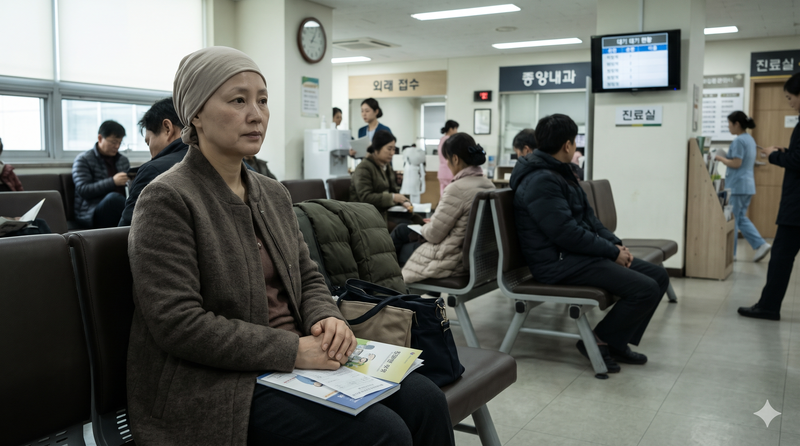
[Financial News] Until now, scalp cooling treatment had been thought to be effective in preventing chemotherapy-induced hair loss only if started with the first chemotherapy session. However, a recent Korean case showing that scalp cooling during chemotherapy can also help hair recover has been reported in an international journal.
Scalp cooling to prevent chemotherapy-induced hair loss shown to work even when started midway through treatment
Lee Seon-min, director of Momentum Hairline Clinic, said on the 26th that a case report confirming recovery in hair density and thickness in a patient who started scalp cooling midway through chemotherapy had recently been accepted for publication in the international hair journal International Journal of Trichology.
Scalp cooling is a treatment to prevent chemotherapy-induced hair loss. The scalp is cooled before and after chemotherapy is administered, constricting blood vessels in the scalp and reducing the amount of chemotherapy drug that reaches the hair follicles. Although its effectiveness has been demonstrated in large-scale clinical trials, scalp cooling had been thought to work only if started with the first chemotherapy session. As a result, patients who missed the window for treatment faced the difficulty of being unable to undergo it at all.
Director Lee provided scalp cooling to a patient who had not received it early in chemotherapy and, by monitoring the patient's progress, confirmed improvements in hair density and thickness around the crown and back of the head.
The patient who received scalp cooling during chemotherapy is a 46-year-old man undergoing FOLFOX chemotherapy after surgery for stage III colorectal cancer. Hair loss progressed across his scalp during cycles 1–6. Starting with cycles 7–12, he used a portable cooling device during each cycle: cooling for 15 minutes before the chemotherapy infusion, 2 hours and 30 minutes during the infusion, and 15 minutes afterward.
Follow-up using standardized scalp photography and trichoscopy (detailed scalp microscopy) showed that the patient's hair density at the crown increased from 74.3 to 99.1 hairs per cm2, while average hair thickness rose from 66.8 μm to 74.8 μm. Both density and thickness also improved at the back of the head. There were no side effects, such as headaches, scalp discomfort, or having to stop treatment because of the cold, throughout the process, and no other hair-loss medications were used.
Lee Seon-min: “A single case, but it adds evidence to broaden treatment options for patients undergoing chemotherapy”
Lee Seon-min explained, “Quite a few patients give up on treatment altogether because they were unable to start scalp cooling early in chemotherapy. This case suggests that hair recovery may also be observed when it is started midway through treatment. Since this is a case report documenting one patient's progress, the results cannot be generalized. However, it is meaningful because it adds evidence that can serve as a reference for patients who missed the opportunity to choose this option.” She added, “We plan to continue documenting and reporting outcomes so that patients concerned about chemotherapy-induced hair loss can make decisions based on accurate information.”
The paper, titled “Hair Recovery After Mid-Chemotherapy Initiation of Scalp Cooling in a Colorectal Cancer Patient: A Case Report,” was accepted for publication in November 2026 in the International Journal of Trichology, the official journal of the Hair Research Society of India.
[email protected] Kim Hyeon-seon Reporter