Hope Friends Korea Food for the Hungry’s Türkiye Earthquake Survivor Support Selected as an ‘Outstanding Development Cooperation Case’
- Input
- 2026-11-26 09:02:27
- Updated
- 2026-11-26 09:02:27
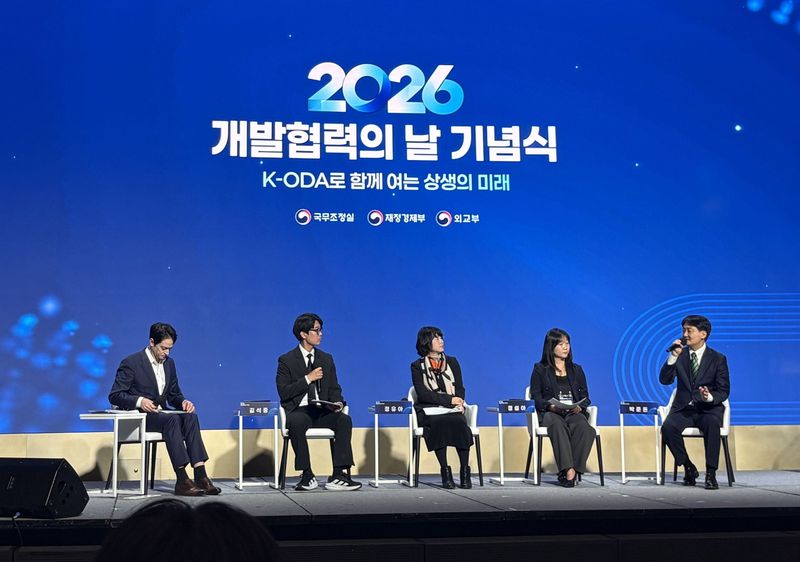
According to Korea Food for the Hungry on the 26th, the project was presented at a talk concert during the ‘2026 Development Cooperation Day Commemorative Ceremony,’ held on the 25th at The Westin Josun Seoul in Jung-gu, Seoul. The ceremony, hosted by the Office for Government Policy Coordination, the Ministry of Finance and Economy, and the Ministry of Foreign Affairs, also included awards for contributions to development cooperation. Development Cooperation Day commemorates Korea’s approval to join the Organisation for Economic Co-operation and Development (OECD) Development Assistance Committee (DAC) on November 25, 2009.
According to the United Nations Development Programme (UNDP), the earthquake that struck southern Türkiye in February 2023 killed at least 50,000 people and left around 3.3 million homeless. Even six months after the earthquake, at least 2 million people were living in tents or containers. Many of them were staying in temporary shelters where access to drinking water, toilets, and showers was difficult.
Immediately after the earthquake, Korea Food for the Hungry took part in a field needs assessment conducted by the South Korean government’s overseas emergency relief team. It later established Korea Friendship Village in the Antakya area with support from the Korea International Cooperation Agency (KOICA), working with the Turkish government and domestic and international nongovernmental organizations (NGOs).
The local relief organization FHA (First Hope Association) also took part in establishing the village. The two organizations provided 170 temporary housing units and improved water, sanitation, and hygiene facilities, including laundry rooms and toilets. They equipped the units with bedding, kitchen supplies, refrigerators, fire extinguishers, and other items in line with the list of essential household goods set by Türkiye’s disaster management agency. They also distributed food packages and vouchers to people displaced by the earthquake.
From the outset of the project, Korea Food for the Hungry gathered residents’ views through a residents’ committee and online surveys accessed via QR codes, and incorporated their feedback into the project. A follow-up review in December last year confirmed that the water, sanitation, and hygiene facilities, educational facilities, and temporary accommodations were being operated locally, and that residents were directly responsible for maintaining and managing the facilities.
“We saw the significance of this project in the way residents expressed their bond by calling Korea and Türkiye ‘kardeş’ (‘brother countries’) and recovered their daily lives while managing the facilities themselves,” said Lee Jae-eun, head of international programs at Korea Food for the Hungry. “We will continue to provide humanitarian assistance centered on local residents so they can become self-reliant without depending on outside support.”
[email protected] Jang In-seo Reporter