"Will a Short-Selling Ban Be Announced?" ... A Day After KOSPI Plunges 6%, What Short-Term Remedy Do Securities Analysts Identify?
- Input
- 2026-11-26 08:30:14
- Updated
- 2026-11-26 08:30:14
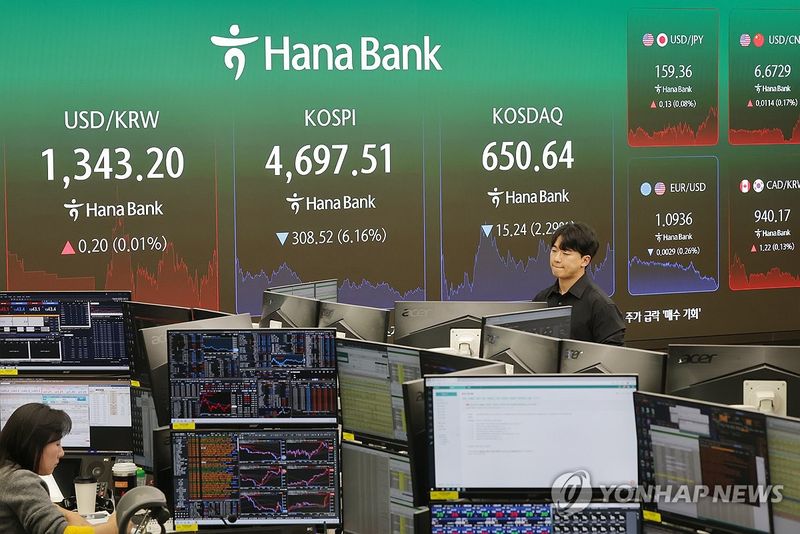
[Financial News] South Korea’s stock market, which plunged more than 6% the previous day, is expected to attempt a rebound on the 26th. The sell-off in artificial intelligence (AI) stocks on U.S. markets eased during the session, and KOSPI 200 overnight futures also closed higher. However, analysts say policy responses such as expanding the market stabilization fund will be needed to revive subdued investor sentiment.
In a report on the 26th, KIWOOM Securities forecast that stock prices would attempt to recover, buoyed by renewed bargain-hunting after the previous day’s plunge of more than 6%, the Nasdaq’s weak start and stronger finish, and news that KOSPI 200 overnight futures had successfully rebounded. KOSPI 200 overnight futures plunged 4.96% intraday before turning higher and closing up 0.36%.
Jensen Huang’s Return Rally Effect Vanishes in a Day... KOSPI Triggers Sidecars for Third Straight Day
The KOSPI closed the previous day at 4,697.51, down 6.16%. It opened lower after U.S. semiconductor stocks plunged as the rally effect from Nvidia CEO Jensen Huang’s return faded. Heavy selling by foreign investors during the session triggered a sidecar, a temporary suspension of program sell orders.
Han Ji-young, an analyst at KIWOOM Securities, said, “The KOSPI has plunged nearly 50% from its peak and has yet to emerge from the bottom-testing phase.” She described the market as experiencing “extreme volatility, with two-way sidecars triggered on three consecutive trading days this week—two on the sell side and one on the buy side.”
U.S. markets also swung overnight. After news that credit rating agency S&P could downgrade Nvidia’s credit rating, selling in AI stocks continued, including Nvidia (-3.91%), Micron (-4.53%) and Oracle (-5.13%), sending the Nasdaq down more than 4% intraday. It later recouped most of its losses as bargain-hunters stepped in, closing down 0.65%.
Han cited AI cloud company CoreWeave’s move to secure a new loan as a positive development. CoreWeave is seeking a $4.5 billion loan next week, using as collateral the graphics processing units (GPUs) it will provide to Meta. The interest rate is expected to be 7% to 7.5%, far below the roughly 18% rate on its existing loan. KIWOOM Securities said this “shows that demand for AI infrastructure investment remains intact despite concerns about AI credit,” and forecast that sentiment toward domestic and overseas semiconductor stocks could recover further if the loan goes through.
Will the 10.8 Trillion Won Market Stabilization Fund Be Expanded? Short-Selling Ban Also a “Key Point to Watch”
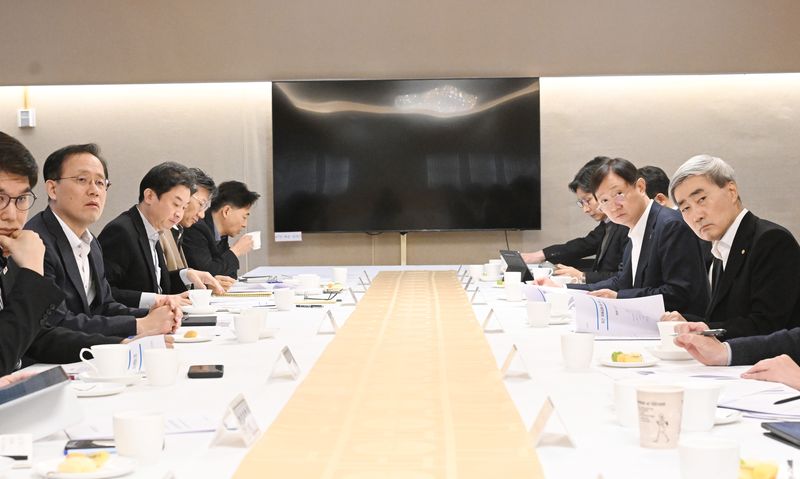
Han focused on whether concrete plans for the market stabilization fund would be announced at the capital market reform task force meeting being held today. Authorities are reportedly assessing demand for additional contributions to increase the fund’s existing 10.8 trillion won in resources.
Han said there remained a possibility that the amount pledged could be increased, given that the domestic stock market’s capitalization has grown since the fund was established in 2020. Even if all the money is not used, increasing the pledged amount in advance alone would signal that the authorities have ample capacity to defend the market, helping improve investor sentiment, she explained.
Whether to ban short selling is also a variable. Taiwan, like South Korea, is highly dependent on semiconductors and has imposed a short-selling ban alongside an injection of funds into its market stabilization fund. However, some say South Korea must weigh the pros and cons of a ban, as it is seeking inclusion in the MSCI World Index.
Han said that resolving AI-related uncertainty, the root cause of the market correction, was “a separate matter,” but forecast that “policy responses such as the market stabilization fund could help restore extremely subdued investor sentiment and curb further steep declines.”
[email protected] Kim Hee-sun Reporter