Turning EVs Into 'Power Plants on Wheels'... Hyundai Motor Company to Validate Their Use at Disaster Sites in Japan
- Input
- 2026-11-26 08:02:23
- Updated
- 2026-11-26 08:02:23
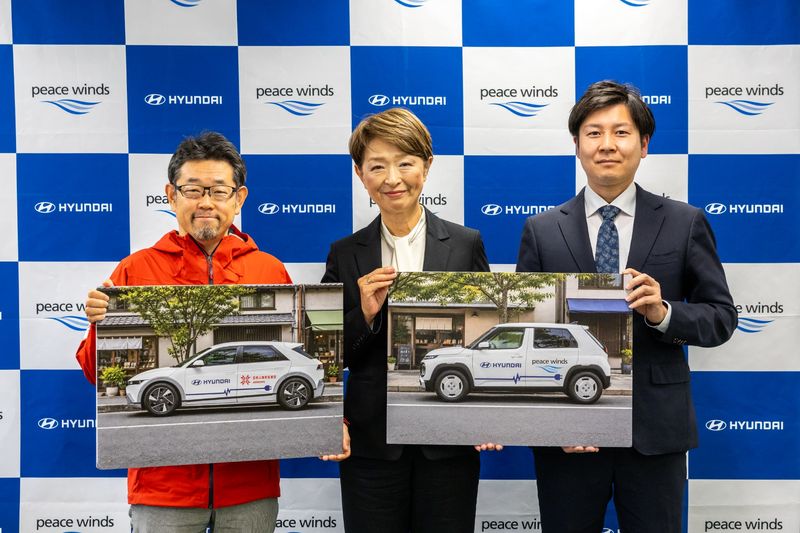
[Financial News] Hyundai Motor Company is launching a disaster response initiative using EVs in Japan, where natural disasters such as earthquakes are frequent. The initiative centers on using EVs not merely for transportation but as emergency power sources at disaster sites. The strategy appears aimed at expanding the social uses of EVs while building trust in the brand in Japan.
Hyundai Motor Company said on the 26th that its Japanese subsidiary, Hyundai Mobility Japan, held a press conference at Japan's Ministry of Land, Infrastructure, Transport and Tourism on the 25th with international relief organization Peace Winds Japan (PWJ) and Okayama University, announcing a technical cooperation plan to assess the potential use of EVs in disasters.
The initiative centers on Vehicle-to-Load (V2L) technology, which supplies electricity stored in an EV battery to external devices. It allows EVs to serve as mobile power sources when electricity supplies are disrupted by natural disasters such as earthquakes or typhoons.
Since this year, Hyundai Motor Company has been discussing ways to use EVs with PWJ, which has been addressing power shortages at disaster sites. The plan is to combine the technical capabilities of an automaker with the disaster response experience of an international relief organization to develop an EV operating model that can be used in the field.
The demonstration project will deploy one Hyundai Ioniq 5 and one INSTER (known in South Korea as the Casper Electric). The two EVs, which differ in body size and battery capacity, will be used to assess power supply and operational efficiency under different disaster response conditions.
After delivery in December, the vehicles are scheduled to be deployed in Kumamoto and Okayama prefectures, respectively. The demonstration will run for three years, with PWJ responsible for operating the vehicles and Hyundai Motor Company providing technical information and sharing operational know-how.
Naomi Fudo, president and representative director of Hyundai Mobility Japan, said the company aims to strengthen Japanese society's disaster response and recovery capabilities through the project and promote the new value of EVs.
The potential use of EVs in disaster medicine is also drawing attention. Mototaka Inaba, a doctor who leads PWJ's Emergency Disaster Relief Project, stressed that since electricity is essential infrastructure at disaster sites, routine demonstrations and drills involving local governments are important. Medical staff at Okayama University also raised the need to secure power during disasters as home medical care expands.
In Japan, Hyundai Motor Company is expanding its engagement with local communities through disaster-prevention activities in coordination with local governments and by training specialists in EV maintenance. In global markets, it is also carrying out humanitarian assistance activities using EVs and charging infrastructure in cooperation with the UN World Food Programme (WFP).
A Hyundai Motor Company official said, "Based on data gathered through this demonstration project, we plan to develop concrete plans for operating EVs in disaster response and expand the potential for supporting people vulnerable to disasters."
[email protected] Kim Dong-ho Reporter