“NVIDIA High-Performance Chip Listings Surge”... Blocking Chinese Access via Workarounds Proves Decisive
- Input
- 2026-11-26 03:41:47
- Updated
- 2026-11-26 03:41:47
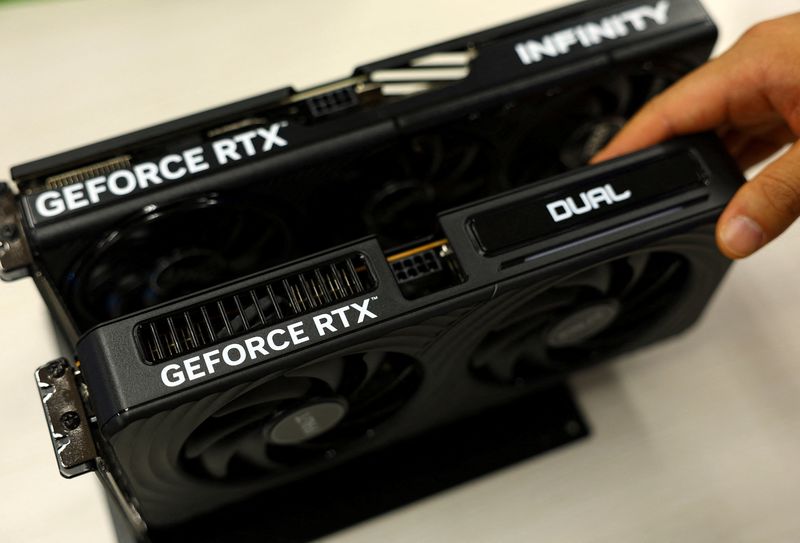
CNBC reported on the 25th (local time), citing three sources, that sellers of NVIDIA chips are looking for new buyers. Export routes have narrowed further amid an affair scandal involving CEO Jensen Huang and a person suspected of being a Chinese spy. The Donald Trump administration further tightened regulations, even blocking Chinese companies from remotely accessing advanced artificial intelligence (AI) systems.
Surge in Listings of NVIDIA High-Performance Chips
According to sources, the market has been unusually flooded with NVIDIA high-performance GPUs (graphics processing units) since new regulations were announced on the 16th.
Jack Duhamel, president of GPU Mart, an AI infrastructure marketplace, and two other sources cited the new regulations—which also block Chinese companies from remotely accessing advanced AI systems—as the direct reason for the surge in GPUs listed for sale. Duhamel said one company was trying to list NVIDIA chips for sale on GPU Mart, citing the new rules.
The two sources said it appeared that those who had secured chips originally intended for Chinese companies to rent and use via remote access were now trying to unload their stock.
The Bureau of Industry and Security (BIS), part of the United States Department of Commerce, announced regulations on the 16th to tighten export controls on NVIDIA's advanced chips. The new rules took effect on the 19th.
Duhamel and one source said that thousands of B300 GPUs, NVIDIA's most advanced chips, were listed for sale after the new rules were announced.
New bills to tighten export controls on NVIDIA's advanced chips are also being discussed in Congress.
The Remote Access Security Act has passed the House and is awaiting a Senate vote. If enacted, it would give the U.S. government broad authority to control access to cloud services. Both NVIDIA and its customers could face “legal action.”
The United States had previously accused the Chinese AI research lab Moonshot AI of accessing NVIDIA chips through facilities in Thailand in July.
Will GPU prices fall?
GPU prices are falling amid measures that are cutting off demand at its source.
According to Hong Kong's South China Morning Post (SCMP), spot prices for NVIDIA GPUs are falling at local electronics markets, including Huaqiangbei in Shenzhen, China. Local merchants say the main factors behind the price decline are weak domestic demand in China, inventory levels and supply-and-demand conditions, rather than U.S. export restrictions or issues related to Jensen Huang.
Spot rental prices for AI chips are also falling.
Semiconductor analysis firm SemiAnalysis said SpaceX recently lowered the hourly spot rental rate for NVIDIA Blackwell GPUs from $15–$15.50 to $10–$12, and concluded that the GPU market was showing signs of a “price cooldown.”
However, some say a sharp price drop is unlikely.
Colette Kress, chief financial officer (CFO), who served as interim CEO in place of Huang, said at an earnings announcement on the 17th that the impact of the regulations was under review, but added, “Demand for chips far exceeds supply.”
It has also been reported that Chinese companies ordered $70 billion worth of workstation GPUs to circumvent export restrictions, but supply constraints mean that only about 1% of the total orders can actually be delivered over the next few months.
[email protected] Song Kyung-jae Reporter