Tesla's Polysilicon Self-Sufficiency Rate Estimated at 10%... OCI Holdings' Target Price Maintained - iM Securities
- Input
- 2026-11-26 05:59:00
- Updated
- 2026-11-26 05:59:01
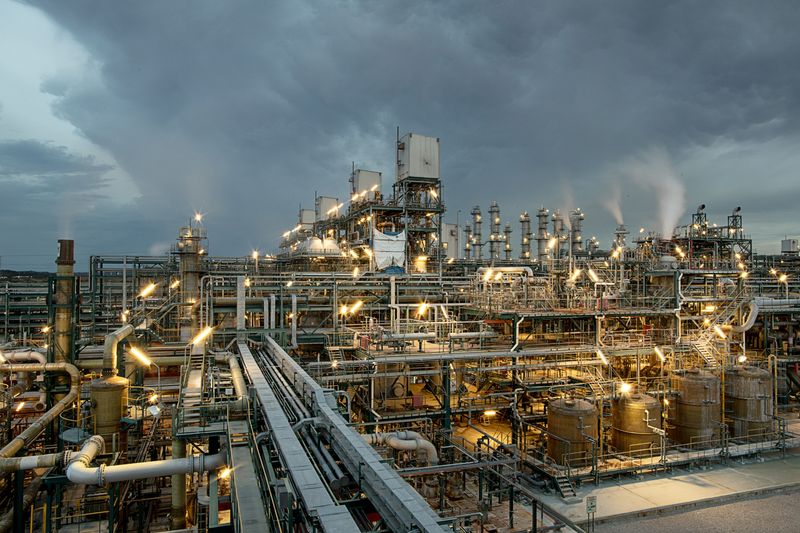
[Financial News] An analysis has found that even if Tesla begins producing polysilicon for solar power in-house, the impact on OCI Holdings' medium- to long-term earnings would be limited. The assessment is that the scale of investment Tesla is considering would cover only about 10% of its projected polysilicon demand. iM Securities forecast that OCI Holdings' polysilicon sales volume would rise 30% next year and maintained its 'Buy' rating and target price of 300,000 won.
According to industry sources on the 26th, iM Securities said in a recent report that although OCI Holdings' share price had fallen amid Tesla's consideration of an investment in polysilicon production facilities, this was not a reason to change its existing investment view. Given the investment costs and technical barriers to entry, iM Securities considered it unlikely that Tesla's in-house production would materialize and said that external sourcing would be unavoidable even if Tesla proceeded with production.
Tesla said in an application for tax incentives in Texas that it was considering building a $3.1 billion polysilicon plant in Nueces County. The company has said it will not invest in Texas without tax incentives, and a final investment decision has not been made. Based on past facility investment cases by Germany's Wacker, iM Securities estimated that Tesla could secure production capacity of around 25,000 metric tons a year with that investment. This is 10% of the approximately 250,000 metric tons of polysilicon needed for Tesla to achieve its target of 100 gigawatts (GW) of solar manufacturing capacity.
The effects of higher product prices resulting from the United States' stepped-up exclusion of Chinese solar products and the introduction of a minimum import price (MIP) are expected to fully materialize from late in the second quarter or early in the third quarter of next year. This is because, with U.S. solar module inventories estimated at 60–70 GW, it is expected to take at least six months to draw them down to an appropriate level.
By contrast, OCI Holdings is expected to see sales volume increase from early next year, supported by long-term supply contracts. According to iM Securities, OCI Holdings plans to begin shipping products in the first quarter of next year under a long-term supply contract for polysilicon and wafers with a U.S. customer pursuing a solar power generation business for space applications. As a result, OCI TerraSus, its Malaysian polysilicon production subsidiary, is estimated to sell nearly 30,000 metric tons next year, up 30% from this year.
The fact that the contract was signed on a 'take-or-pay' basis, requiring payment even if a specified volume is not taken, and that capacity expansion began after some advance payments had been secured were also cited as grounds for the sales growth forecast. iM Securities forecast further sales growth from sequential capacity expansions in 2028–2029 and increased supply to the U.S. customer.
iM Securities estimated OCI Holdings' consolidated revenue and operating profit next year at 4.1272 trillion won and 453.9 billion won, respectively. Those figures represent increases of 5.7% and 64.5%, respectively, from this year's forecasts. OCI TerraSus' operating profit is expected to rise from 15.5 billion won this year to 195.4 billion won next year.
[email protected] Kim Mi-hee Reporter