A Bottle of Wine Marked With a White Marker, Without Even a Label ... The 'Honeymoon of a Lifetime' in Georgia's Mountains [Lee Hwan-joo's Out-of-Pocket Travelogue]
- Input
- 2026-11-28 10:00:00
- Updated
- 2026-11-28 10:00:03
[Financial News] When we chose Georgia for our honeymoon and started looking up information, the three things we were most looking forward to were a tour of a small local winery, trekking in Juta, and a visit to Sighnaghi, the “city of love,” where couples can get married 24 hours a day. Our itinerary didn’t allow for a visit to Sighnaghi, but the small-winery tour and the Juta trek remain experiences we have absolutely no regrets about, even now, well over a year later.
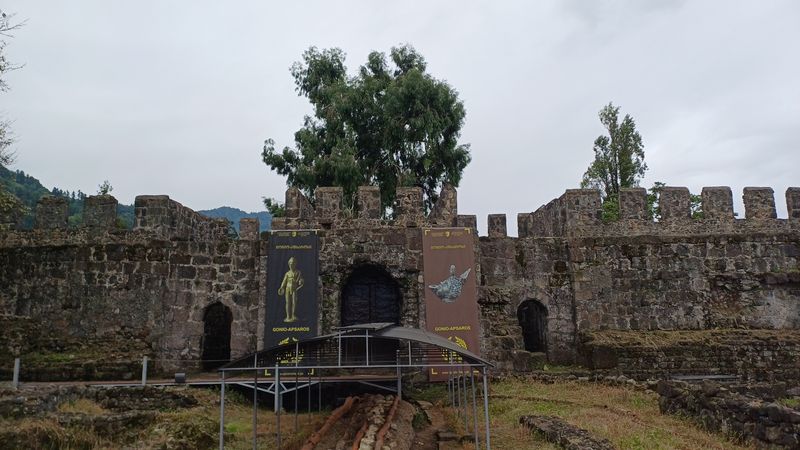
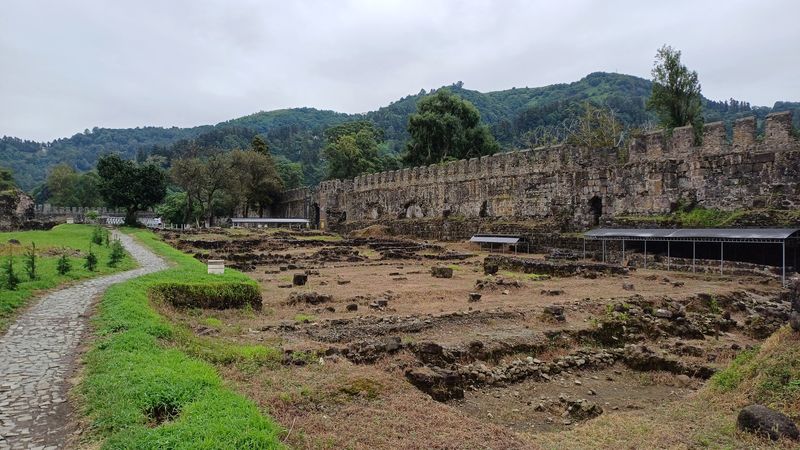
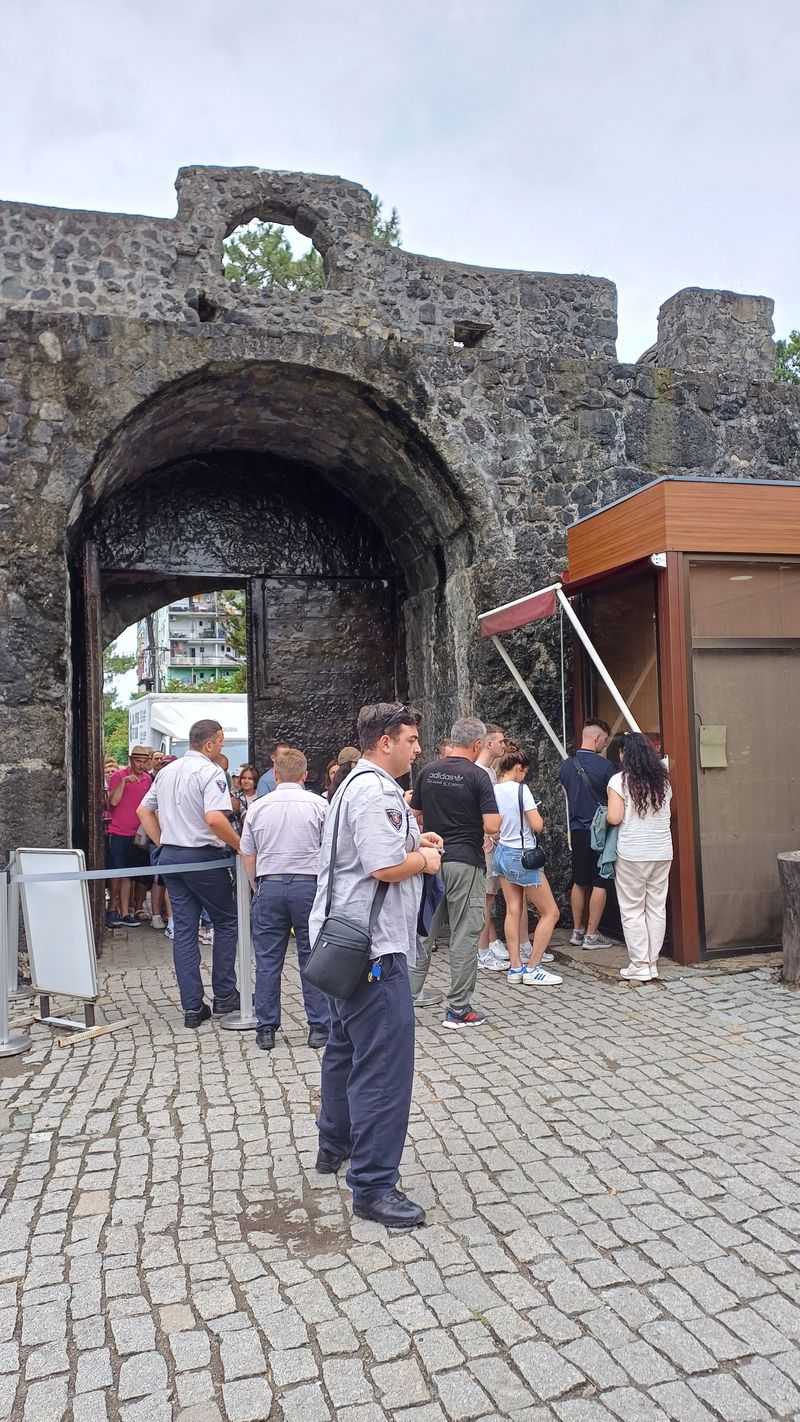
After spending our eighth day in Batumi, which reminded us of Busan in Korea, we planned to head on the ninth day to the city of Gori, Stalin’s hometown. After checking out of our hotel in Batumi, we drove for about 40–50 minutes and happened upon an old castle marked as a tourist attraction on Google Maps, so we pulled over. Perhaps because it was early in the morning—the site opened at 10 a.m.—a few tourists had parked and were waiting to enter in front of the gate in the old stone wall. It was Gonio Fortress, formerly known as Apsaros Fortress, one of the oldest and best-preserved Roman-era fortresses in Georgia, about 12 km south of Batumi.
Gonio Fortress, Steeped in Roman, Ottoman and Russian History
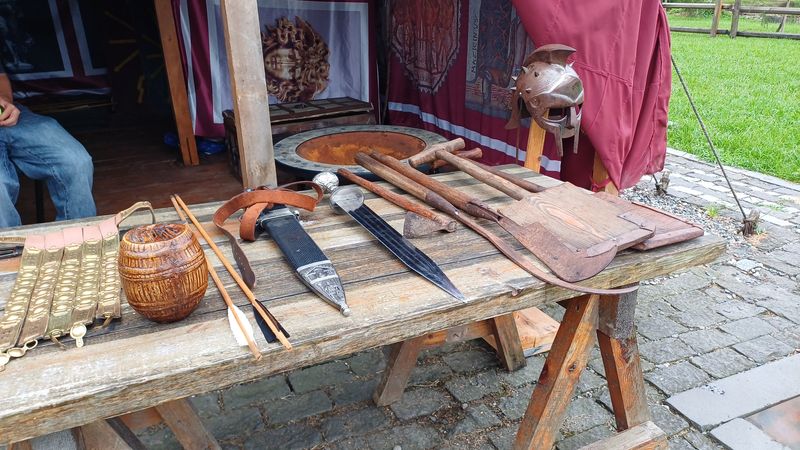
Gonio Fortress was built around the 1st century AD, during the Roman Empire, and its walls have a total circumference of about 900 meters. Inside, we could see traces of a Roman-style bathhouse and water pipes. It served as a Roman military outpost for hundreds of years after it was built. The Ottoman Empire, which took control of the area in the mid-1500s, ruled it for more than 300 years and is said to have built and used an Ottoman-style bathhouse inside the fortress. The area was later incorporated into the Russian Empire in 1878. Inside the walls, alongside relics from the past, a small museum displayed coins, pottery and weapons from the Roman, Byzantine and Ottoman eras. After looking around at a leisurely pace for about an hour, we headed to our next destination.
The Apostle’s Waterfall, Where the Gospel Was First Preached in Georgia
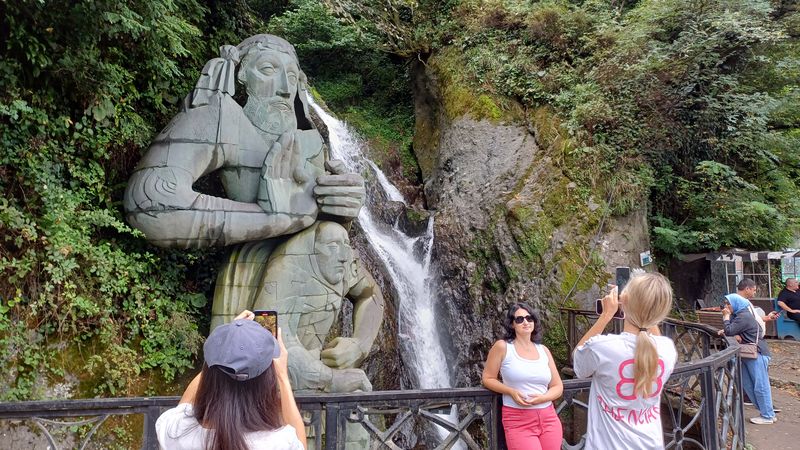
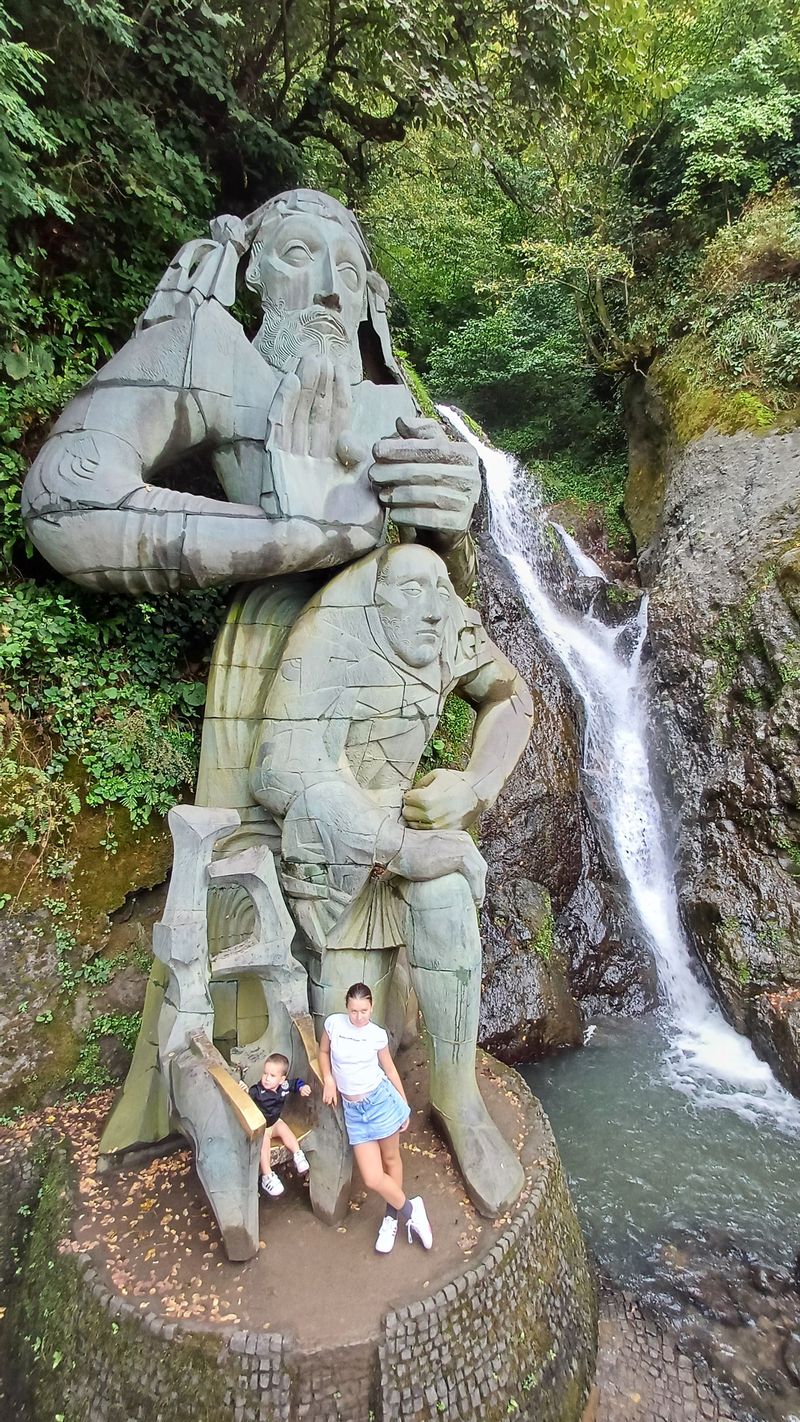
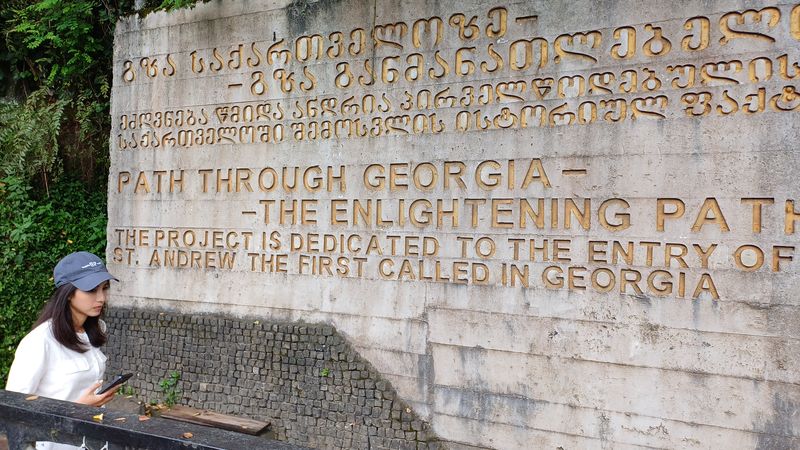
Our next stop was also somewhere we happened upon by chance. While driving, we stopped to see the “Statue of the Apostle Andrew and Waterfall,” near the border between Georgia and Türkiye. It is a monument and a small waterfall beside the coastal road south of Batumi, just before Sarpi, a village on the Turkish border. It was built in 2008 to commemorate the missionary history of Saint Andrew, whom the Georgian Orthodox Church honors as the first to preach the Gospel in Georgia. Saint Andrew is said to have been the first of Jesus’s twelve apostles to be called, and to have first brought the Christian Gospel to Georgian lands in the 1st century AD, traveling along the Black Sea coast and through the region of Adjara. Legend has it that after completing a rugged journey, Andrew rested his weary body and quenched his thirst when clear water sprang from a rocky cliff. A sign near the monument indeed bears the words, “The path of the Apostle Andrew across Georgia is the path of enlightenment.”
A statue of the Apostle Andrew stands among the rocks and green trees beside the road, with a small waterfall flowing down the rocks behind it. Many tourists sat on the bench below the statue to take commemorative photos. Since the statue is near the border with Türkiye, the timestamps on photos taken there show a time one hour earlier than the time in Georgia.
A Mountain Winery All to Ourselves, a Wine of a Lifetime With No Label
Having visited a winery without a reservation in Kutaisi, the city we stopped in earlier, we made a reservation in advance for a small boutique winery that day. Georgia, the birthplace of wine, has hundreds, even thousands, of small wineries. We thought that weighing every option might just give us a headache, so we booked one that caught our eye among several along our route without giving it too much thought.
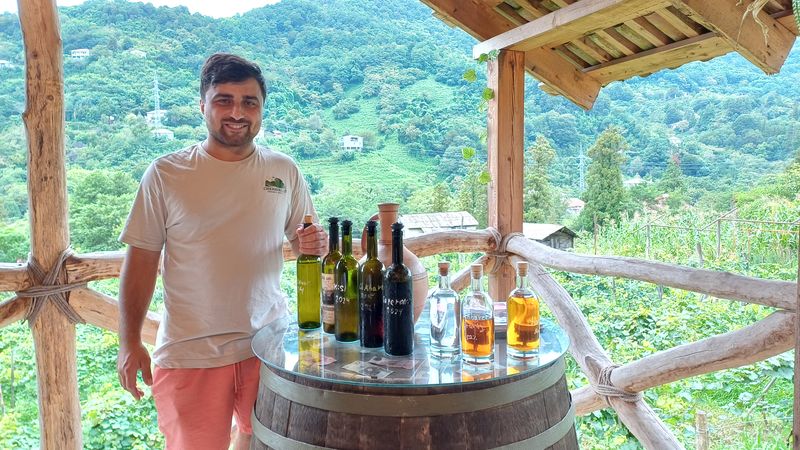
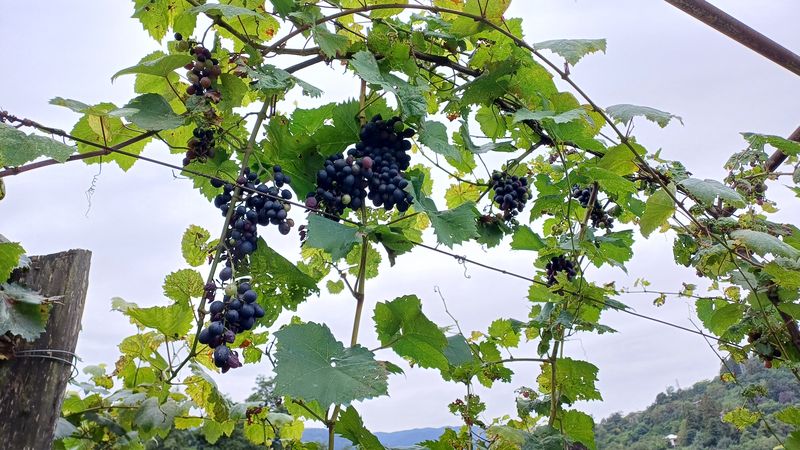
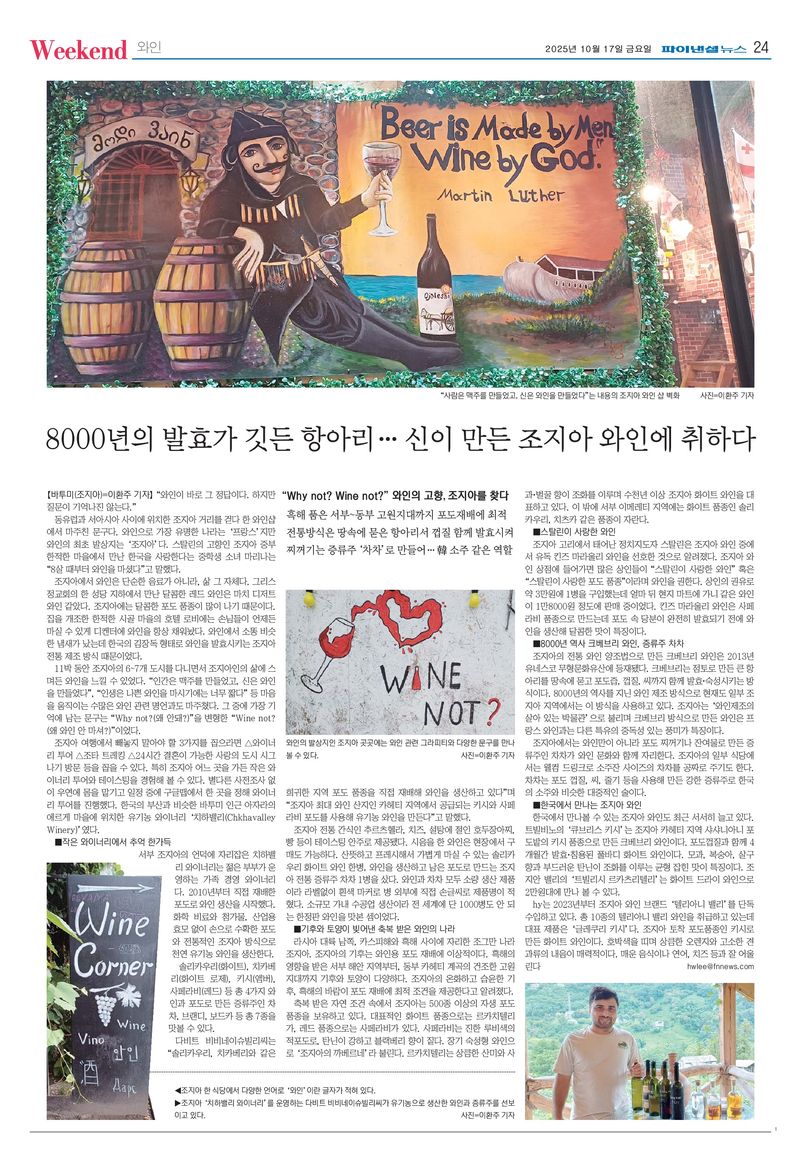
We visited Tskha Valley Winery, set on a mountainside at an elevation of 300 meters in the Keda region of the Autonomous Republic of Adjara in western Georgia. The winery’s name comes from Chkhaveri, a prominent indigenous red grape variety in the area. Chkhaveri is a late-harvest variety picked in late autumn, around November, when frost arrives. It is often made into rosé or white-style wines characterized by delicate fruit aromas and bright acidity.
Tskha Valley Winery is a small family winery run by David Bibineishvili and his wife. They began making wine in 2010 using grapes they had grown themselves. We were the only visitors that day. They hand-harvest grapes grown without chemical fertilizers and make wine without additives or commercial yeast. They use both the traditional Georgian method of Qvevri fermentation—fermenting in clay jars, like Korea’s kimjang tradition—and stainless steel tanks.
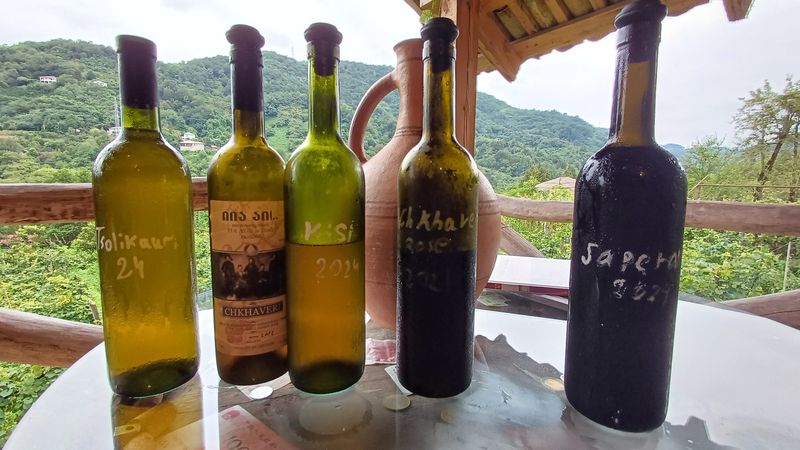
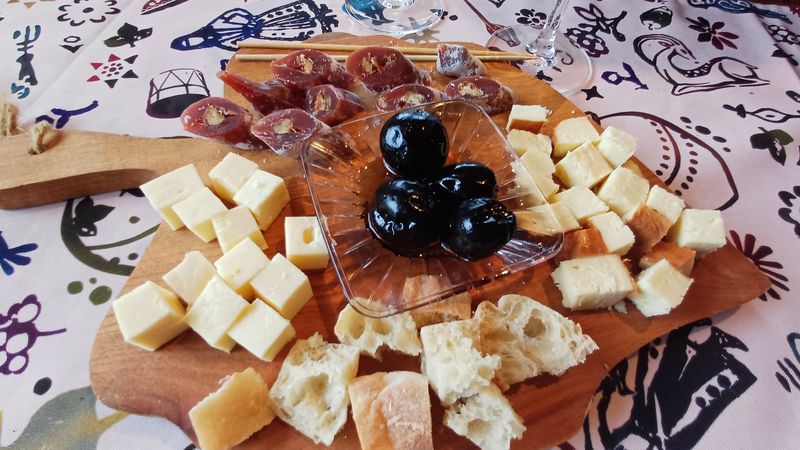
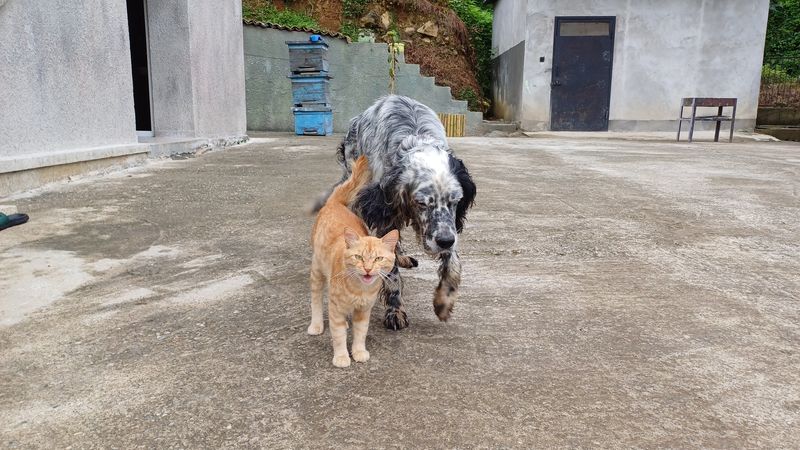
We got to taste seven alcoholic drinks in all: four wines, along with spirits such as chacha, brandy and vodka. The four wines were Tsolikouri (white), Chkhaveri (white rosé), Kisi (amber) and Saperavi (red). Snacks served with the tasting included churchkhela, a traditional Georgian treat, cheese, walnuts preserved in sugar, and bread. The candied walnut was especially unusual: it was made by sweetening the outer flesh of small walnuts, not the kernels. The winery also sold a variety of Georgian snacks, as well as wine and spirits. We had already exceeded the limit on liquids we could bring back to Korea, but figured we could always drink them during the trip, so we bought a bottle of Tsolikouri white wine and a bottle of chacha, a traditional Georgian spirit made from the leftover grapes after winemaking. Made from the white grape variety Tsolikouri, this wine was produced in such small quantities that the bottles had no label stickers; only the variety and vintage were written on them in white marker. The wine might not have been especially outstanding, but I found myself wondering, “Could my partner and I be the only people in our country who have tasted Tsolikouri white wine from Tskha Valley Winery?”The taste of wine on the tip of your tongue lasts only a moment, but memories of someone who shared a special time and place with you last much longer, along with the wine.After the tasting, we took our time walking around the vineyard and then left the winery. As we headed out, a large black-and-white dog guarding the winery and a ginger cat came out to see us off.
Stalin Wasn’t Russian ... Gori, Stalin’s Hometown
After the winery tour, we headed to our next destination, Gori. The drive from the winery to Gori took about five hours. We were running low on gas along the way, but there was no gas station nearby, so we had to leave our route to refuel before setting off again, which delayed us a little. Gori is famous as the birthplace of Stalin, the Soviet Union’s supreme leader. Many people think of him as Russian, but he was in fact Georgian, born in Gori, Georgia, which was under Russian imperial rule at the time, in 1878.
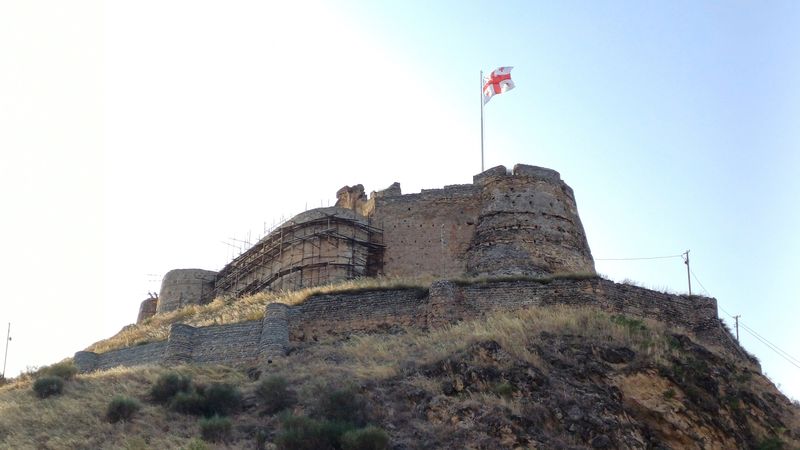
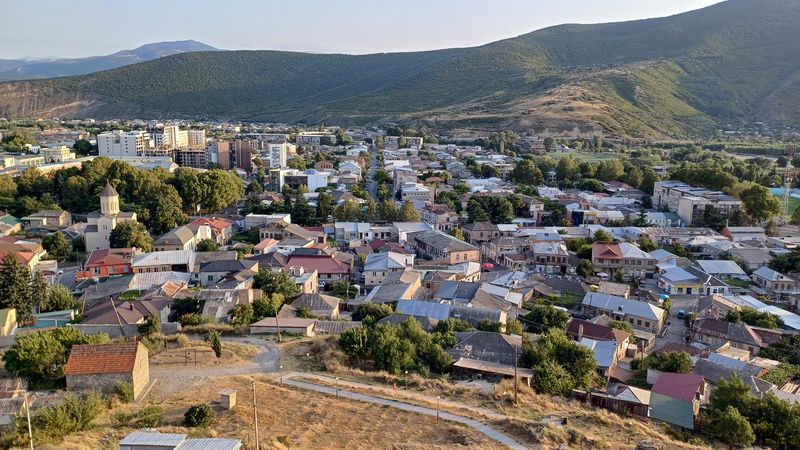
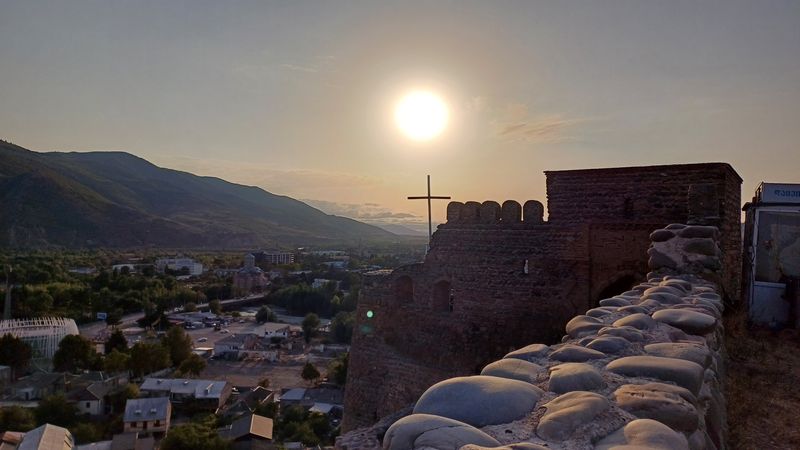
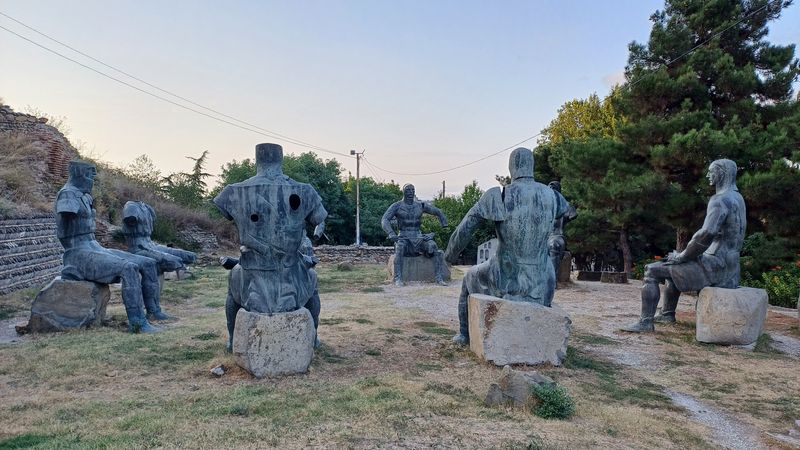
When we arrived in Gori, the first place we visited was Gori Fortress in the city center. With a history spanning more than a thousand years, it is designated an important cultural monument of Georgia. Major repairs and reconstruction in the 17th century gave it the appearance it has today. Perched on top of a hill, it offered a sweeping view of the city. After exploring the fortress, we went down the hill and found a huge bronze statue of a warrior at its foot. Known as the “Georgian Warrior Heroes Memorial,” the statue is said to have been created by Giorgi Ochiauri, one of Georgia’s leading sculptors, to honor the courage and indomitable spirit of warriors who fell defending their homeland.
We happened to meet a group of local middle school students in front of the Georgian Warrior Heroes Memorial. There were about seven or eight boys and girls, apparently gathered to celebrate a girl named Maria’s birthday. A few of the boys seemed to have already had a few glasses of whiskey, but they showed great interest when we said we were from Korea. Maria, a middle school student who spoke English very fluently, said, “Everyone in Georgia drinks wine,” and added, “I’ve been drinking wine since I was eight.”
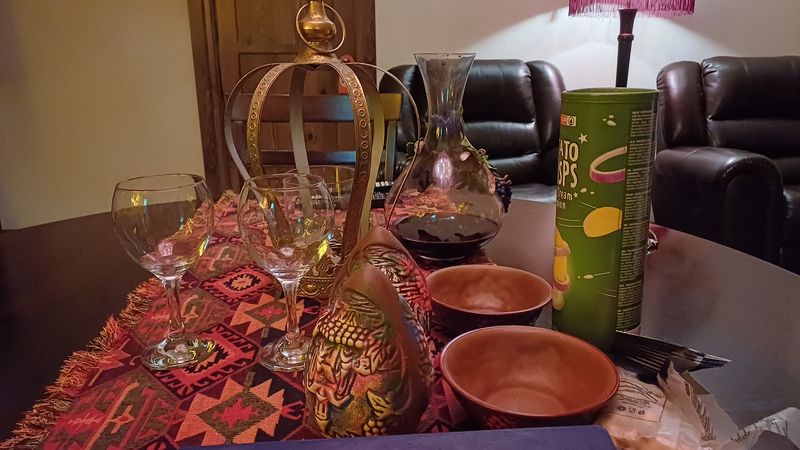
The hotel where we stayed in Gori was called Hestia Boutique Hotel. It was family-run, and a white child of about seven or eight spoke English at a native level. The hotel had an antique feel, and a decanter of traditionally made Georgian wine was always available in the lobby. The wine was complimentary for guests, so we tried a glass or two before bed. Unlike the wine sold in local supermarkets, it seemed to have a smell somewhat like cow dung.
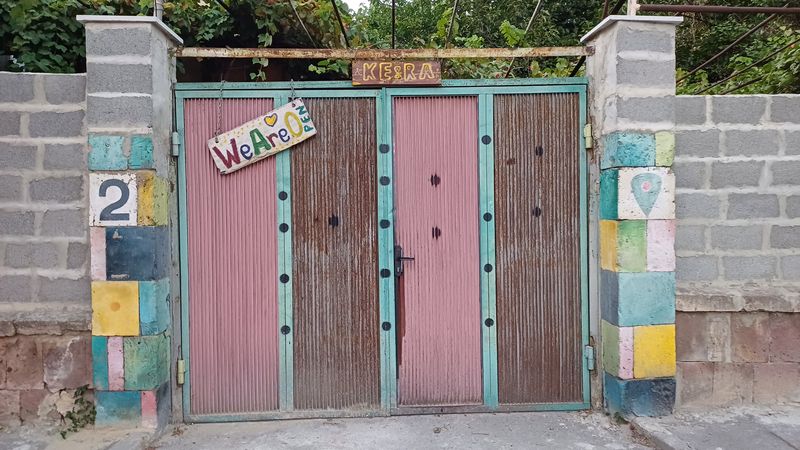
We had dinner at a nearby restaurant called KE & RA. It seemed to be a converted house and had a very distinctive atmosphere. The owner was warmly and genuinely kind to us. We had dishes such as chicken in tomato sauce and mushroom risotto with cheese. The food was ordinary, but we liked the homey, welcoming atmosphere. We stayed only one night, but both our accommodation in Gori and the restaurant where we had dinner were good enough that we would recommend them to others.

[email protected] Lee Hwan-joo Reporter