[Editorial] The Predictable Fiasco of Nuclear Power Deliberations That Paved the Way for the Anti-Nuclear Camp
- Input
- 2026-11-25 18:17:43
- Updated
- 2026-11-25 18:17:43
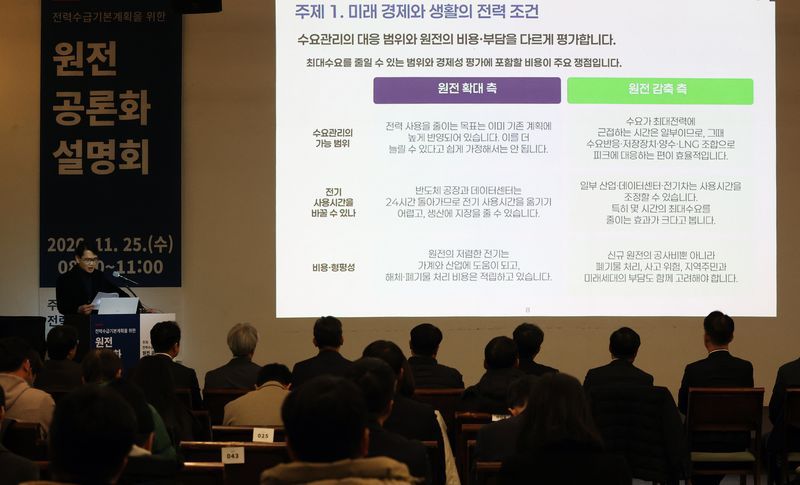
The problem is that if the conflict between the two sides is left as it is, they will remain at an impasse indefinitely. The dispute centers on whether to ask the citizen panel about nuclear power’s share in 2050 as well as in 2040. The expansion side is taking a hard line, insisting that the question should include nuclear power’s share in 2050. It is making this argument because of the need for long-term predictability. If new large-scale nuclear power plants are built, it takes at least 10 years from securing a site to completing the first unit. Building one or more new large-scale plants would take even longer.
But if energy plans are set only through 2040, it will not be possible to draw up a long-term energy investment schedule. The reduction side, by contrast, says it is inappropriate to discuss 2050 in deliberations on the 12th Basic Plan for Electricity Supply and Demand, whose planning period ends in 2040. The decision also seems to reflect the view that electricity demand beyond that point is difficult to forecast from the present vantage. At the briefing, the decision was made for now to exclude 2050 and include only nuclear power’s share in 2040, prompting the expansion side to declare it would not attend.
Both sides have reasons for their positions. But there is one point that must be clearly recognized in energy policy: the way decisions are made about energy supply and demand must change decisively from the past. The global energy market is now moving into a paradigm markedly different from that of the past. Competition to secure energy is fiercer than ever, and ways of meeting energy supply and demand are becoming more diverse.
Moreover, with demand for semiconductors and artificial intelligence (AI) surging, securing energy has become a decisive factor in determining the fate of the nation’s industries. In these circumstances, forecasting energy demand and devising supply plans according to the procedures of past energy supply-and-demand plans is nothing short of a textbook example of outdated, desk-bound administration.
Energy is a matter of national strategic importance. Debate over the roles of nuclear power, renewable energy and gas is no longer an issue for a single country; it is a global concern. In this environment, unless national energy policy is formulated steadily over both the short and long term, companies investing in the sector will inevitably hesitate. In other words, the government’s complacent energy policy will hold back industrial development.
The Basic Plan for Long-term Electricity Supply and Demand still has to go through additional deliberations and be reported to the National Assembly. If things continue this way, the process will end without any decision, generating nothing but discord. The future energy plan must be finalized with an emphasis on “predictable and sustainable policy.”