[Editorial] Hydrogen Vehicle Support Also Goes in Reverse—Is There Any Will to Foster Future Industries?
- Input
- 2026-11-25 18:17:38
- Updated
- 2026-11-25 18:17:38
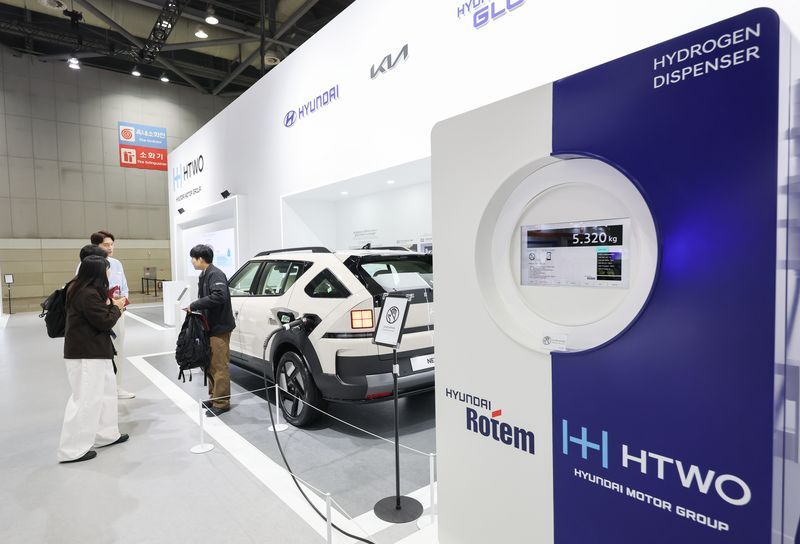
Hydrogen vehicles are a future automotive sector that South Korea is developing alongside electric vehicles. In September this year, South Korea became the first country in the world to surpass 50,000 hydrogen vehicles deployed. But China, which entered the field later than South Korea, is growing quickly. In September, Dongfeng Motor Corporation unveiled a 400-kW-class fuel-cell system for heavy-duty hydrogen trucks at the Hanover Motor Show in Germany. The system offers a range of up to 1,700 km on a single charge. Foton, a commercial vehicle maker under BAIC Group (BAIC), also unveiled a heavy-truck platform with a range of more than 1,000 km.
China's rapid growth in hydrogen vehicles is backed by full support from the Chinese government. Unlike South Korea, China focuses on commercial vehicles, and its government provided about 1.5 trillion won in support for the first pilot program, which ran from 2021 to 2025. With that funding, it deployed at least 25,000 hydrogen vehicles and built at least 250 refueling stations. It is reportedly planning incentives on a similar scale going forward.
With this support, China is expected to soon overtake South Korea in the number of hydrogen vehicles deployed and be the first to reach 100,000. Market research firm SNE Research forecast that China's annual hydrogen vehicle sales would surge to 933,000 in 2030.
Unlike China, our government's support is going in reverse. The Ministry of Climate, Energy and Environment's budget for next year's hydrogen fuel-cell vehicle deployment program is 445.7 billion won, down 22.6% from this year. Local governments' worsening finances are also a problem. This year's national budget for hydrogen fuel-cell buses covers 1,800 vehicles, but 117 billion won remains unspent. The national subsidy for each hydrogen fuel-cell bus exceeds 200 million won, placing a heavy burden on local governments.
As the Ministry of Finance and Economy has effectively opposed a proposal to grant tax credits to electric vehicles produced and sold domestically, concerns are growing that the means of countering Chinese electric vehicles' offensive in the domestic market will be weakened.
At a tax subcommittee meeting of the National Assembly's Finance, Economy and Planning Committee held on the 24th, the government effectively opposed including electric vehicles among those eligible for the domestic production tax credit. The stated reason was that “determining the scope of eligible items and production costs could lead to substantial administrative inefficiencies, and there is a risk that the pool of eligible recipients could expand excessively.” The government also believes that domestically made electric vehicles are not significantly behind Chinese-made ones in price competitiveness. It therefore says there is no need for additional tax support for electric vehicles.
The industry sees it differently. It argues that the intensifying Chinese offensive makes this a critical moment for the competitiveness of South Korea's hydrogen industry. Industry players say the central government should secure stable funding and consistently pursue medium- and long-term deployment targets, rather than relying on local government budgets.
In trying to weigh institutional and legal issues and efficiency and ensure policies are free of flaws, the government invariably becomes cautious. This is the government's habitual attitude of trying to avoid taking any responsibility. The government should abandon this approach and show more initiative in pushing policies forward. Companies working on the ground understand market conditions better than the government does.
The government should listen to businesses and industry and make an effort to resolve the difficulties they face. If it ignores their concerns and fails to act, it will miss the critical window and soon see Chinese-made electric and hydrogen vehicles taking over our roads, as in Europe.