“Yongsan Park, Which Holds the Scars of Korea’s Modern and Contemporary History ... Must Not Be Developed for Housing Supply” [Editorial Desk’s News Diagnosis]
- Input
- 2026-11-25 18:13:34
- Updated
- 2026-11-25 18:15:15
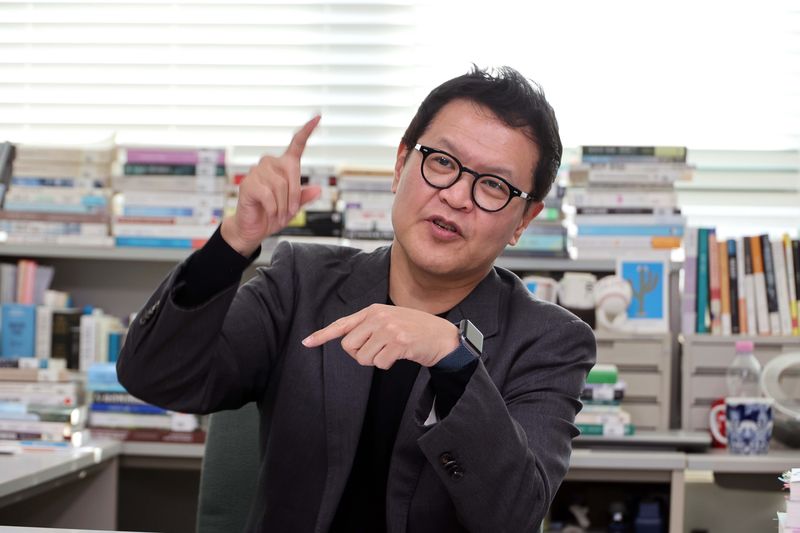
“A park is a city’s counterpart.”
A city is complete only when paired with a park.
But in a city short of homes for people to live in, preserving that pair
is never easy.
Three million square meters of land in the heart of Seoul is once again at a crossroads.
It is Yongsan Park.
For more than 120 years since Japanese troops moved in in 1904,
it has been “forbidden land” occupied by foreign military forces.
In 2003, South Korea and the United States agreed to relocate the base,
and in 2007, the National Assembly enacted a special act,
pledging to create a national park.
The return of the land was slow.
So far, only about 30% of the land has been returned. The target opening date has also been pushed back from 2027 to seven years after the entire site is returned.
The controversy erupted this summer.
When the government said in its August 13 real estate measures that it would consider Yongsan Park as a candidate site for housing supply, debate over revising the Special Act
also gained momentum.
The Seoul Metropolitan Government and some residents are protesting, saying this would break a national commitment.
For more than 20 years, the person leading planning for Yongsan Park has been responsible for research on the comprehensive master plan and other work, starting with the 2005 vision to turn the Yongsan Garrison into a park.
We asked Jeong-hann Pae, a professor in Seoul National University’s Department of Landscape Architecture and Rural Systems Engineering and president of the Korean Institute of Landscape Architecture, about the meaning of parks and green spaces in cities,
as well as the value of Yongsan Park and how to protect it.
—You called a park a city’s counterpart. Why must cities have parks?
Pae: A park is an “invention of the modern city.” It was conceived as a spatial solution to the problems of industrial cities. Cities bring together people, capital and functions and use land efficiently. A park, by contrast, preserves open space that is difficult to retain under the logic of urban production and efficiency, and is public land that everyone can enjoy together. It is open space for rest and socializing, as well as social and ecological infrastructure that regulates urban heat and water and provides habitats for nonhuman life.
—What is your favorite park in South Korea?
Pae: Seonyudo Park. It is a masterpiece that transformed a former water purification plant into a new park without erasing traces of its past, turning its concrete structures and water-treatment facilities into park spaces. The former industrial facilities now hold plants and water, and people walking there experience the time of the city overlapping with the time of nature.
—What are some signature parks in major cities around the world?
Pae: Central Park in Manhattan, New York, is a major park created in the rapidly expanding industrial city of the 19th century to provide residents with broad expanses of nature and places to rest. For more than 170 years, it has served as a model and standard for urban parks around the world. There is also Hyde Park in London, a place not only for walking and relaxation but also for public speeches and gatherings, and the Bois de Boulogne, a vast green space that sustains Paris and a foundation for biodiversity. These large parks differ in form and history, but share the fact that they have secured public space for residents in the face of urban density and the pace of urbanization, while making it possible for people and nature to coexist.
—What are the ideal size and form for an urban park?
Pae: There is no ideal size for a park. Large parks contribute to a city’s resilience, biodiversity and response to climate change, and are physical infrastructure that sustains the city. Small parks are social infrastructure that supports everyday walks and rest, community-building and social interaction. What matters is not size but whether people can move safely in and out of parks and whether they can easily reach them from different neighborhoods. Cities need a balanced distribution of large parks that form broad ecological corridors and small parks that people can walk to in their daily lives. There is a misconception about Yongsan Park. New York’s Central Park covers about 3.41 square kilometers. It is rectangular, about 4 kilometers along its longer side and 0.8 kilometers along its shorter side. Some say Central Park is easy to cross because it is narrow, while Yongsan Park is not. But a width of 0.8 kilometers is by no means narrow, and Yongsan Park, with its irregular shape, is narrower in some places. It is regrettable that this argument is sometimes misused to support the strange logic that building apartments on part of Yongsan Park and narrowing it would make the park more walkable.
—According to the 2022 edition of the World Cities Culture Forum (WCCF), Seoul’s “public green space ratio” is 27.91%—lower than London’s but higher than New York’s, Paris’s and Tokyo’s.
Pae: Seoul is a city with an exceptionally large number of mountains and hills. Statistics on parks and green spaces have included forests in and around the city, national parks and areas along rivers. So it is difficult to say that Seoul has as much green space as the figures suggest. Seoul’s 2022 statistics show that neighborhood parks provide just 5.65 square meters per person, a low figure. Access to parks is also very poor. New York City has a policy that enables all residents to reach a park within a 10-minute walk. Seoul, too, needs to shift the question from “How much parkland and green space is there?” to “How easily and often can people use it?”
—Yongsan Park seems all the more distinctive in Seoul, where flat parks are rare. What is its historical, social and symbolic value?
Pae: It is a historic place that bears the accumulated scars of Korea’s modern and contemporary history, from colonization and division to war and the Cold War. The Yongsan Park site, now returning to our hands 120 years after the Russo-Japanese War, is not empty land. Getting it back as a park means more than changing the land’s use; it means remembering that history together and healing its wounds. It is also an ecological bulwark against the climate crisis and climate infrastructure. This 3-million-square-meter park, larger than Yeouido, can complete Seoul’s broad urban ecological corridor linking Namsan, Yongsan Park and the Han River.
—What was the legislative purpose of the 2007 Special Act on the Creation of Yongsan Park?
Pae: It was enacted to establish a comprehensive framework for planning, creating and managing a park on the returned Yongsan U.S. military base under state leadership, while systematically reorganizing the surrounding area. After the 1990 memorandum of understanding on relocating the base, arguments for real estate development and park creation were evenly matched. But following the 2003 formal agreement between South Korea and the United States, public discussion converged on “Yongsan Park.” Article 4, paragraph 2 of the Special Act, which says that “the core site cannot be changed to a use other than a park,” was a product of that agreement.
—What is at the heart of the controversy over development of Yongsan Park, and what is the situation now?
Pae: The central question is whether part of the returned Yongsan U.S. military base land may be developed for housing. Stabilizing soaring real estate prices is clearly a serious issue. But the government’s recent policy of considering the site for housing supply is closer to populist spatial politics than to a realistic solution. More concerning is that the urgency of housing and real estate issues is being invoked to undermine the principles for creating the park, already established through social consensus and the Special Act. Even if the need for housing is acknowledged, the burden should not be shifted to the core park site, which has great historical, ecological and social value. What is needed now is not an announcement that prioritizes housing-supply figures, but political and diplomatic efforts to bring forward the base-return schedule, along with transparent disclosure of contamination surveys and cleanup plans and their relationship to the park plan, followed by public deliberation with citizen participation.
—Some analyses say that supplying housing quickly would be difficult.
Pae: The Yongsan Park Comprehensive Master Plan has used N as the year when the entire base is returned and proposed “N+7 years,” allowing about seven additional years for contamination surveys and cleanup, design and construction. As of December 2024, about 31.5% of the total area had been returned. The “entire” core site must be returned before the next stage can begin. In particular, if the land is to be used for housing, contamination at each site must be thoroughly investigated and its safety for that use confirmed. Once that process, implementation plans and phased development are completed, people would not be able to move in until 2040, which would not help bring current housing prices down. Another candidate site, the former Defense Acquisition Program Administration and military apartment complex, is government land unrelated to the base return. But building high-rise apartments at this highest point in the park would sever the green corridor linking Namsan and Yongsan Park and block views of Namsan.
—The 2024 Yongsan Park Comprehensive Master Plan estimated annual operating costs of at least 35 billion won. Some also argue that the surrounding area would receive most of the benefits.
Pae: Operating and maintenance costs certainly need to be considered. But they should not be seen as spending solely for residents around Yongsan Park. Parks can affect the asset values of nearby homes, but they also serve climate regulation, biodiversity, residents’ health and recreation, and Seoul’s ecological corridors and public spaces. Their benefits extend beyond the surrounding area to all Seoul residents and the public nationwide. It is appropriate for the state to fund a national park in line with its public functions. At the same time, various measures—such as reusing some existing buildings, adopting ecological management practices, or establishing a provisionally named Yongsan Park Corporation—should be used to reduce operating costs, with the process made transparent.
—There is also a compromise proposal to consider parks and housing supply together.
Pae: Housing supply and park creation can be considered together. But a compromise does not have to mean dividing the core park site in half and developing one part. Housing should instead be provided on scattered parcels already designated for complex-facility development, nearby public land or through redevelopment projects. In fact, a compromise has already been underway. During the return and conversion of the Yongsan U.S. military base into a park, 16.2% of the base has been used, or is to be used, for purposes other than a park. The Ministry of National Defense, the War Memorial of Korea and the National Museum of Korea are examples.
—What does the future hold for Yongsan Park?
Pae: Creating the park is expected to remain difficult, in part because no single administration can complete it during its term. Arguments for housing development have resurfaced at every election and will likely continue to do so. But the completion of Yongsan Park should go down in history as a project that demonstrates the maturity of Korean society. Above all, public interest and participation are essential. Yongsan Park is not land left undeveloped because development was impossible; it is land that society promised to preserve as a park for future generations.
■ Profile of Seoul National University Professor Jeong-hann Pae: △Master’s and doctoral degrees in landscape architecture from Seoul National University △Professor in Seoul National University’s Department of Landscape Architecture and Rural Systems Engineering △President of the Korean Institute of Landscape Architecture △Led research for the Yongsan Park Comprehensive Master Plans (2011 and 2021) △Editorial director of the monthly magazine Environment and Landscape △Author of The Era of Landscape Architecture, Beyond Landscape Architecture (2007), Consolation of Parks (2023) and numerous other books
[email protected] Reporter Im Sang-su[email protected] Reporter