“K-Content Ecosystem in Crisis”... Film Content Industry Urges National Assembly to Provide “Budget Support to Restore the Production Ecosystem”
- Input
- 2026-11-25 18:09:34
- Updated
- 2026-11-25 18:09:34
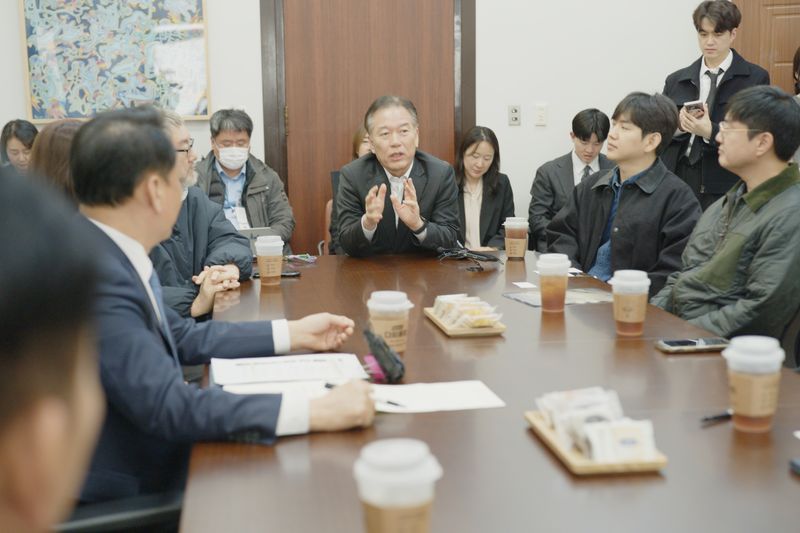

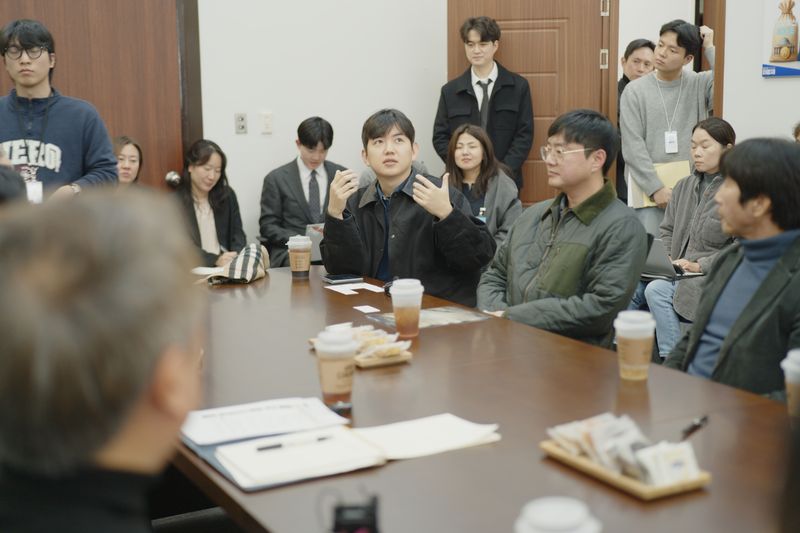
[Financial News] The National Assembly and the video content industry agreed that the domestic production base is under strain despite the global popularity of K-content.
The domestic video content industry, including the Association of Korean Independent Film & Video and the Korean Film Producers Association (KFPA), met with Lee Kwang-jae, chair of the National Assembly’s Special Committee on Budget and Accounts; Jung Tae-ho, the committee’s secretary; and Lee Jae-jung, chair of the Culture, Sports and Tourism Committee, at the National Assembly Building in Yeongdeungpo District, Seoul, at 1:30 p.m. on the 25th. They called on the National Assembly and the government to play an active role in accelerating the recovery of South Korea’s film and video industry and fostering the sustainable development of its ecosystem.
Video content industry meets with chair of National Assembly’s Budget and Accounts Committee
At a meeting with the video content industry that day, participants said a “K-Culture New Deal,” combining changes to budgets and systems, was needed to revive production and investment. The industry emphasized that, as K-content boosts South Korea’s image and drives tourism and demand for consumer goods, a decline in the number of productions and a contraction in investment could also affect related industries.
Lee Kwang-jae, chair of the National Assembly’s Special Committee on Budget and Accounts, expressed sympathy for the industry’s predicament, citing the case of director Lee Chang-dong’s Possible Love, which struggled to secure production funding in South Korea before receiving investment from Netflix. He said he had proposed creating a 1-trillion-won fund covering film, broadcast video and animation. Lee Jae-jung, chair of the National Assembly’s Culture, Sports and Tourism Committee, voiced support for the “K-Culture New Deal,” saying, “I hope this year’s budget review will be the starting point for improving the systems that support the video content industry.”
Those attending from the industry included Hong Sung-ho, vice chair of the Korea Animation Industry Association and CEO of Locus Corporation; animation director Han Ji-won; director Kang Yoon-sung; actors Ye Ji-won and Son Byung-ho; Baek Jaeho, chair of the Association of Korean Independent Film & Video; Lee Eun, president of the Korean Film Producers Association; Song Byeong-jun, chair of the Korea Drama Production Association; and YouTuber Go Mong (Kim Woong-hyun). They discussed ways to restore the domestic video content industry’s production base amid the spread of online video services (OTT) and changing viewing habits.
Calls for a recovery in drama production and long-term support for animation
Song Byeong-jun, chair of the Korea Drama Production Association, said drama production had fallen due to rising production costs and declining advertising revenue for broadcasters, driving skilled workers out of the industry and reducing opportunities for new actors, writers and directors to make their debuts. “Just about three years ago, the three major broadcasters were producing 90 dramas, but now they produce only 30,” he said. “A steady stream of medium- and low-budget dramas costing 1 billion won per episode is needed to maintain the competitiveness of K-dramas.”
Hong Sung-ho, CEO of Locus Corporation, cited the example of the South Korean webtoon Solo Leveling being made into an animation in Japan, and said the domestic production base needed to be strengthened for the global popularity of South Korean original works to translate into growth for domestic production companies. He said that while the Ministry of Culture, Sports and Tourism’s overall content budget had increased, its animation budget had been cut, and asked that a request for an increase of about 20 billion won be reflected in the budget review. He also said the support model needed to change, proposing that some production costs be covered through tax credits or cash rebates for projects meeting certain requirements, such as having a distribution contract, rather than through the current system of awarding initial grants through competitive open calls.
Film industry calls for expansion of Film Development Fund and protection of production companies’ rights
The film industry called for stable financial support, saying that declining theater revenue had made it difficult to secure funding for the Film Development Fund and that financial difficulties in production had also deepened.
Lee Eun, president of the Korean Film Producers Association, said that as even large companies had less capacity to invest, it had become difficult for domestic films and dramas to secure production funding. “Right now, even large companies are in crisis, and small and medium-sized businesses like ours are in crisis too,” he said, asking for the Film Development Fund to be expanded as seed funding to attract private investment.
Director and producer Kang Yoon-sung said public support should also be used to build the capabilities of domestic production companies. Speaking after the meeting, he said with regret, “Production companies handle applications for, disbursement of and accounting for Korean Film Council (KOFIC) grants, but in practice, the grants are used to reduce the burden on investors.” The proposal is to recognize grants as the investment companies’ share to encourage film investment, while also granting production companies that secure the funds a certain share of the investment so they can share in box-office revenue.
Actors Son Byung-ho and Ye Ji-won said the decline in the number of productions was reducing job opportunities for actors and called for a foundation that would enable works to be produced steadily. Another proposal was to establish a consultative body where industry experts could continue discussing support measures.
Another proposal was to impose a levy on global online video service (OTT) providers, similar to the surcharge on movie theater tickets, and reinvest the proceeds in domestic content production. Participants also called for changes to the relevant systems so production companies and directors could secure intellectual property (IP) rights to their works.
[email protected] Shin Jin-a Reporter