Imperfect Produce Heads to Students Living Alone for 2,500 Won
- Input
- 2026-11-25 16:29:33
- Updated
- 2026-11-25 16:29:33
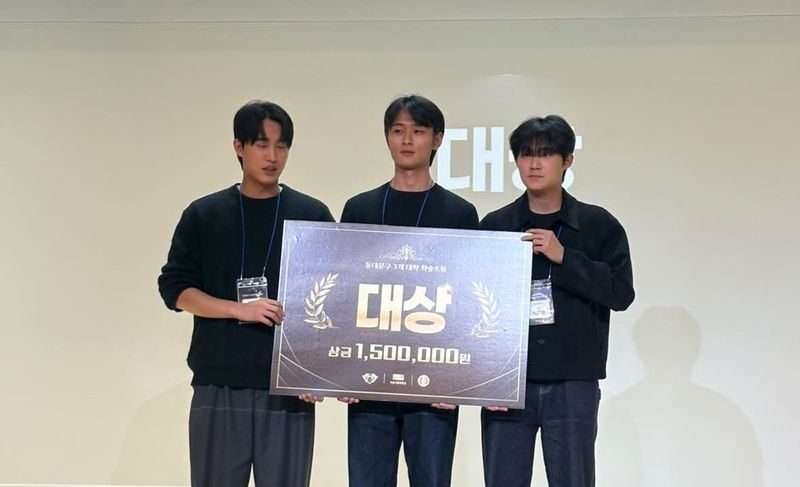
[Financial News] A student team from the University of Seoul won the grand prize at a university academic forum after proposing a business model to sell students living alone produce at risk of being discarded at Cheongnyangni Traditional Market in 2,500-won single-serving bundles priced 32% below market rates.
The University of Seoul said on the 25th that its Department of Environmental Horticulture student team Green On (Lee Mun-won, Jeong Hyeon-u and Im Won-bin) won the top prize, the Seoul Metropolitan Council Speaker’s Award, at the 2026 Academic Forum of Three Universities in Dongdaemun-gu. The forum was held on the 4th by three universities based in Dongdaemun-gu—the University of Seoul, Kyung Hee University and Hankuk University of Foreign Studies. The team earned high marks for its “Cheongnyangni Food Loop” model, which eases the food-cost burden on young people hesitant to buy fresh produce amid high prices and prevents market vendors from losing money on unsold stock.
The “Cheongnyangni Food Loop” is simple to operate. When students order the ingredients they need in advance, market vendors put together single-serving bundles of produce that is slightly misshapen or nearing the end of its sales window and deliver them to campus. Each bundle costs 2,500 won—about 32% less than the average price in Seoul, even after accounting for ingredients, packaging and labor. The model cuts costs by distributing the produce without further processing and is designed to turn a profit by selling just 67 bundles a week. Vegetable scraps from preparation are recycled as compost on campus.
The Green On team will use the award as a springboard to launch an actual business. By the end of this year, it plans to recruit participating market shops and assess the volume of surplus produce, then run a 12-week pilot on campus in the first half of next year. The team will also develop a mobile booking app to automate orders and payments.
Team leader Lee Mun-won said, “It started with connecting produce that would otherwise be discarded at the market right next to campus with students living alone who feel burdened by the cost of buying ingredients,” adding, “Our goal is to grow it, through a pilot program and app development, into a sustainable social enterprise that benefits students and vendors alike.”
[email protected] Kim Man-gi Reporter