The Menopausal Transition Is Not a Disease... Get Through It With Diet and Lifestyle [Professor Ahn Cheol-woo's Hormone Encyclopedia]
- Input
- 2026-11-28 07:00:00
- Updated
- 2026-11-28 07:00:00
The menopausal transition is not an illness but a natural physical change that comes with aging. It can be difficult because it happens so abruptly, but in most cases it is not severe enough to require treatment and improves with time even without treatment. If symptoms are not severe, they can be managed by eating foods that support female hormones, along with exercise, activity and rest. Taking supplements for menopause is another good option. Here are some ways to get through the menopausal transition in daily life.
Eat foods rich in female hormones
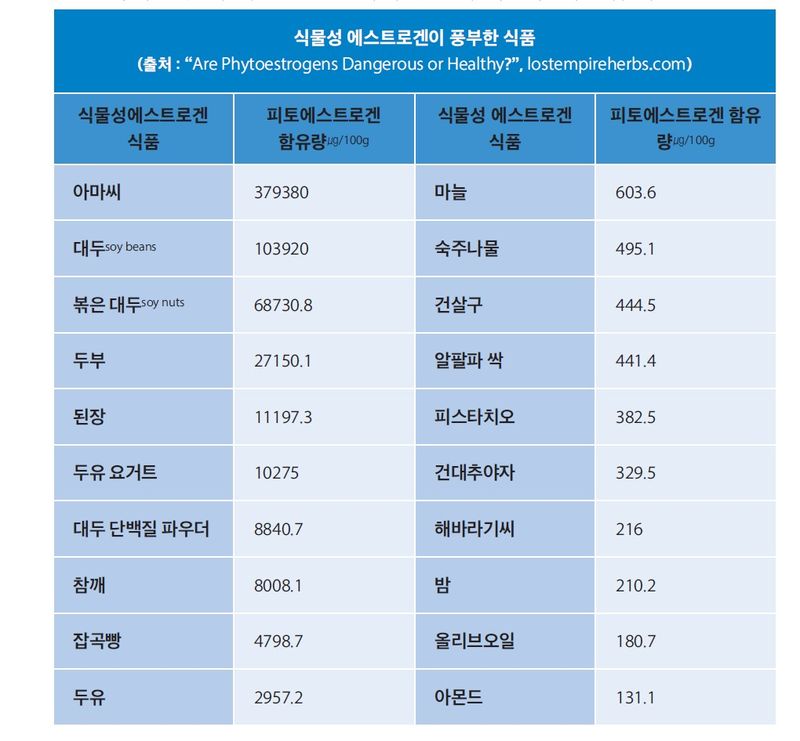
Plants contain compounds similar to human estrogen. Common examples include isoflavones, abundant in soybeans; lignans, abundant in flaxseed; and coumestans, found in abundance in sunflower seeds and spinach. Other such compounds include resveratrol and quercetin, which are abundant in berries. They all have molecular structures similar to estrogen, so they can bind to estrogen receptors in the body and produce effects similar to those of female hormones. Of course, they do not bind as efficiently as actual estrogen. However, several studies have found that consuming phytoestrogens can ease hot flashes and help prevent osteoporosis and cardiovascular disease, suggesting they can have some effect.
Foods rich in phytoestrogens include soybeans, tofu, soy milk, flaxseed, sunflower seeds, sesame seeds, olive oil and almonds. These are all healthy foods, so it is a good idea to consume enough of them not only during the menopausal transition but throughout old age. Even after menopausal symptoms disappear, having even a small amount of female hormones can help with health management.
Taking functional foods for menopause
If it is difficult to get enough female hormones from food, one option is to use health functional foods. The functional ingredients currently recognized by the Ministry of Food and Drug Safety (MFDS) as potentially helpful for menopause include red ginseng and Japanese pagoda tree fruit extract. Red ginseng is an ingredient recognized for a range of functions, including supporting immunity and memory, reducing fatigue and providing antioxidant effects. Several clinical studies have also confirmed its effectiveness in alleviating menopausal symptoms.
However, it does not act as a female hormone; instead, it is known to help manage symptoms through its antioxidant effects and its ability to boost immunity. Japanese pagoda tree fruit extract contains high levels of sophoricoside, an isoflavone-type compound, and acts as a phytoestrogen.
Products on the market generally use Japanese pagoda tree fruit extract as the main ingredient and add soy isoflavones, gamma-linolenic acid, and vitamins B, D and K as secondary ingredients to help improve blood circulation and support bone health. There are no major differences between products, so check the amount of the main ingredient and choose one that is reasonably priced.
Other individually recognized functional ingredients include “Baeksuo and other combined extract,” “thistle and other combined extract,” “rhubarb root extract,” “Lactobacillus acidophilus” and “germinated fermented soybean extract powder.” Individually recognized ingredients are developed by the ingredient manufacturers themselves, which submit data from human studies and safety data before the MFDS recognizes them as functional ingredients. They can therefore be considered to have some supporting evidence.
However, these products remain foods, so you should not expect clear-cut effects like those of medicine. It is best to think of them as supplements that can help manage health during the menopausal transition and old age by replenishing nutrients that are difficult to get from food.
/ Ahn Cheol-woo, professor of endocrinology, Gangnam Severance Hospital
[email protected] Jung Myung-jin, medical correspondent Reporter