Japanese Stocks Plunge 2.78%... 'Jensen Huang's Return' Rally Fades After Just One Day
- Input
- 2026-11-25 15:53:46
- Updated
- 2026-11-25 15:53:46
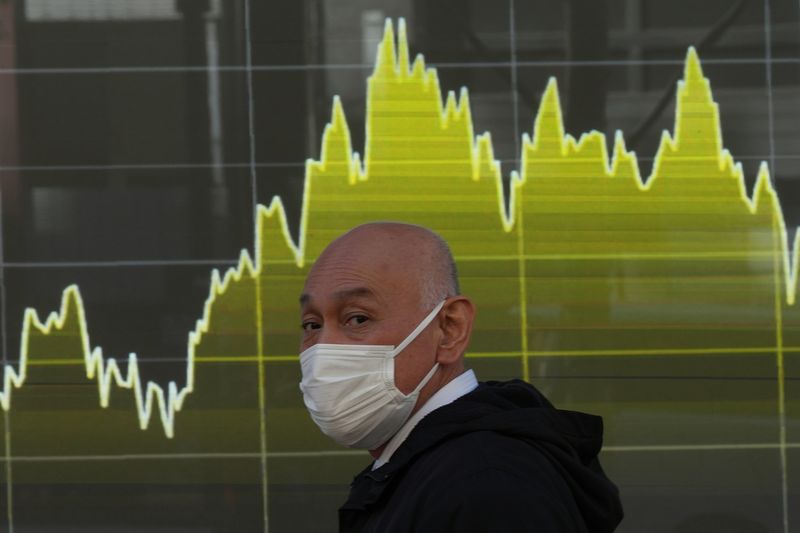
【Financial News, Tokyo—Correspondent Seo Hye-jin】Japan's Nikkei 225 Stock Average plunged 2.78% on the 25th. As concerns over excessive investment in artificial intelligence (AI) resurfaced, the rebound fueled by the return of NVIDIA CEO Jensen Huang lasted just one day. Sell orders flooded semiconductor and technology stocks, while buying interest concentrated in government bonds, pushing Japanese long-term interest rates to their lowest level in about three weeks.
AI Investment Concerns Persist Despite 'Huang's Return'
On the day, the Nikkei 225 closed at 57,011.62 on the Tokyo Stock Exchange, down 1,633.01 points (2.78%) from the previous trading day. It fell more than 2,100 points at one point during the session, following the previous day's sharp drop in U.S. technology stocks, but trimmed some of its losses as bargain hunting emerged in the afternoon.
The Philadelphia Semiconductor Index (SOX) plunged nearly 8% on the previous day in New York. A view spread that Huang's return alone would not be enough to ease concerns over excessive AI investment and worsening financial conditions at technology companies. In Tokyo, Advantest, Tokyo Electron and SoftBank Group led the declines.
Controversy over NVIDIA's corporate governance also weighed on investor sentiment. Criticism mounted after U.S. President Donald Trump publicly said he had intervened in personnel decisions during the process of Huang's return. Reports that Huang had maintained his existing position that a plan to groom a successor was unnecessary also heightened management uncertainty.
Kiyohide Nagata, chief strategist at Tokai Tokyo Intelligence Lab, said, “The likelihood has increased that the series of issues worrying the market will remain unresolved even with CEO Huang's return,” adding, “Instead, a view has spread that it could add fuel to concerns surrounding AI stocks.”
Japanese cable maker Fujikura plunged as much as 15% intraday after Nomura Securities lowered its investment rating and price target amid concerns over slowing investment in U.S. data centers. Fujikura, Kioxia Holdings, SoftBank Group, Mitsui Mining & Smelting, and Taiyo Yuden—which fell to the daily lower price limit on the day—were all down more than 70% from their record highs.
Investors Flee to Defensive Stocks and Government Bonds... Margin-Buying Balances Also a Concern
In the afternoon, overseas short-term investors and others bought stock-index futures as the Nikkei 225 fell below 57,000, trimming its losses. Buying also focused on defensive stocks, including pharmaceuticals, which are relatively less affected by economic conditions. As of 2 p.m., the TOPIX Pharmaceuticals Index had the largest gain among the 33 industry sectors.
Institutional investors remain cautious. Jun Ishigane, a senior fund manager at Mitsubishi UFJ Asset Management, said, “We have been gradually reducing our allocation to Japanese stocks since August and have continued selling this month.” The investment view on Japanese stocks was also downgraded from “somewhat bullish” in the spring to “neutral” recently.
High margin-buying balances are also a factor that could constrain a rebound. Individual investors expecting AI stocks to recover have bought on margin each time prices fell since July, building up positions that could come onto the market as selling during future liquidations. Ishigane said, “It is still too early to buy.”
Risk aversion was also evident in the bond market. The yield on newly issued 10-year Japanese government bonds, a benchmark for long-term rates, traded at 2.645% per annum, down 0.075 percentage points from the previous day. This was its lowest level in about three weeks, since the 6th.
The U.S. 10-year Treasury yield's fall below 4.90% per annum in Asian trading that day also supported buying of Japanese government bonds.
Ultra-long bonds, however, moved in the opposite direction. After demand was weak at the 40-year government bond auction held that day, the 40-year yield rose 0.060 percentage points from the previous day to 4.180% per annum.
In the foreign exchange market, the yen strengthened briefly in the morning on safe-haven demand, then weakened in the afternoon. As of 2 p.m., the dollar was trading at 159.39–159.40 yen, up 0.05 yen from 5 p.m. the previous day. Ahead of the release of U.S. personal consumption expenditures (PCE) data that night, traders sold yen and bought dollars to adjust their positions.
[email protected] Seo Hye-jin Reporter