Chey Tae-won’s Side Regrets Roh Soh-yeong’s Rejection of Court-Recommended Settlement ... “Could End This Week If Accepted”
- Input
- 2026-11-25 15:34:29
- Updated
- 2026-11-25 15:34:29
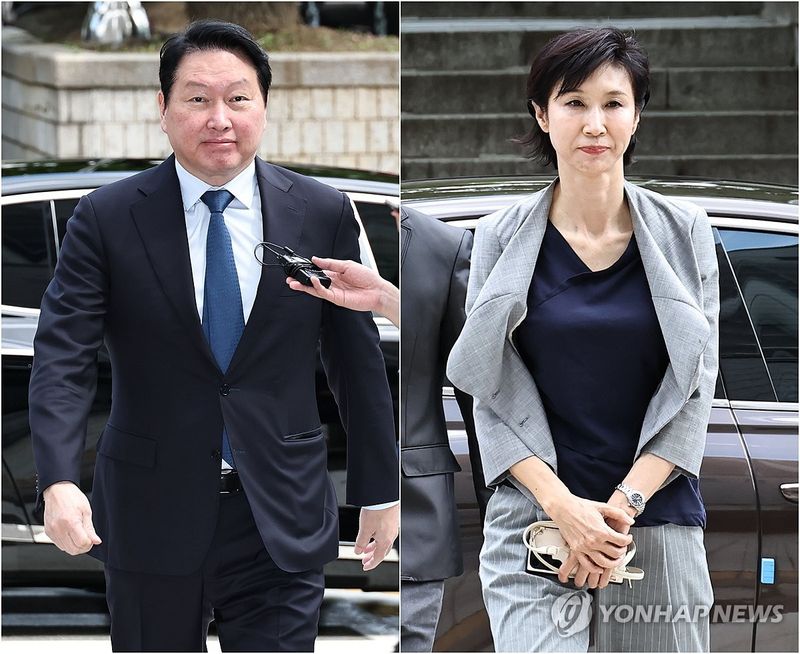
[Financial News] In a property division lawsuit involving 944 billion won, Art Center Nabi Director Roh Soh-yeong rejected SK Group Chairman Chey Tae-won’s application for a court-recommended settlement and demanded that he withdraw his appeal. Chey’s side, which had said the move was intended to bring the lawsuit to a swift conclusion and allow him to focus on management, said it regretted that the gesture’s broader purpose had been disparaged. The divorce-related property division lawsuit, which has continued for more than nine years, is expected to remain in the Supreme Court’s further-appeal proceedings for the time being.
On the 25th, Chey’s legal representative issued a statement saying, “We are deeply troubled and express our sincere regret that Roh’s side has questioned the sincerity of the request for a court-recommended settlement and disparaged its purpose.”
Chey’s side stressed that the application for a court-recommended settlement was a decision made regardless of the legal advantages or disadvantages. His representative explained, “Although there are many points that Chey could legally contest, including the property division ratio and the assets subject to division in the remand proceedings, he requested a court-recommended settlement in the broader interest of both sides reaching an amicable settlement, ending a conflict that has continued for a long time and completely resolving the sources of dispute.”
Chey’s side rejected Roh’s side’s demand that he immediately withdraw his appeal if he was sincere about reaching an early resolution. It countered, “If the court-recommended settlement is accepted, the case could be concluded even this week and the desired amount could be received. Despite that, responses such as ‘he should just withdraw the appeal’ are one-sided claims by the other side.”
He added, “Chey will faithfully take part in the remaining proceedings and will continue working to find an amicable resolution.” This was interpreted as signaling that, at this stage, he would not agree to unilaterally withdrawing his appeal.
On the 23rd, Chey’s side submitted an application for a court-recommended settlement to the Supreme Court of Korea’s Second Division (Justice Kim Seong-su), which is hearing the further appeal in the property division case, saying he would pay in full the 944 billion won in property division calculated by the Seoul High Court in its remand proceedings. That morning, Roh’s side submitted a brief to the panel expressing its non-consent and demanded that Chey withdraw his appeal.
With the two sides’ positions at an impasse, the possibility of an early conclusion through the court-recommended settlement process has effectively disappeared. Even if the panel issues a court-recommended settlement on its own initiative in a case where one party has already expressed its refusal, an objection filed within two weeks would prevent the decision from becoming final, and the case would return to the existing further-appeal review process.
The case is now more likely to proceed to formal review by the Supreme Court’s Second Division. When Chey filed a further appeal last August challenging the remand ruling, he maintained that he would not contest 700 billion won of the 944 billion won division amount and would seek a legal ruling only on the remaining 244 billion won. However, as Chey’s side said in its statement that it would “continue working to find an amicable resolution,” observers say there may still be room for behind-the-scenes coordination between the two sides during the appeal proceedings.
[email protected] Lee Chang-hoon Reporter