If Lee Yong-cheol Takes Office: Justice Ministry’s Challenges... Addressing Side Effects of the Complete Separation of Investigation and Prosecution and Reducing Prosecutors’ Presence
- Input
- 2026-11-25 15:36:11
- Updated
- 2026-11-25 15:36:11
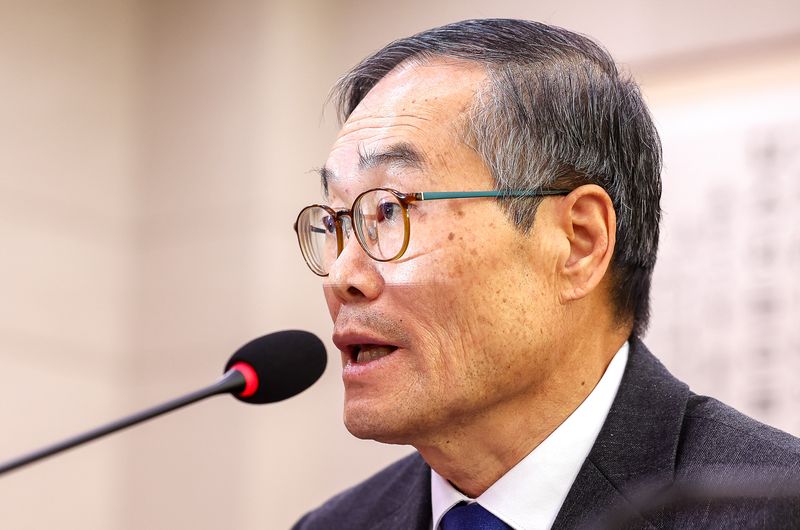
According to legal circles on the 25th, the National Assembly’s Legislation and Judiciary Committee is expected to decide on the 27th whether to adopt the report on the nominee’s confirmation hearing. If the process proceeds smoothly, he is expected to be appointed at the end of this month or early next month. At the hearing the previous day, Lee said he would do his utmost to ensure the successful establishment of the new criminal justice system.
One challenge is to resolve confusion arising after the launch of the Public Prosecution Office over crime victims’ submission of evidence and prosecutors’ efforts to maintain prosecutions. Kim Nam-hee of the Democratic Party of Korea (DPK) raised the need to amend the Criminal Procedure Act so that prosecutors can use as evidence materials they obtained to maintain prosecutions. Lee said that gathering evidence could be investigative in nature, but that he would devise measures to minimize inconvenience to the public. Seo Young-kyo, chair of the Legislation and Judiciary Committee, proposed using court orders to produce documents and requests for factual inquiries.
At the hearing, Lee also acknowledged that prosecutors’ authority to conduct supplementary investigations had helped provide redress for victims who had been wronged. However, he opposed restoring that authority, saying, “Prosecution and investigation must be separated, and it is important that this principle not be undermined.” In response to criticism that prosecutors sometimes effectively direct the police through requests for supplementary investigations, he said, “The power to consult should not be used as if it were the power to direct.”
The aim is to reduce side effects by making requests for supplementary investigations more effective while maintaining the principle of separating investigation and prosecution. However, it remains uncertain whether changes within the current system alone can resolve practical difficulties. Lee Geun-woo, a professor in the Department of Law at Gachon University, said, “We need to identify what is placing a burden on the Public Prosecution Office’s work and devise measures,” adding, “If evidence can be submitted only at the court’s own initiative, there could be concerns about infringing on defendants’ rights to mount a defense.”
The Justice Ministry is expected to reduce the role of prosecutors in stages. Lee said he “strongly agrees with the basic direction of de-prosecutorialization,” while explaining that prosecutors’ expertise would need to be used to some extent to ensure the stable establishment of the new criminal justice system. In written responses, he said the ministry was considering replacing positions—except those for which appointing prosecutors is unavoidable—with legal professionals provisionally referred to as “legal affairs officers.”
According to People’s Solidarity for Participatory Democracy, as of last July, 56 prosecutors were seconded to the Justice Ministry, only two fewer than in May of the previous year. The organization said the ministry should expand opportunities for career civil servants and outside experts to join departments such as the Legal Affairs Office and the Human Rights Bureau, where prosecutors’ specialized expertise is not required.
Professor Lee Geun-woo said, “Since it is difficult to end all prosecutor secondments right away, the ministry should start with departments that do not need prosecutors’ expertise,” adding, “It should also establish a system to recruit and train specialists in legal administration.”
[email protected] Choi Eun-sol Reporter