“Will My Acne Leave Scars?”...What Signs Can Be Spotted in Advance? [Weekend Health]
- Input
- 2026-11-26 14:52:29
- Updated
- 2026-11-26 14:52:29
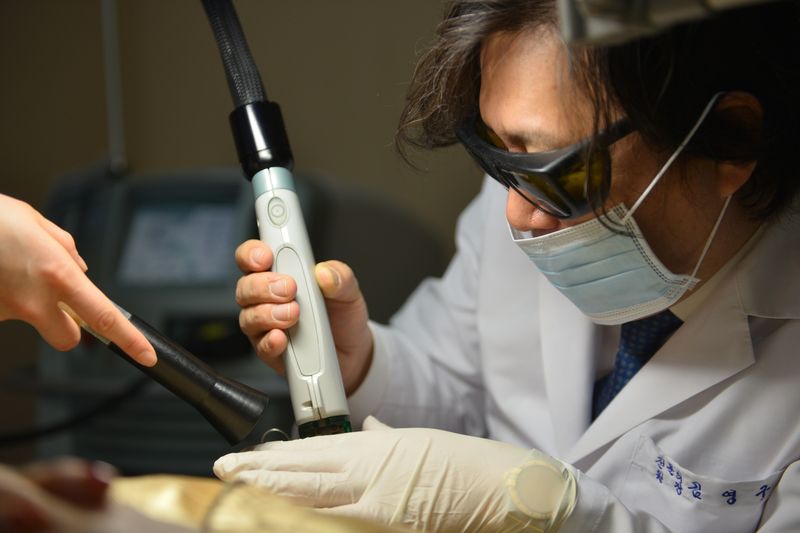
[Financial News] Acne is common, affecting at least 90% of adolescents. It occurs most often in males aged 16–19 and females aged 14–16, and in most cases subsides on its own around age 20.
The problem is acne scarring. Reported in 1%–11% of the population, acne scars not only cause psychological and emotional distress but can also disrupt school and social life and cause stress in interpersonal relationships.
So, is there a way to know in advance whether acne will leave scars? According to a study published in a medical journal, severe inflammatory acne raised the risk of scarring about 8.9-fold. Moderate inflammatory acne also raised the rate of scarring 3.5-fold.
People whose acne began before they turned 15 had a scarring rate 2.2 times that of those whose acne began at age 16 or later. Men had acne scars about 1.4 times as often as women.
Severe scarring was especially more common among men. In a study of 100 patients with acne scars, men accounted for 69% of those with moderate scars and 75% of those with severe scars.
“People whose acne starts early are exposed to male hormones (androgens) for longer, and men are more affected by androgens than women. This may explain why acne scarring is more common,” said Young-gu Kim, chief director of Yonsei Star Dermatology Clinic's Gangnam Main Branch.
The risk of scarring was also about 4.5 times higher when conditions such as post-inflammatory hyperpigmentation—in which dark pigmentation remains where acne had appeared—developed. “When inflammation persists, blood vessels dilate, which can lead to post-inflammatory hyperpigmentation (PIH) or redness,” Kim said. “If inflammation is severe enough to cause hyperpigmentation, the likelihood of acne scars can also be considered higher.” Kim added, “It is known that the risk of scarring increases when red, raised inflammatory acne lasts for three weeks or longer.”
Scars vary according to their shape and location. “The most common type, depressed scars, account for as much as 80% of acne scars and usually appear on the cheeks, while raised scars are common around the nose,” Kim said. “However, it is not uncommon for two or more types to occur together, so accurate diagnosis and a well-chosen combination of treatments, such as laser therapy and procedures, are needed to achieve improvement.”
[email protected] Jung Myung-jin, Medical Specialist Reporter