Firmly Ruled Out Involvement in War but Left 'Strategic Ambiguity'... Cheonghae Unit Expansion Plan Passes with Bipartisan Agreement
- Input
- 2026-11-25 15:47:49
- Updated
- 2026-11-25 15:47:49
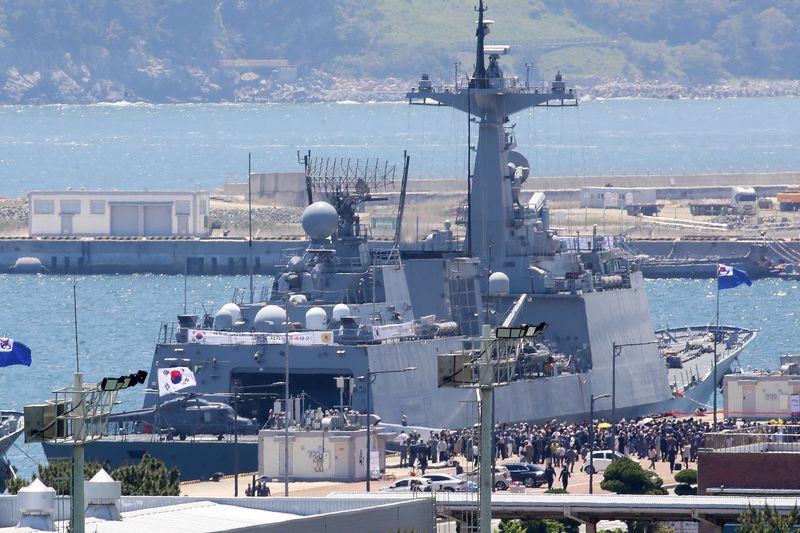
According to the National Assembly on the 25th, the National Defense Committee's subcommittee approved the amended motion to extend the Cheonghae Unit's deployment, with an accompanying opinion setting out three principles: non-involvement in war, making the safety of service members the top priority, and adhering to the principle of self-defense. The motion had initially been scheduled for approval the previous day, but the vote was delayed by a day after the parties failed to resolve their differences over how specific the accompanying opinion should be, even at the last minute.
The Democratic Party of Korea drew up an accompanying opinion to address concerns about involvement in military conflict after facing continued opposition not only from pan-progressive parties, including the Rebuilding Korea Party and the Progressive Party, but also from hardliners within its own ranks. The Democratic Party had initially sought to specify the relevant provisions in detail, while the People Power Party maintained that they should be limited to broad principles.
A People Power Party official on the National Defense Committee told this newspaper that the need to maintain “strategic ambiguity” on diplomatic and security matters was behind the disagreement. The point was that spelling out the scope of the Cheonghae Unit's mission too specifically in advance could narrow the options available to the government and military in responding to future developments.
Kim Byung-joo, a Democratic Party lawmaker and the ruling party's secretary on the National Defense Committee, spoke with this newspaper after the subcommittee meeting that day. He said the Democratic Party had sought to make the accompanying opinion more specific, while the People Power Party wanted to “include it conceptually,” adding that they ultimately agreed to state principles rather than detailed provisions.
Earlier, at a Cabinet meeting on the 10th, the government approved an amended motion to extend the Cheonghae Unit's deployment and expand its operational area from the waters around Somalia's Gulf of Aden to the open waters south of Oman. The main provisions add activities to ensure the safety of international sea lanes and restore freedom of navigation to the unit's existing anti-piracy and ship-escort missions, and strengthen its capabilities with maritime patrol aircraft, an explosive ordnance disposal team and unmanned minesweeping equipment.
The government says the move follows an increase in pirate activity around the Gulf of Aden as international maritime security forces were redeployed in the wake of the Strait of Hormuz blockade. It has also stressed that the expanded operational area does not include the Strait of Hormuz.
Controversy over a possible indirect deployment arose, however, over provisions requiring forces participating in international maritime security operations to come under the tactical control of the local commander, among other issues. The Rebuilding Korea Party and the Progressive Party had opposed the plan, saying South Korean forces could effectively be incorporated into a U.S. military operation and become embroiled in military conflict in the Middle East. Within the Democratic Party, lawmakers including Kim Yong-min also called for caution, citing the safety of service members.
The significance of the bipartisan agreement is that it both eases the domestic political burden and lends support to the government's efforts to expand international maritime security cooperation. It leaves the government a degree of strategic ambiguity as it manages complex diplomatic and security factors, including the situation in the Middle East, security cooperation with allies, and the safety of Korean citizens and vessels.
Kim said the accompanying opinion made clear that this was not a deployment to the Strait of Hormuz. Asked about the possibility of further opposition from pan-progressive parties, he said, “We included all the points they objected to in the accompanying opinion, so I don't think there will be a major problem.”
[email protected] Jiwon Song Reporter