Cho Hee-dae Impeachment Motion Likely to Go Before Plenary Session Early Next Week... ‘Turning Point’ at Judges’ Representatives Conference on the 30th
- Input
- 2026-11-26 07:48:35
- Updated
- 2026-11-26 07:48:35
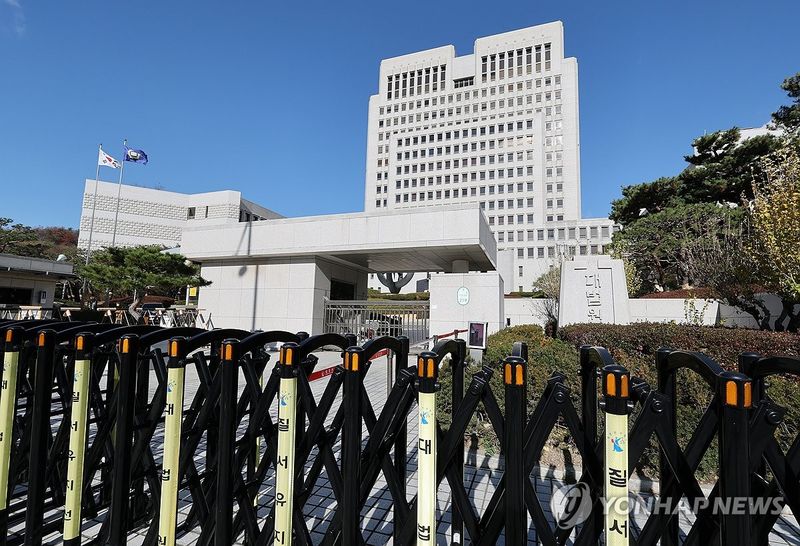
“Impeachment of the Chief Justice” “Infringement of Judicial Independence”
According to legal and political circles on the 26th, the Democratic Party of Korea is reportedly planning plenary sessions on December 1, 2 and 9. The impeachment task force, led by Rep. Yang Bu-nam, is reportedly set to complete drafting the motion this week, after which it will be introduced following review by party leaders and a caucus meeting. Rep. Seo Young-kyo, chair of the National Assembly’s Legislation and Judiciary Committee, said in a YouTube broadcast on the 23rd, “I think December 2 may be the most important plenary session.” The Rebuilding Korea Party has reportedly proposed introducing and reporting the motion on December 2, then voting on it on the 3rd, the second anniversary of the December 3 emergency martial law.
The Democratic Party adopted impeachment as its official party line at a caucus meeting on the 20th. This came the day after the Supreme Court’s en banc court overturned and remanded former Prime Minister Han Duck-soo’s insurrection case with a view toward partial acquittal. A motion must be put to a vote no sooner than 24 hours and no later than 72 hours after it is reported to the plenary session. It can pass with the support of a majority of all lawmakers, allowing the ruling party to pass it on its own.
The task force is considering five possible grounds for impeachment: changing the en banc court’s deliberation date in Han’s case to a date for handing down its ruling; alleged violation of the deadline for handing down a ruling under the special counsel law on insurrection; the procedure for the ruling overturning and remanding President Lee Jae Myung’s election law case; the issue of re-nominating a Supreme Court justice; and payments of encouragement money to Supreme Court justices. The Democratic Party’s position is that the problem lies with procedure, not the substance of the ruling. The People Power Party opposes the motion, saying it would set a precedent of impeaching the head of the judiciary in protest over a ruling.
As political moves gather pace, the courts are also responding. The Changwon District Court held a regular full judges’ meeting for the second half of the year the previous day, with 69 judges from its main court, and discussed an agenda item on judicial independence. The issue was placed on the agenda following internal calls for it to be discussed at a judges’ meeting. Such meetings are advisory bodies on judicial administration at courts of all levels, chaired by the chief judge. This is reportedly the first time judges at a lower-level court have discussed judicial independence as an agenda item since the Democratic Party adopted its official party line.
The National Judges Representatives Conference will hold its regular meeting on the 30th at the Judicial Research and Training Institute in Goyang, Gyeonggi Province. The meeting has been moved up by a week from its original date of December 7. A proposal to put the issue of infringement of judicial independence on the agenda is reportedly being pursued. Whether the conference will reach a common position remains uncertain. In June last year, the conference discussed public confidence in the judiciary and judicial independence amid controversy over the ruling overturning and remanding President Lee’s election law case, but reached no conclusion.
Lawyer groups have also voiced their positions. In a statement on the 24th, the Korean Bar Association (KBA) expressed concern that setting a precedent of linking differences of opinion over rulings or judicial administration to impeachment would ultimately burden the public. Thirty-three former KBA presidents and heads of local bar associations also issued a joint statement on the 23rd.
Chief Justice Cho left on the 24th for Singapore to attend an event marking the 200th anniversary of the judiciary and to visit Japan. The trip was reportedly scheduled before the Democratic Party adopted impeachment as its official party line. He is due to return on December 1, the date the party is planning to hold a plenary session.
Could the Supreme Court’s en banc court grind to a halt?
If the impeachment motion passes, Chief Justice Cho’s powers will be suspended immediately, and under the Court Organization Act the most senior Supreme Court justice will serve as acting chief justice. The most senior justice, Cheon Dae-yeob, will serve in the role until his term ends on May 7 next year, after which Oh Kyung-mi will take over. The impeachment resolution will be sent to the Constitutional Court of Korea, and Cho will be removed from office if at least six of the nine justices find the grounds for the motion valid.
The issue is the en banc court. It is presided over by the chief justice and consists of at least two-thirds of all Supreme Court justices, with a minimum of 10 members. One of the 14 authorized seats is vacant following, among other things, a request from the Blue House for a new nomination. Excluding Noh Kyung-pil, head of the National Court Administration, who does not take part in trials, leaves 12 justices. If Chief Justice Cho’s duties are suspended, 11 will remain. That meets the quorum, but leaves a margin of only one; if two justices are excluded or recuse themselves in an individual case, the en banc court cannot be constituted at all.
Precedents differ on whether the en banc court can hand down rulings under an acting chief justice. In 1979, acting Chief Justice Lee Young-seop handed down an en banc ruling. By contrast, during Ahn Cheol-sang’s tenure as acting chief justice in 2023, the en banc court held just one hearing over nearly two and a half months and issued no rulings. En banc rulings were suspended for eight months, from September that year until May the following year. The vacancy was prolonged after Chief Justice nominee Lee Kyun-yong failed to win National Assembly approval. Whether an acting chief justice can exercise the power to nominate a justice to fill one vacant seat is also disputed. Ahn suspended the process for selecting a successor at the time, and last year the Constitutional Court granted an injunction suspending the effect of then-acting President Han Duck-soo’s nomination of a Constitutional Court justice.
The en banc court still has former Interior and Safety Minister Lee Sang-min’s insurrection case before it, with no date set for a ruling. Lee’s detention period expires on December 18. Former President Yoon Suk Yeol’s insurrection case is also approaching Supreme Court review on appeal.
There are also concerns that judicial independence is institutionally vulnerable. A law professor at a law school in the Seoul metropolitan area explained, “In other countries, too, the government proposes [budgets for judicial institutions], but unlike here, the government does not review them in the process; they are simply submitted as they are,” adding, “They are discussed only in the National Assembly.” A former senior official who worked at the Ministry of Government Legislation said, “The Constitution’s assigning the power to nominate Supreme Court justices to the chief justice is not a privilege granted to the judiciary; it is a requirement of the separation of powers,” and added, “It is a mechanism that allows the courts, the last bastion of the people’s rights, to do their part through their expertise.”
Chief Justice Cho’s term, which ends when he reaches the retirement age, runs through June 5 next year. If he is impeached in December, he will have six months remaining in his term. If the Constitutional Court does not conclude its proceedings within that period, he will leave office without returning to his duties. No motion to impeach a chief justice has ever passed. In 1985, an impeachment motion against then-Chief Justice Yoo Tae-heung was rejected by the plenary session. If the current motion passes, it will be the first time in the nation’s constitutional history that a chief justice’s duties are suspended.
[email protected] Kim Dong-gyu Reporter