Annual 1.5 Trillion Won Tobacco Tax: Housing Welfare or Firefighting Funding? National Assembly Debate Gains Momentum
- Input
- 2026-11-25 15:15:25
- Updated
- 2026-11-25 15:15:25
On the 25th, the Democratic Party of Korea’s Special Committee on Housing Welfare held a forum at the National Assembly titled “Promoting the Conversion of the Tobacco-Consumption-Tax Portion of the Local Education Tax into a Local Housing Welfare Tax.” At the forum, speakers repeatedly argued that the tax, which is set to expire at the end of this year, should be used as an independent source of funding for local governments to expand housing welfare.
Rep. Kim Nam-geun, chair of the DPK’s Special Committee on Housing Welfare, said, “Establishing a housing welfare tax would be a historic opportunity for local governments to address housing issues and pursue housing policies tailored to the characteristics of their regions.” He added, “There is talk of having to share some of the funds with firefighting finances in the first year (next year), so it is becoming uncertain whether stable funding can be secured.”
Rep. Yeom Taeyeong of the DPK also agreed on the need to bolster firefighting finances, while expressing concern that local governments would have fewer funds available for housing welfare. He stressed, “For housing welfare to truly be effective, it needs sustained financial support, and it is important to ensure that frontline services and local governments have stable funding.”
The government initially planned to use the portion of the local education tax on tobacco consumption that is set to expire as a source of funding for housing welfare. On October 16, it submitted to the National Assembly a bill to amend the Local Tax Act, with the creation of a local housing welfare tax as its centerpiece. The key is to maintain the current tax system, under which 43.99% of the tobacco consumption tax is levied, while changing the purpose of the funds from expanding local education finances to ensuring housing stability for local residents.
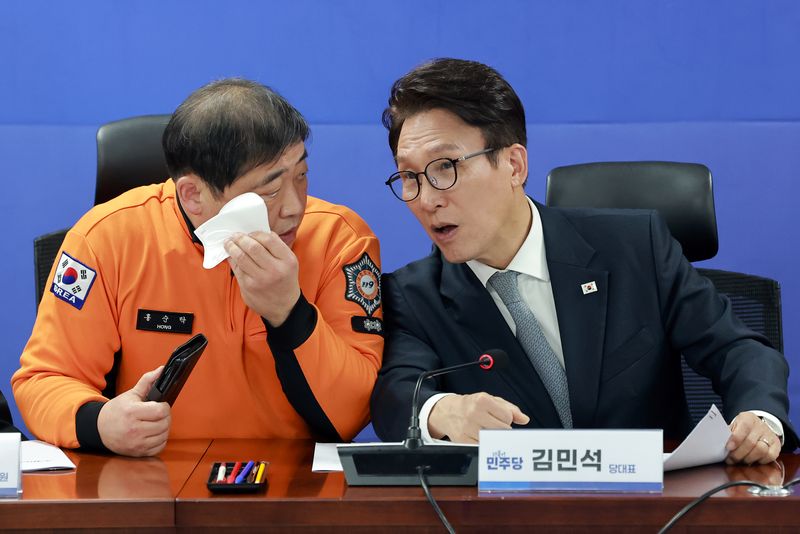
The Ministry of the Interior and Safety says support for firefighting finances should be approached as a response to urgent funding needs, while the issue should be resolved in the long term by expanding the state’s financial responsibility. At the forum, Seo Won-ju, a division chief for local tax policy at the ministry, noted that national and local governments currently bear firefighting costs at a ratio of roughly 1 to 9. “I believe that, fundamentally, it is important in the long term to fund firefighting from general national government revenues,” he said. Seo also expected the National Assembly’s Public Administration and Security Committee to begin reviewing the related bills next week. The issues under discussion are expected to include not only the allocation ratio between housing welfare and firefighting finances, but also whether to set a time limit on support for firefighting finances.
Experts who attended the forum likewise agreed that securing a stable, earmarked source of funding is urgent as local governments’ financial burden related to housing welfare grows. They said strengthening the state’s responsibility for firefighting finances would also be desirable for their stability, and expressed a somewhat negative view of support funded, in effect, through the tobacco consumption tax.
The push to expand local governments’ autonomy in housing welfare policy is converging with calls to bolster urgently needed firefighting finances, and fierce debate is expected during the legislative process. The stable establishment of the local housing welfare tax is likely to hinge not only on the allocation ratio but also on whether support for firefighting finances is made temporary.
[email protected] Kim Hyeong-gu Reporter