“Even If Victims Do Not Want Punishment, Perpetrators Must Be Punished”... Recommendation to Legislate Against Dating Violence
- Input
- 2026-11-25 14:53:17
- Updated
- 2026-11-25 14:53:17
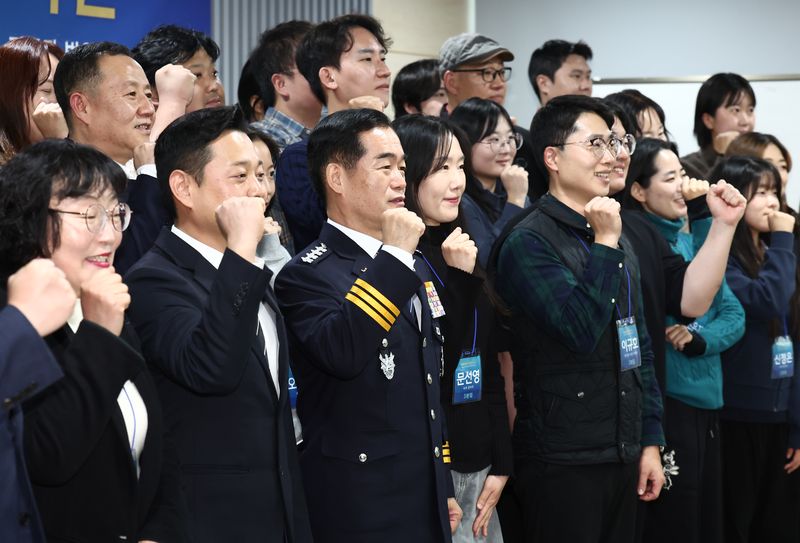
[Financial News] The Public Participation Group has recommended enacting legislation so perpetrators of dating violence can be punished even when victims do not want them punished. It also proposed taking necessary protective measures regardless of victims’ wishes in relationship-based crimes involving a serious threat to life or physical safety or repeated reports. Police plan to review the recommendations and reflect them in future policies for responding to relationship-based crimes.
The National Police Agency said on the 25th that it held the “Police Policy Public Participation Group” for two days starting on the 23rd at the Vabien II Education Center in Seoul’s Jung District and drew up 24 policy recommendations setting out criteria and the scope for police intervention in relationship-based crimes.
This is the first time police have introduced a public deliberation process into the development of public safety policies. Twenty-nine members of the public, randomly selected with gender and age taken into account, took part and drafted the recommendations after expert presentations, question-and-answer sessions with field police officers, and small-group discussions.
The recommendations cover six areas: criteria for intervening in relationship-based crimes; stronger joint responses by relevant agencies; standards and systems for sharing victim information; improvements to the protection system for victims of dating violence; protection and enhanced expertise for field police officers; and greater public awareness.
Recommendation to legislate against dating violence... Risk assessments even after cases are closed
The Public Participation Group recommended establishing a separate legal basis for dating violence, as with the Act on the Punishment of Domestic Violence. It said perpetrators should be punished regardless of victims’ wishes, taking into account that victims may reverse their decision on punishment because of fear of retaliation, threats, financial dependence or other reasons.It proposed defining who qualifies for protection by taking into account not only current or former partners but also temporary relationships formed with the intention of dating. The recommendations also said the protection system should address the complex forms of harm that can occur, including psychological domination and control, threats involving sexually explicit images, and contact through social media after a breakup, as well as physical assaults during a relationship.
The group also set out criteria for when active police intervention is needed. In high-risk and urgent cases involving threats to life or physical safety, and in cases involving repeated reports, necessary protective measures should be taken as a matter of principle regardless of the victim’s wishes.
It recommended that specialists such as profilers accompany officers to the scene and conduct a separate risk assessment focused on the perpetrator, and that the victim’s level of risk continue to be reassessed even after the case is closed. It also called for stronger protections for people close to the victim, given the possibility that retaliatory crimes could extend to the victim’s family or acquaintances.
However, the group said safeguards were also needed to prevent infringements of basic rights resulting from excessive use of public authority as police intervention expands. It called for stronger post-action reviews of coercive measures and procedures that allow for independent investigations and remedies when harm is caused by an improper exercise of public authority.
Police to Handle Perpetrators, Specialized Agencies Victims... Proposal for 48 Hours of Intensive Protection
The recommendations also call for a joint response system that clearly divides responsibilities among relevant agencies. The aim is for police and relevant agencies to respond together from the reporting stage and to establish a pan-government consultative body to oversee the effort. At the scene, police would handle perpetrators and specialized agencies would take charge of victims, reducing the burden on victims of having to give repeated statements to multiple agencies.The recommendations also propose assigning specialists from the Ministry of Gender Equality and Family to the field to connect victims with temporary accommodation and provide at least 48 hours of intensive protection and counseling. They also call for creating public officials specializing in psychological support for victim statements and assigning them to local police stations.
If victims reverse their decision on punishment several times, their cases should be cross-checked with specialized agencies such as counseling centers to determine whether the decision is voluntary. The group also proposed requiring the opinion of the police officer in charge to be heard whenever a request is made to cancel protective measures.
The group also said an integrated information system for relevant agencies should be established so victim support does not lapse during investigations and trials, and that necessary information should be shared in real time from the receipt of a report and dispatch of officers. For high-risk cases, it called for a legal basis in a special act to allow limited disclosure of personal information to support agencies even without the victim’s consent, alongside safeguards such as tiered access permissions and records of information access.
The group also recommended institutional improvements to support field officers in actively carrying out their duties. These include establishing a dedicated body, similar to one for protecting teachers’ rights, to provide legal and litigation support, and improving immunity provisions for proactive administration. It also proposed incentives such as training and assigning specialist investigators in relationship-based crimes, giving priority consideration to officers’ preferred units after at least a specified period of service in women and juveniles departments, and shortening the time required for promotion based on length of service.
The recommendations also call for expanding required education for adolescents on the characteristics of relationship-based crimes, victims’ psychology and conflict management, and strengthening public awareness campaigns at the pan-government level. They also include expanding temporary shelters by using idle public facilities, increasing the personnel and operating hours of volunteer neighborhood patrol units, and making use of advanced technologies such as patrol robots.
The National Police Agency plans to review the recommendations through relevant departments and then reflect them in policies for responding to relationship-based crimes. It will continue discussions with relevant government ministries on measures requiring legal amendments or coordination among agencies.
National Police Agency Commissioner General Kim Jong-chul said, “We will take seriously the recommendations put forward directly by the public and develop policies that provide victims with stronger protection,” adding, “We will continue to broaden public participation so that people’s voices are reflected in public safety policies.”
[email protected] Kim Ye-ji Reporter