"Prioritize Domestic Steel in Public Projects" ... Calls in National Assembly to Defend Domestic Demand
- Input
- 2026-11-25 14:25:03
- Updated
- 2026-11-25 14:25:03
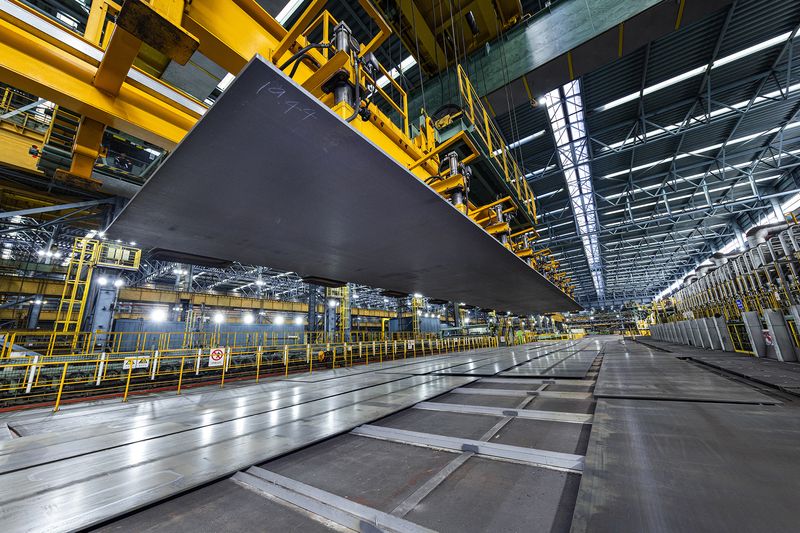
[Financial News] The National Assembly heard calls for active industrial policies to protect the domestic steel industry, which is facing a crisis amid global oversupply and the spread of protectionism. These include introducing comprehensive import restrictions and prioritizing domestically produced steel for public projects. The need for tax credits for domestic steel production and regionally differentiated electricity rates was also raised.
On the 25th, the National Assembly Steel Forum held a policy seminar at the National Assembly Members' Office Building on “Strengthening the Steel Industry Ecosystem in an Era of Global Economic Transformation.” The event, hosted by Rep. Kwon Hyang-yeop of the Democratic Party of Korea (DPK), the forum’s lead research member, and sponsored by the Korea Iron & Steel Association (KOSA), was attended by lawmakers from both ruling and opposition parties, government officials, and representatives from the steel industry and academia.
Gong Mun-gi, head of the Steel Research Center at the POSCO Research Institute, said that “the global steel industry has entered a period of structural transition amid stronger protectionism and supply chain restructuring.” Even if countries raise trade barriers, the products China exports and the regions it targets may change, while the oversupply problem persists, he analyzed. He also called for securing new steel demand from the artificial intelligence (AI) industry and transitioning to low-carbon production.
Lee Jae-yoon, head of the Industrial Carbon Neutrality Research Division at the Korea Institute for Industrial Economics and Trade, outlined five key policy tasks to strengthen the steel industry’s competitiveness: introducing comprehensive steel import restrictions; prioritizing domestically produced steel in public infrastructure and energy projects; expanding high-value-added recycling of steel by-products; introducing tax credits for domestic production; and implementing regionally differentiated electricity rates ahead of schedule. The aim is to protect the domestic market through trade barriers while also securing a stable base of domestic demand and reducing production costs.
The ensuing discussion brought together government and private-sector experts, including Kang Yeon-ju, director of the Steel and Ceramics Division at the Ministry of Trade and Industry. They discussed ways to respond to steel trade restrictions imposed by major countries, transition equipment to reduce carbon emissions, and create new demand for steel through renewable energy projects.
The steel industry also called for government-wide support. Ha Jeong-jin, head of POSCO’s Communications Office, said business uncertainty was growing as global oversupply, stronger protectionism, the burden of reducing carbon emissions, and weak domestic demand converged.
Rep. Kwon said, “With major countries overseas strengthening trade barriers, the steel industry—the foundation of manufacturing competitiveness—needs active policy support,” adding, “I will work to provide active support in the National Assembly based on today’s discussion.”
The National Assembly Steel Forum is a bipartisan lawmakers’ research group launched during the 20th National Assembly. It is currently co-chaired by Rep. Eo Gi-gu of the DPK and Rep. Lee Sang-hwi of the People Power Party. It includes 32 National Assembly members and experts from the steel industry and academia.
[email protected] Kim Gyeong-min Reporter