Seoul Metropolitan Government: “Devolving Integrated Review Authority to Districts Is Regressive Legislation” ... Calls for Full Withdrawal
- Input
- 2026-11-25 14:21:57
- Updated
- 2026-11-25 14:21:57
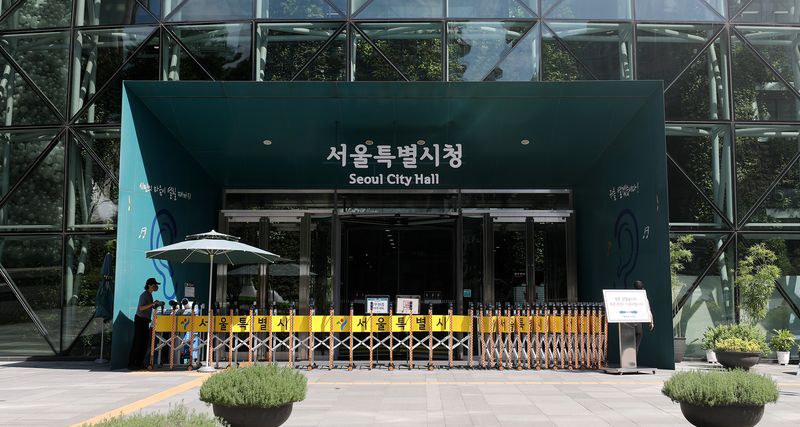
On the 25th, the Seoul Metropolitan Government said an amendment to the Urban Improvement Act introduced by Assembly member Kim Nam-geun and others went beyond the previously discussed transfer of authority for small-scale projects involving 500 households or fewer. It would also transfer authority over integrated reviews to autonomous district governments regardless of project size, making it regressive legislation that fundamentally undermines Seoul’s metropolitan urban management system.
The amendment would leave only the authority to make the initial decision on a redevelopment plan with the Seoul Metropolitan Government, while assigning subsequent plan changes and integrated reviews exclusively to autonomous district governments. The city, however, pointed out that redevelopment plans are not fixed plans completed with an initial decision alone. Rather, floor-area ratios, building heights and infrastructure plans are continually adjusted as project feasibility is reviewed, designs are refined and residents’ opinions are gathered. Under the amendment, prior consultation with the Seoul Metropolitan Government would be required except for minor changes. But the grounds for refusing consultation would be strictly limited to violations of laws or regulations or of the master plan, and consultation would be deemed complete after 30 days, making it difficult for the city to meaningfully coordinate or oversee the plans.
The Seoul Metropolitan Government warned in particular that distributing subsequent authority among 25 autonomous district governments could undermine the consistency of urban plans established through Rapid Integrated Planning and lead to disorderly development. District governments could be more susceptible to demands for profitability from individual complexes and local complaints than to infrastructure needs across Seoul as a whole or balanced development between regions. As a result, standards for floor-area ratios, public contributions and infrastructure could vary by district, potentially intensifying disputes over fairness between projects and conflicts between regions.
The review capacity of individual district governments and administrative inefficiencies also came under scrutiny. It has not been established whether all 25 autonomous district governments could each secure expert committee members and reliably operate integrated reviews, a complex review system requiring expert assessments in nine fields and coordination of committee members’ schedules. If review standards and requests for revisions vary from district to district, the predictability of administrative procedures could decline, potentially delaying projects instead.
The Seoul Metropolitan Government stressed that there was little justification for transferring authority, given that the current integrated-review system was already operating quickly. It currently processes integrated-review cases submitted by autonomous district governments in about a month, with an approval rate of around 95%. The city, which also called for a full reconsideration last August, saying an ineffective transfer of authority would only fuel confusion on the ground, expressed strong regret that the legislation was advancing without sufficient impact analysis or consultation with the Seoul Metropolitan Government.
Myeong No-jun, head of the Seoul Metropolitan Government’s Housing Office, said, “To speed up urban redevelopment projects, we should not divide up and decentralize authority. Instead, we should maintain a consistent planning system for the city as a whole and boldly improve unnecessary procedures and causes of delay.” He added, “We call for the full withdrawal of the Urban Improvement Act amendment, which obstructs this effort and runs counter to it, and will continue steadfastly to pursue responsible urban management that encompasses citizens’ residential environments and the city’s future urban spaces.”
[email protected] Jeon Min-gyeong Reporter