Vietnam to Invest $943 Billion in Power Grid Expansion by 2050
- Input
- 2026-11-25 16:52:16
- Updated
- 2026-11-25 16:52:16
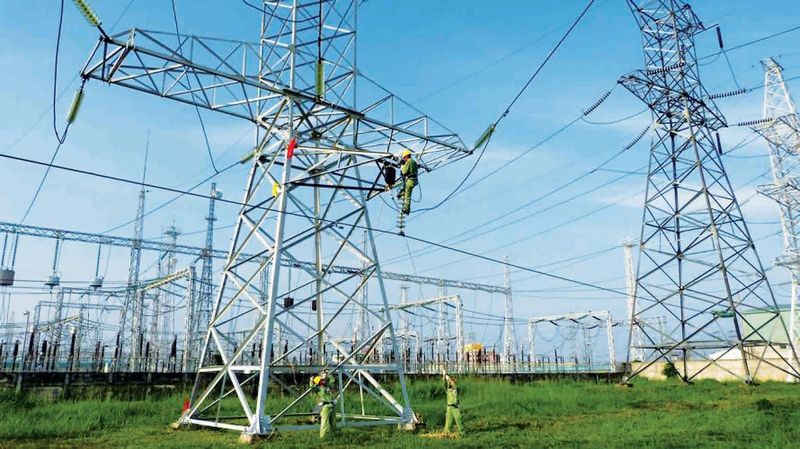
【Hanoi, Vietnam — Kim Jun-seok, correspondent】Vietnam’s Ministry of Industry and Trade estimates that a total of $943 billion (about 1,267 trillion won) in investment will be needed by 2050 to expand power generation facilities and transmission networks. Offshore wind, nuclear power and solar power are expected to receive the largest amounts of funding.
According to local media reports and other sources on the 25th, Vietnam’s Ministry of Industry and Trade has estimated total electricity investment needs for 2026–2050 at about $943 billion (about 1,267 trillion won) in a proposed adjustment to the “2021–2030 National Power Development Plan (Eighth Power Plan) and Vision for 2050,” which is being reviewed in consultation with relevant ministries and industry. Of that amount, about $853.8 billion (about 1,147 trillion won) is allocated to power generation development, while an estimated $89.2 billion (about 119 trillion won) will be needed to build transmission networks.
Total investment for 2026–2030 is set at $134.9 billion (about 181 trillion won), comprising about $114.5 billion (about 153 trillion won) for power generation and about $20.4 billion (about 27 trillion won) for transmission. The total investment is then expected to rise sharply to $808.1 billion (about 1,085 trillion won) for 2031–2050, including about $739.3 billion (about 993 trillion won) for power generation facilities and about $68.8 billion (about 92 trillion won) to expand transmission networks.
By power source, offshore wind had the largest projected investment need, at $195.2 billion (about 262 trillion won), followed by nuclear power at $187.3 billion (about 251 trillion won) and solar power at $142 billion (about 190 trillion won). Funding for these three sources accounts for about 61% of total investment in power generation development over the plan period.
The proposed adjustment also points to delays in power generation and transmission projects. Vietnam needs to bring a total of 116 GW of new generation capacity online during 2025–2030, but only 4.6 GW has entered commercial operation so far. In particular, projects totaling 49 GW have yet to complete even the investor selection process or obtain investment policy approval. Transmission infrastructure is also progressing sluggishly: as of the end of last September, progress on 500 kV and 220 kV transmission line and substation projects stood at around 4–11%.
To address these bottlenecks, Vietnam’s Ministry of Industry and Trade proposed diversifying funding sources, studying the introduction of an investment mechanism based on the build-operate-transfer (BOT) model, and actively encouraging a range of economic entities to invest in transmission networks.
The ministry said the electricity pricing system needs to be overhauled to attract investment in liquefied natural gas (LNG) power generation, wind and solar power, and energy storage systems. It also recommended considering ways to simplify investment procedures and designate power generation projects to investors with sufficient capabilities.
[email protected] Kim Jun-seok Reporter