"Guam and Saipan Are Separate Countries From the U.S."... Supreme Court Rejects DB Insurance's 8.4 Billion Won Tax Refund Claim
- Input
- 2026-11-25 11:20:41
- Updated
- 2026-11-25 11:20:41
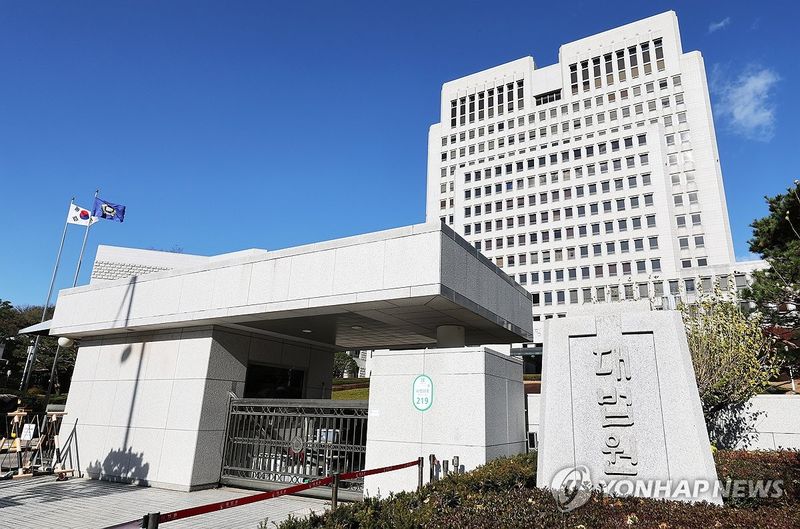
On the 25th, legal sources said the Second Division of the Supreme Court of Korea (Presiding Justice Oh Kyung-mi) dismissed DB Insurance's appeal on the 30th of last month in its case seeking to overturn the rejection of its request for a corporate tax reassessment, brought against the head of the Samsung Tax Office. This ended DB Insurance's bid to recover 8,399,050,000 won in taxes.
DB Insurance has overseas business establishments in Hawaii, California and New York in the United States, as well as in Guam, a U.S. territory. Through its Guam operation, it sells insurance products in Guam and Saipan in the Northern Mariana Islands, and filed and paid corporate taxes to the governments of Guam and the Northern Mariana Islands, respectively. When filing corporate tax returns for the 2015–2019 business years, it calculated the credit limit separately for taxes paid to the U.S. federal government and those paid to Guam and the Northern Mariana Islands. It later filed a request for reassessment, arguing that the three were a single country and therefore should not be treated separately. On March 17, 2022, the head of the Samsung Tax Office rejected the request, saying they were separate countries.
The foreign tax credit is designed to prevent the same income from being taxed twice. Article 94(7) of the former Enforcement Decree of the Corporate Tax Act stipulated that, "where overseas business establishments are located in two or more countries, the credit limit must be calculated separately for each country." Before the amendment on February 3, 2015, taxpayers could choose between an overall-limit method and a country-by-country limit method, but after the amendment only the country-by-country method remained.
The issue was whether the term "country" includes U.S. territories. Guam and the Northern Mariana Islands are not independent sovereign states under international law.
The Seoul Administrative Court, the court of first instance, dismissed the claim in December 2024, and the Seoul High Court, the second-instance court, also dismissed the appeal in April. The appellate court found that the two governments have the authority to enact their own tax laws and exercise taxing authority under their respective tax systems, making them independent holders of taxing authority separate from the U.S. government. It also noted that U.S. domestic tax law generally treats U.S. territories as foreign, and that the two regions are excluded from the geographic meaning of the "United States" under the Korea-U.S. tax treaty.
The Supreme Court reached the same conclusion. The justices said that the term "country" is "a concept that includes a government with a separate legal system and jurisdiction over taxes on foreign-source income, or a region over which that authority extends, even if it is not an independent sovereign state." They pointed to the International Tax Adjustment Act, which includes within the term "country"—as a party to a tax treaty—a "region to which its own tax laws apply," and to Article 94(1) of the same enforcement decree, which defines foreign corporate tax as "tax paid or payable to a foreign government (including local governments)."
The justices also reviewed the purpose and history of the system. They explained that its basic premise is that the foreign tax credit must not erode the domestic taxing authority over domestic-source income, and that the 2015 amendment, which left only the country-by-country limit method, was intended to prevent taxpayers from claiming excessive credits "by taking advantage of low-tax countries."
[email protected] Kim Dong-gyu Reporter