South Korea's Exports Surpass $1 Trillion... Exports Drove Half of Economic Growth in the 2020s
- Input
- 2026-11-25 10:26:39
- Updated
- 2026-11-25 10:26:39
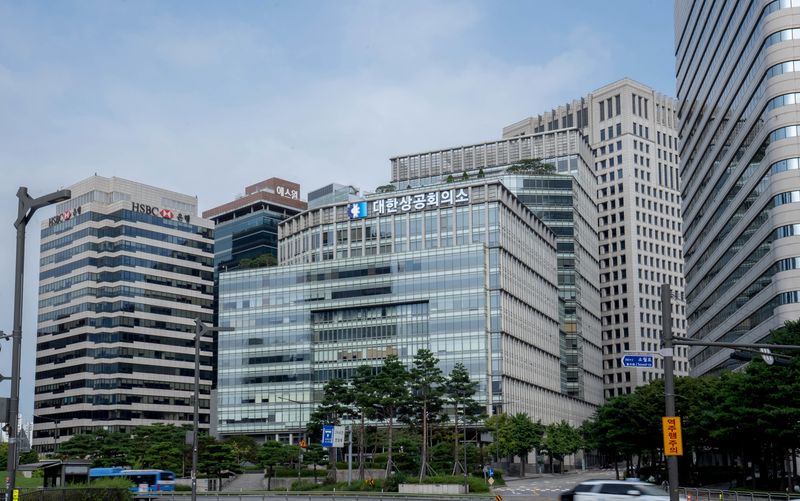
[Financial News] An analysis has found that exports drove more than half of South Korea’s economic growth in the 2020s, as the country’s cumulative exports this year topped $1 trillion.
South Korea’s exports have not simply grown in size; by generating real domestic value added, they have become a key engine of recent economic growth. It is argued that new flagship products must continue to emerge beyond semiconductors to sustain this momentum.
■ Exports contributed 1.5 percentage points to 2.8% growth
According to a report titled “How much have exports driven our economic growth?” released by KCCI on the 25th, South Korean exports grew by an average of 16.6% annually from 1960 to 2025, nearly twice the global export growth rate of 8.6% over the same period.South Korea’s share of global exports rose from 0.07% (82nd) in 1964 to 2.69% (8th) in 2025. It took 31 years for the value of exports to grow tenfold, from $100 billion to $1 trillion—a period similar to that of the United States (31 years) and Germany (30 years).
Using the import adjustment method, KCCI estimated that exports contributed 1.5 percentage points and domestic demand 1.4 percentage points to average annual GDP growth of 2.8% in 2021–2024.
Exports accounted for 51.7% of the contribution to growth, while private consumption and government consumption accounted for 29.9% and 18.0%, respectively, and investment for just 0.4%. The increase during that period was attributed to the export rebound after the pandemic and rising demand for artificial intelligence (AI) and semiconductors.
Over the full period from 1961 to 2024, exports accounted for 27.1% of the contribution to growth. Their share rose to 40.0% as global value chains expanded from 2001 to 2010, then fell to 33.1% from 2011 to 2020.
■ South Korea’s exports move up the value chain, with semiconductors exceeding 40%
The assessment is that remarkable advances in the industrial structure lay behind the quantitative expansion of exports.South Korea’s export industry has upgraded, with medium- and high-tech products such as electronics and automobiles accounting for 76.1% of exports in 2024.
However, the composition of the top 10 export items, which account for about 60% of exports, has changed little since the 2000s. Semiconductors’ share, which was 24.4% last year, had topped 40% by October this year.
Regarding these results, KCCI said, “$1 trillion in exports is not the end but a new starting point,” and noted that several challenges must be addressed.
Domestic value added generated per 1 billion won in exports fell from 700 million won in 2005 to 630 million won in 2024. Over the same period, the number of jobs generated per 1 billion won in exports also declined from 9.8 to 5.6, measured in 2020 prices.
KCCI proposed strengthening the competitiveness of materials, parts and equipment and reinforcing domestic supply chains to increase the share of domestic value added in exports. It also proposed broadening the participation of small and mid-sized partner companies in export supply chains and combining manufacturing with services so that exports lead to domestic jobs.
KCCI also emphasized the need to foster next-generation export products such as bio products and secondary batteries, and to expand into markets including ASEAN, India and the Middle East.
Lee Si-wook, head of economic research at KCCI, said, “With exports now driving more than half of growth, people will feel the benefits of growth more keenly when export expansion leads to domestic investment and jobs.” He added, “The task after the $1 trillion mark is to broaden export products and markets through manufacturing innovation and ensure that the benefits of exports reach partner companies and regions.”
[email protected] Kim Hak-jae Reporter