“There Are Four Players to Lock Up Before Free Agency; Lose Them and It’s Over” ... “2027 Kia Tigers’ Fate Hinges on Just $400,000”
- Input
- 2026-11-25 09:44:37
- Updated
- 2026-11-25 09:44:37
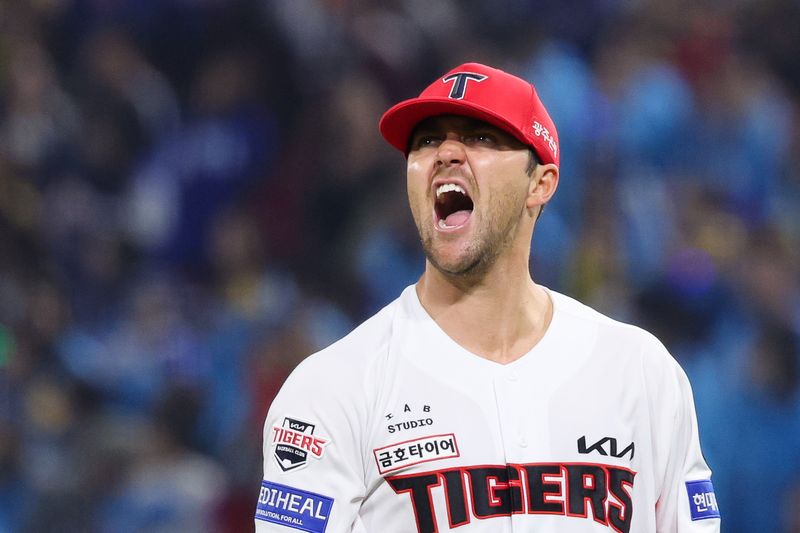
[Financial News] What is the Kia Tigers’ top priority this winter? Is it retaining Kim Ho-ryeong and Kim Tae-gun, who have entered the free-agent market, or bringing in players from outside?
Both are important, but the Tigers, aiming to do even better in 2027 than this year, have a different task they must tackle first.
It is retaining all four foreign players: James Naile, Adam Oller, Harold Castro, and Asian-quota player Keisho Shirakawa.
Despite losing key players Choi Hyung-woo and Park Chan-ho, Kia climbed from eighth last year to third in the regular-season standings this season. If Kim Do-yeong’s complete comeback was the catalyst, the four foreign players, who delivered extraordinary value, provided solid support behind him. The problem is that Kia’s finances are up against a huge obstacle—the salary cap—making it difficult to keep them all.
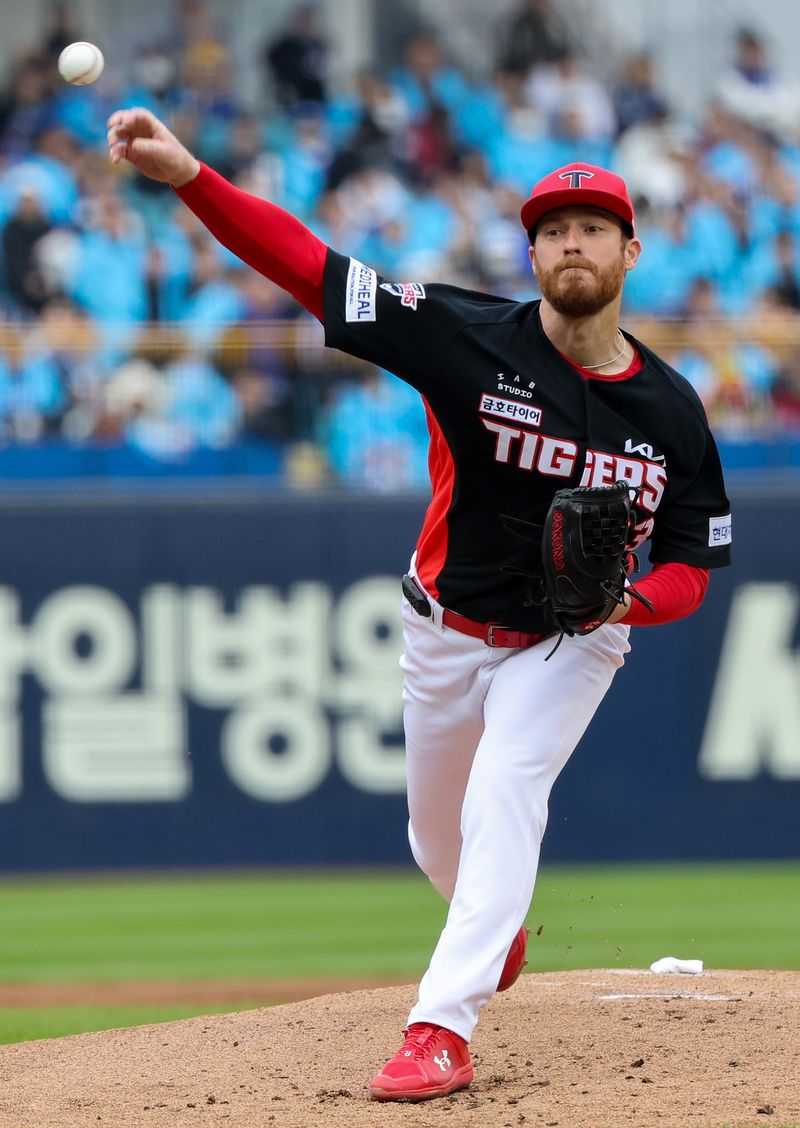
The assets Kia must protect first are undoubtedly Naile and Oller. Naile (31 games, 183 innings, 13 wins, 7 losses, 3.49 ERA) and Oller (30 games, 178 innings, 11 wins, 10 losses, 3.13 ERA) ranked first and second in innings pitched in the KBO League this season. Their combined 361 innings, 24 wins, and 39 quality starts (QS) were an indispensable pillar that kept Kia’s pitching staff from collapsing while its domestic rotation was not at full strength. Kia could bring in a new pitcher with an impressive Major League record, but finding another proven one-two punch to each shoulder 180 innings in the KBO would be like finding a needle in a haystack.
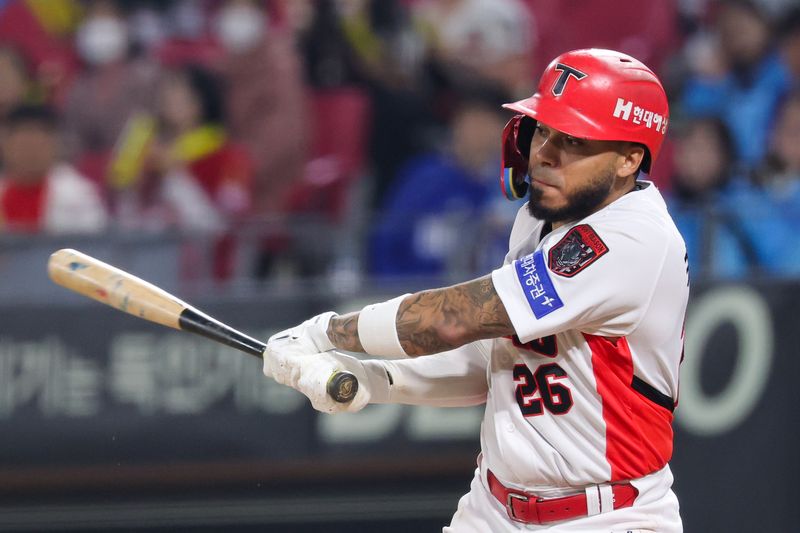
Harold Castro is also an irreplaceable centerpiece of the lineup. Despite appearing in just 99 games after a hamstring injury early in the season, he racked up a .327 batting average, 21 home runs, 88 RBIs, a .928 OPS, and a .367 batting average with runners in scoring position. Over 144 games, that projects to 31 home runs and 128 RBIs. Above all, the “umbrella effect” of his steady protection behind Kim Do-yeong, which kept opposing pitchers from pitching around Kim, was worth more than the numbers alone show.
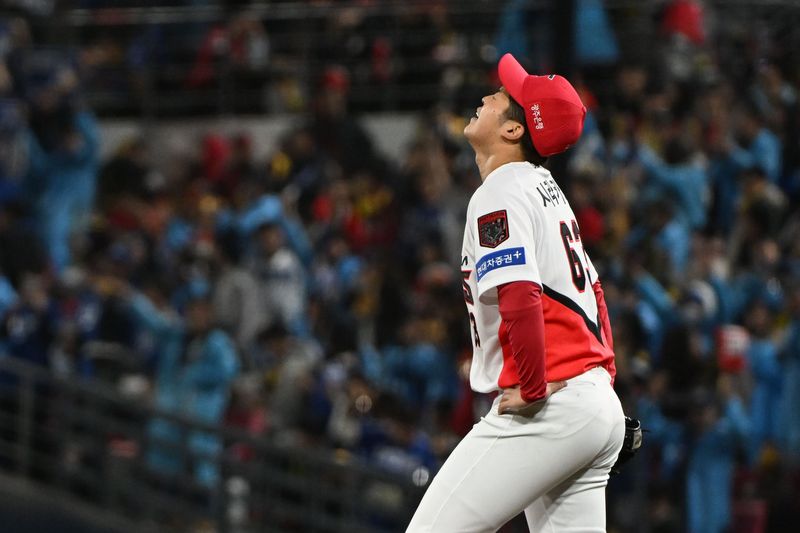
Asian-quota player Shirakawa, who joined the team midseason (18 games, 831⁄3 innings, 4 wins, 5 losses, 4.75 ERA), was no small contributor either. Veteran Yang Hyeon-jong will turn 39 next year, while young starters such as Lee Eui-ri and Hwang Dong-ha have yet to dispel the question marks around them. Shirakawa also proved his ability to perform in big games with a strong outing in Game 3 of the semi-playoffs: five innings, nine strikeouts, and one earned run.
If Kia loses the combined 4441⁄3 innings and 28 wins (about 35% of the team’s victories) contributed by Naile, Oller, and Shirakawa, it will face the nightmare of having to rebuild its starting rotation from scratch.
The dilemma starts here. Under the KBO’s foreign-player salary cap rules (a base cap of $4 million), applying all the additional amounts for years of re-signing ($300,000 for Naile, $200,000 for Oller, and $100,000 for Castro) would put Kia’s 2027 cap at $4.6 million. Given that the team spent a total of $4.2 million on the three players this year ($2 million for Naile, $1.2 million for Oller, and $1 million for Castro), it has just $400,000 in additional money to offer them while staying under the cap.
There is no grounds to cut anyone’s pay. Naile, already among the highest-paid, led the league in innings pitched and was the ace of the team that won both the regular season and the championship. Oller, who earned $1.2 million, has posted double-digit wins for two consecutive years and a 3.13 ERA, making a substantial raise unavoidable. Castro, too, has every right to seek a fair increase after being held to the $1 million cap for new foreign players. Even if Naile gets a $100,000 raise and Oller a $200,000 raise, only $100,000 would remain for Castro.
Ultimately, the Kia front office will have the bold option of exceeding the salary cap. The penalty for exceeding it for the first time is 50% of the excess amount.
For example, if the team spent $4.9 million—$300,000 over the cap—it would incur an additional outlay of $450,000 in all, including a $150,000 penalty. That is certainly not a small sum, but it may be a far more rational investment than losing proven key players to stay under the cap and then bearing the cost of a new foreign player failing to adjust and being replaced midseason.
Before Kim Do-yeong dominates the league in good health and heads to MLB, Kia needs to take its shot at winning a title at least once. Keeping all four foreign players, who have already been thoroughly proven, including Shirakawa, who is subject to separate Asian-quota rules, is a more certain prerequisite than any outside free-agent signing.
With just $400,000 in room, will Kia find a way to meet all three players’ expectations, or protect the foundation for a championship even if it has to pay a penalty? The success or failure of its 2027 title bid now depends on the Kia front office’s careful calculations and resolve.
[email protected] Jeon Sang-il Reporter