KT, LG Electronics Develop 6G Technology That Increases Upload Capacity Fivefold Compared With 5G
- Input
- 2026-11-25 09:41:29
- Updated
- 2026-11-25 09:41:29
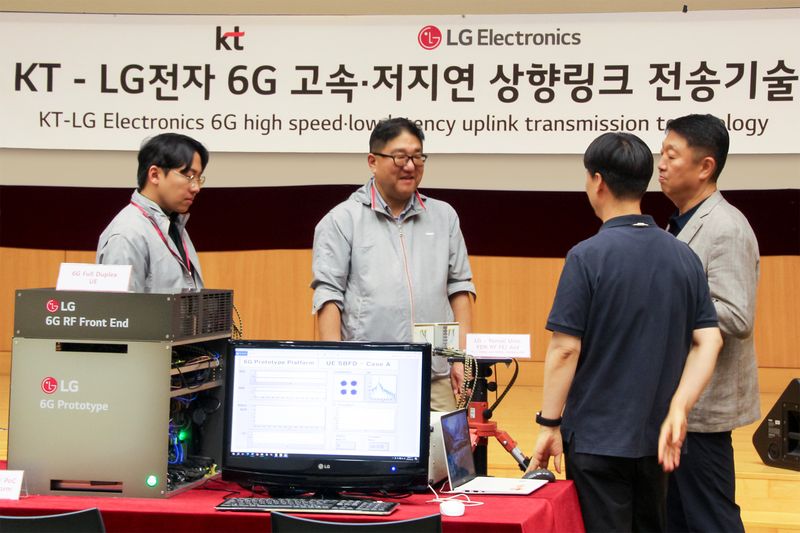
[Financial News] KT has successfully verified, in collaboration with LG Electronics, 6G mobile communications technology that increases data upload capacity to as much as 4.9 times that of existing fifth-generation (5G) mobile communications. The move aims to secure next-generation communications technology in preparation for the spread of services requiring real-time data transmission, such as physical AI and autonomous driving.
KT said on the 25th that it had completed performance testing with LG Electronics for two key 6G technologies: subband full-duplex (SBFD) and frequency-sharing full-duplex (SSFD).
The time-division duplex (TDD) method primarily used in 5G currently divides download and upload time within the same frequency band. It allocates more time to downloading data to suit usage patterns centered on downloads, such as watching videos.
However, as physical AI and autonomous driving become more widespread, demand for uploads will surge because video and audio data collected by robots and vehicles will need to be transmitted over networks in real time. This is because various AI devices, including those used in physical AI and autonomous driving, will need to send the video and audio information they collect to networks in real time.
With the existing TDD method, increasing upload time reduces download time and can also cause signal interference between neighboring base stations, creating technical limitations.
To overcome this limitation, SBFD, which the two companies tested, is a technology that converts part of the frequency band used for downloads to upload use, allowing both tasks to be performed simultaneously.
Field tests showed that data upload capacity increased to about 2.9 times that of the existing 5G TDD method with SBFD, and to about 4.9 times with SSFD.
The two companies plan to continue research collaboration on 6G technology development and standardization to meet communications demand arising from the future spread of AI services.
Jongsik Lee, head of KT’s Future Network Lab in the Network Division, said, “We will continue to proactively secure next-generation wireless technologies to provide customers with reliable AI services.”
[email protected] Choi Hye-rim Reporter