Delivery Robots Move Into Apartments... Riding Elevators to Doorsteps [Daily IT Pick]
- Input
- 2026-11-25 09:26:48
- Updated
- 2026-11-25 09:26:48
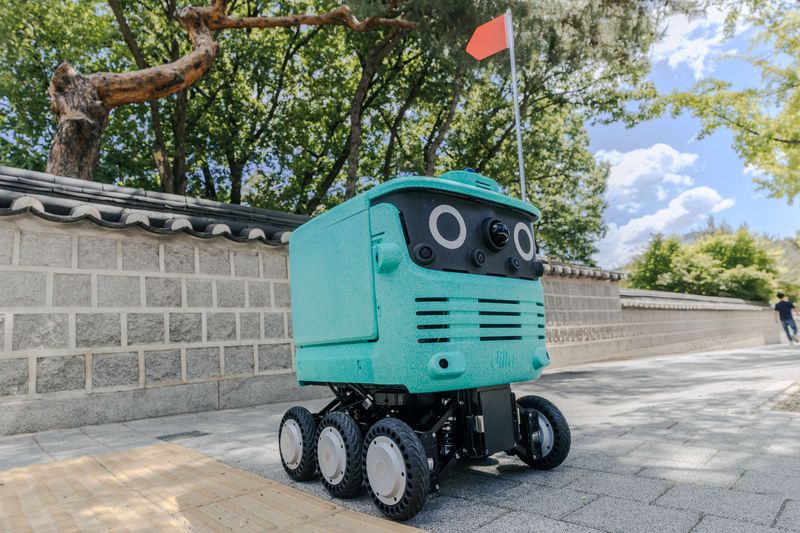
[Financial News] Delivery robots are expanding their reach beyond roads and sidewalks into apartment buildings. Baedal Minjok is moving to commercialize a robot delivery service that passes through shared building entrances, rides elevators and delivers food to the doors of individual units. This marks the first step toward bringing delivery robots—which until now have stopped outside buildings—inside apartments, a leading form of housing in South Korea.
According to industry sources on the 25th, Woowa Brothers, the operator of Baemin, has partnered with Tower PMC, a company specializing in residential property management, to expand robot delivery services within apartment complexes. The two companies signed a memorandum of understanding (MOU) on the 24th and agreed to pursue the launch next year of a “door-to-door” (D2D) robot delivery service in apartment complexes in Seoul.
One of the limitations of robot delivery has been getting inside buildings. Advances in outdoor autonomous driving technology have made it possible for robots to travel on roads and sidewalks, but entering shared building lobbies and riding elevators have remained separate challenges. Since February last year, Baemin has also used its self-developed delivery robot Dilly to deliver Baemin B Mart products in the Nonhyeon-dong and Yeoksam-dong areas of Seoul’s Gangnam District, but customers had to come down to the first floor themselves to collect their orders.
Baemin partnered with a residential property management company rather than with individual apartment complexes to overcome these limitations. Tower PMC manages and operates around 100 major residential complexes in South Korea, including Tower Palace, Hannam THE HILL, Trimage and Raemian One Bailey. The partnership is significant because it provides a foundation for connecting robots with building facilities, such as shared entrance access-control systems and elevators, while also making it possible to expand the service to more complexes in the future.
The two companies will first select pilot complexes in Seoul and begin work to connect the robots with residential facilities. Once the service is deemed reliable, they plan to expand its reach to complexes managed by Tower PMC, starting with the Gangnam and Seocho districts of Seoul.
Robot delivery is drawing attention because it could do more than improve convenience for customers: it could also make existing delivery operations more efficient. In large apartment complexes, deliveries take considerable time even within the grounds, including entering shared lobbies, traveling between buildings and waiting for elevators. Baemin says that if robots take on these tasks, they could shorten riders’ delivery times and ease dispatch delays during peak order periods.
The initiative is also significant as an effort to build a robot delivery model suited to South Korea’s residential environment. Equipping apartment complexes with the facility connections and operational systems needed for robot delivery could allow services centered on individual buildings to expand to large residential complexes. However, the pace of actual expansion is likely to depend on factors such as the cost of connecting facilities, residents’ willingness to adopt the service and the economics of operating the robots.
Ko Myeong-seok, chief technology officer (CTO) of Woowa Brothers, said, “We will build a robot delivery service that satisfies customers, riders and merchants alike.”
[email protected] Choi Hye-rim Reporter